“Machines warn you,” Calvin often said. “Most folks call it noise because they’re too busy to listen.”
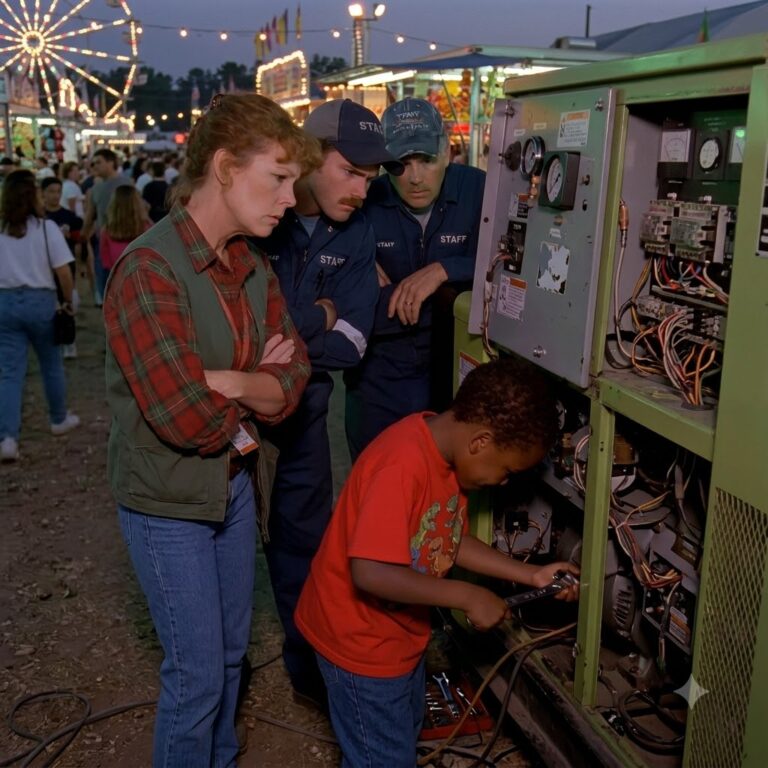
Isaiah listened. He drew pictures of engines in the margins of spelling tests. He collected broken switches from the repair shed and took them apart on the kitchen table, always asking permission first. Calvin made him label every piece and put it back before supper.
None of that made the family rich. His mother, Tasha, washed uniforms at a nursing home on weekdays and cleaned offices some evenings. Rent kept rising. When Isaiah needed shoes, Calvin polished the old pair until the leather looked new from a distance.
That morning, Tasha had tucked a peanut butter sandwich into Isaiah’s backpack and reminded him not to miss the school bus. She had a late shift, and there was no car available to collect him.
He had promised to be home before Calvin’s medicine alarm rang.
Now the bus sat beside a road where even grown men avoided stopping. The boy in the second row was beginning to cry. A girl with red glasses fanned her brother with a math workbook.
Isaiah remembered the moment before the engine quit: a brief shiver through the floor, the dashboard fading, and a dry metallic tapping that seemed to come from low on the driver’s side.
It was not proof. Calvin had taught him that too.
But it was a clue, and nobody wanted to hear it.
—
Mr. Whitcomb had the children leave the bus in pairs and move to a strip of shade behind a fenced feed store. He counted them twice. Mrs. Ainsley, the afternoon route’s teacher, stayed between the group and the road while dispatch arranged water and transportation.
Isaiah admired that part. Even worried adults could do something right.
“Don’t go near the engine,” Whitcomb warned when Isaiah stepped toward the bus.
“I won’t. I just want to tell you where I heard it.”
“Please, Isaiah. I’ve got twenty-eight children to think about.”
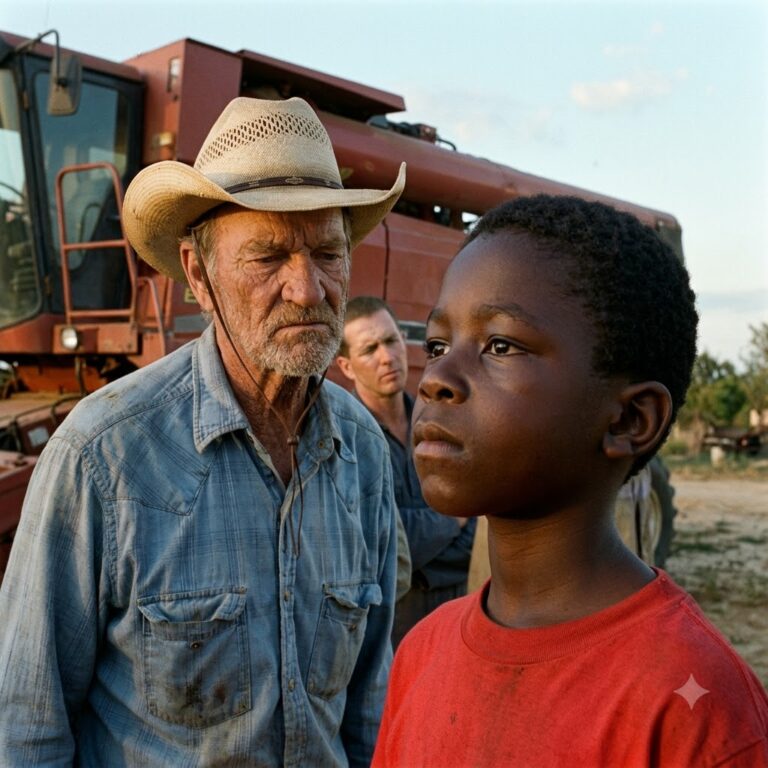
That answer hurt more than the laughter. Isaiah was one of those children, yet his words seemed to count less.