THE PIE THAT CHANGED ASHCOMBE HALL
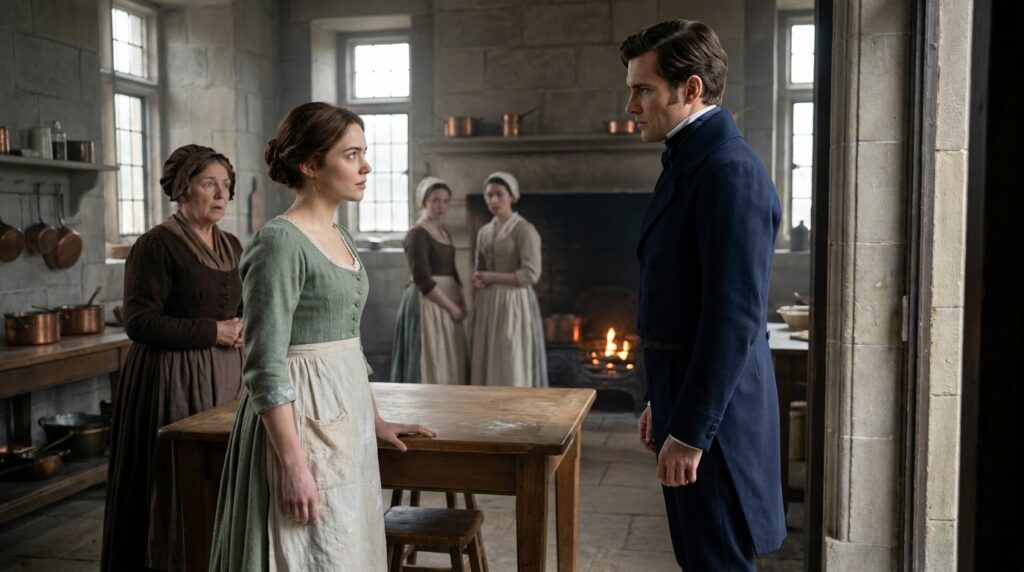
At seven o’clock, the breakfast table at Ashcombe Hall was still empty. The Duke of Ashcombe stood at the kitchen door, displeasure plain on his face. Mrs. Dobbs, the housekeeper, explained that Mary Bell, the cook, had fallen ill before dawn. Her sister had come to take her place.
Nora Bell stepped forward. Edward Ashcombe recognized her immediately. Five years earlier, she had thrown an apple pie at his head in the front hall, in front of his staff. He had never forgotten the humiliation. Nora had never forgotten why she had done it. The duke had raised the rents on Mill Street until her family’s bakery could no longer pay its lease. She had gone to beg for more time. He had told her that business was business.
“I have not come for you, Your Grace,” Nora said. “I have come so my sister does not lose her place while she is ill.”
Edward ordered her to go home. Nora reminded him that the county dinner was only five days away. No agency cook could arrive, learn the kitchen, and prepare a formal meal in time. She could feed twenty guests, she said, and would not waste a single pie on him.
The duke studied her. At last he allowed her to stay until Saturday, warning that one burnt dish would put her out of the house. Nora answered that he had better get used to eating very well.
The servants watched her with curiosity. Polly, a young kitchen maid, asked whether she really had thrown a pie at the duke. Nora admitted it. The pie had been apple, and it had been excellent. Polly laughed, then asked what he had done to deserve it. Nora told her about Mill Street and the bakery. She did not explain how close her family had come to losing everything after the shop closed.
Lady Harriet Ashcombe, the duke’s mother, was less amused. She had heard that Nora Bell had entered the kitchen and demanded to know whether Edward had lost his senses. She considered the Bell family insolent and reminded him of the rule she had enforced for thirty years: any servant who married must leave the estate on the same day. Edward said he knew the rule. His mother answered that knowing it was not the same as enforcing it.
Nora’s first test came at luncheon. She prepared leek and potato soup from the vegetables already in the pantry. Lady Harriet entered, saw the plain tureen, and called it peasant food. In Ashcombe Hall, she declared, luncheon required consommé. Nora explained that proper consommé took two days and the meal was in one hour.











