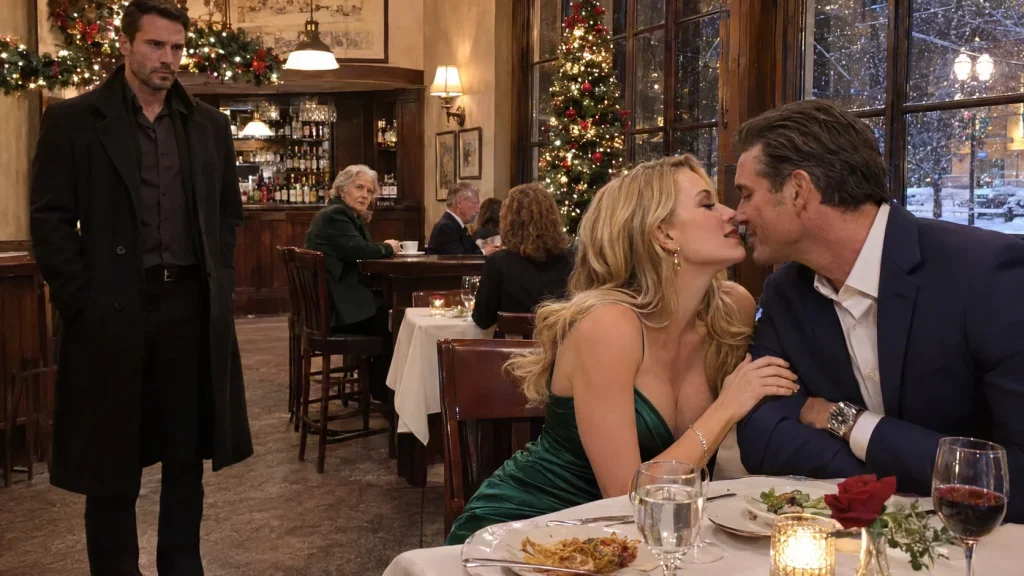
My Wife Texted, “Bringing Someone to Christmas Eve. Be Nice.” I Replied, “Me Too.” His Old Client.
At 3:20 on Christmas Eve, during a ten-minute break between radar screens crowded with holiday flights, my wife texted me.
“Bringing someone to dinner tonight. Be nice.”
I stared at the message for about four seconds. Then I typed two words.
“Me too.”
She sent back a single question mark. I didn’t answer. I turned my phone facedown, went back into the dark control room, and cleared the next flight. By nine that night, the man my wife had brought to dinner would be walking into the snow without his coat. The woman I’d brought would be finishing his tiramisu, and my wife would be staring at her phone as if it had just told her the date of her death.
Because Daphne thought she was the one controlling the game that night. She wasn’t even a player. She was the prize.
My name is Rhett Callaway. I’m thirty-nine years old, and I’m an air traffic controller in Omaha. I work in the control facility near the airport, mostly night shifts, and my entire profession comes down to one rule: readback. When I give a pilot an instruction, the pilot repeats it back word for word. I listen to every syllable, because in this job, one small mistake isn’t a typo. It’s a disaster.
Do that for fifteen years and it changes the way your brain works. I hear numbers and remember them. I read everything twice. Daphne used to tease me that I read the terms and conditions printed on chewing-gum wrappers. Remember that, because it’s what this whole story comes down to.
We’d been married seven years. Daphne made her living planning corporate events: galas, product launches, the kind of parties where someone has to decide which way the napkins should face. She could walk into an empty room and see the entire evening before it happened, who would stand where, when the lights would dim, and when the speeches would begin. It wasn’t until Christmas Eve that I understood she’d planned for both marriages to end with exactly the same care.
We lived about twenty minutes north of the city, in a white farmhouse with a red barn that my grandfather Abe had built mostly with his own hands. He left it all to me when he died four years earlier, along with a brokerage account he’d built a little at a time over fifty years. It held $262,000 by the end of his life.
Grandpa Abe was a farmer who never trusted a man in a necktie. His last piece of real advice to me, delivered while he sat on the porch with an oxygen tube in his nose, was simple.











