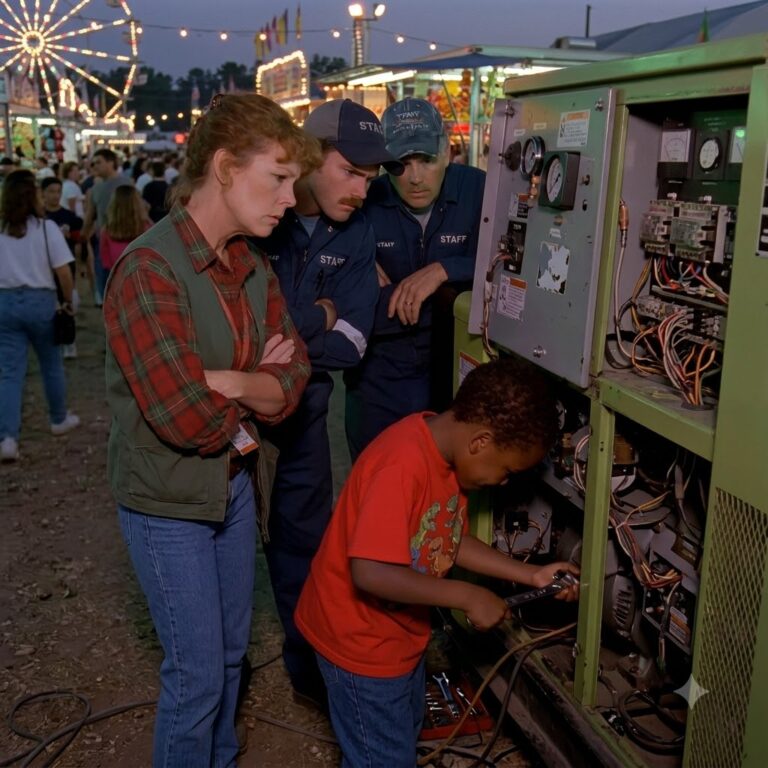
Machines never cared who owned the toolbox. They responded to pressure, friction, timing, and the small ordinary failures that people became impatient enough to overlook. Caleb liked that fairness. He also understood that understanding a machine did not give him permission to touch it.
Evie arranged an approved courier with a clean vehicle and the required food handling conditions. The extra fee ate much of the profit, but the pastries arrived before the final agreed time. Mrs. Parker sent a photograph of teachers eating around a conference table. She added that several had asked where they could buy the rolls for their families.
Hart returned to the shop expecting to find Evie defeated by the overnight rush. Instead he found Rochelle washing the last pans and Caleb writing down the new inquiries. Hart asked how much they made on the order. Caleb answered that he did not know the final margin yet because the courier fee and rejected pastries needed counting.
A grown man in a sports jacket at the next table laughed and called Caleb too serious for his age. Hart looked at the order ledger and noticed the boy had recorded not only sales, but wasted ingredients and customer complaints. Evie said she wished she had started doing that years ago.
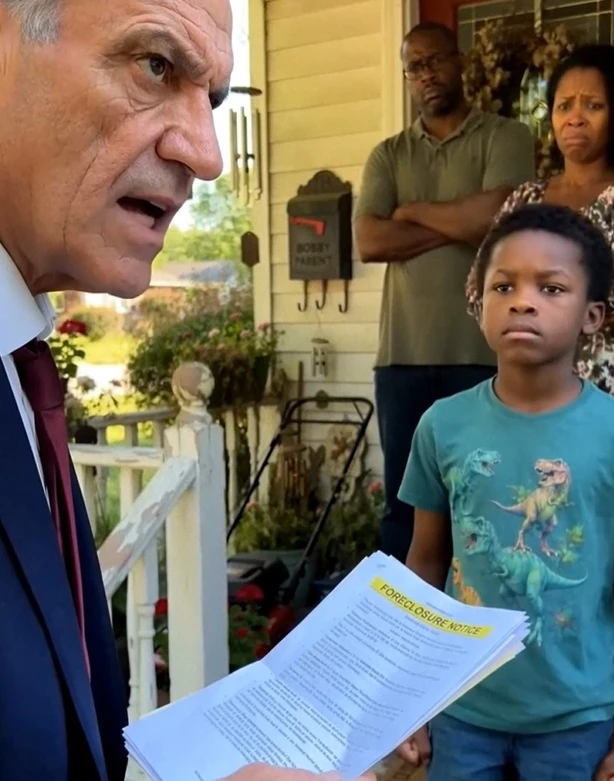
When Hart offered to buy the bakery again, he added that the boy could keep working there as long as somebody supervised him.
—
Caleb hated the offer because Hart spoke as though the building would stay the same no matter who owned it. But Miss Evie was seventy and tired, and her lease renewal bill was larger than last year’s entire autumn profit. Rochelle told Caleb they could not judge Hart’s proposal by whether he was rude. They had to examine what it would mean for wages and the neighborhood.
When money is short, time becomes another bill. Rochelle counted the miles before her next shift, the groceries left in the refrigerator, and what a missed afternoon could mean for rent. Caleb noticed those calculations even when she pretended she was only tired.
Evie asked her accountant to review the business. The numbers were difficult: morning sales were strong, afternoons weak, and custom cakes barely covered their labor hours. Rochelle said the recipes were not the problem. They had never advertised their catering service, and the website still displayed hours from before the pandemic.
Caleb suggested a simple weekly preorder sheet with pickup times and a small rotating menu. He had noticed that customers complained when favorite pastries sold out, then stopped coming because they assumed the bakery was unreliable. He did not ask to manage the business. He asked Evie if the adults could test his idea for two weeks and measure the results.