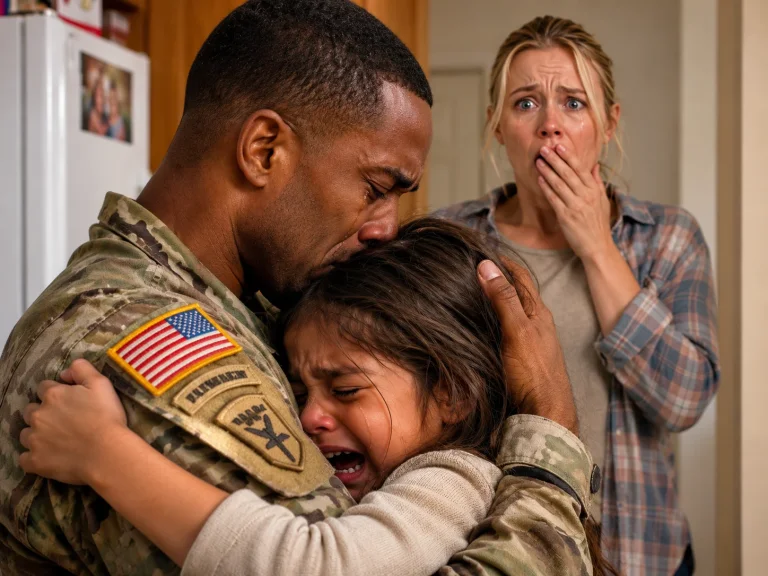
—
Has there been stress at home?”
Nia looked at Marcus first. He nodded.
“You can tell the truth.”
So Nia told it in bits and pieces, the way frightened children do: floor breakfasts, waiting for dinner until everyone else was done, snacks hidden in her room, timeouts in the laundry room, being called greedy, being told not to bother Daddy. Dr. Patel’s face remained calm, but Marcus saw anger flicker there too. After the exam she stepped into the hallway with him.
“This is neglect,” she said.
“Chronic enough that I have to document it carefully.
If you are the protective parent, she needs immediate stability, regular meals, and follow-up counseling.”
Marcus thanked her and asked for copies. When they left, Nia slipped her hand into his.
“Am I sick?”
she asked.
“No, baby.
But you’ve been hurt in ways people couldn’t see.”
She thought about that.
“Because I was small?”
He knelt beside the truck.
“Because an adult made cruel choices.
None of this is your fault.”
Back home he ordered groceries online—fruit, oatmeal, bread, yogurt, chicken, juice boxes, everything Nia loved but never seemed to receive enough of. He also bought a small keypad pantry lock. Not to keep Nia out. To keep Lauren from controlling food ever again.
When Lauren asked why delivery boxes kept arriving, he answered flatly, “Because my daughter is going to eat like a child who lives here.”
She tried tears next.
“Marcus, I know I haven’t handled everything perfectly, but you are humiliating me in my own house.”
He looked at her a long moment.
“You humiliated a six-year-old in hers.”
That evening, as he tucked Nia in with a full stomach and a night-light shaped like a moon, she whispered, “Will she be mad tomorrow?”
Marcus smoothed her curls away from her face.
“She can be whatever she wants,” he said.
“But tomorrow, she won’t be in charge of whether you eat, sleep, or feel safe.”
Nia searched his eyes. For the first time since he came home, she seemed to believe him a little. The next day Marcus went deeper. He reviewed bank statements from the household account where he deposited money for groceries, school activities, clothes, and Nia’s needs. He found payments for Sophie’s dance lessons, Ethan’s hockey camp, Lauren’s salon appointments, and a weekend spa package. None of that was forbidden. What shook him was what was missing.
There were almost no purchases tied clearly to Nia in the past six months. One pair of shoes. A discounted backpack. Two school lunch payments after repeated low-balance notices. Each transfer seemed explainable alone, but together the payments formed a pattern that pointed directly toward Lauren and away from chance.