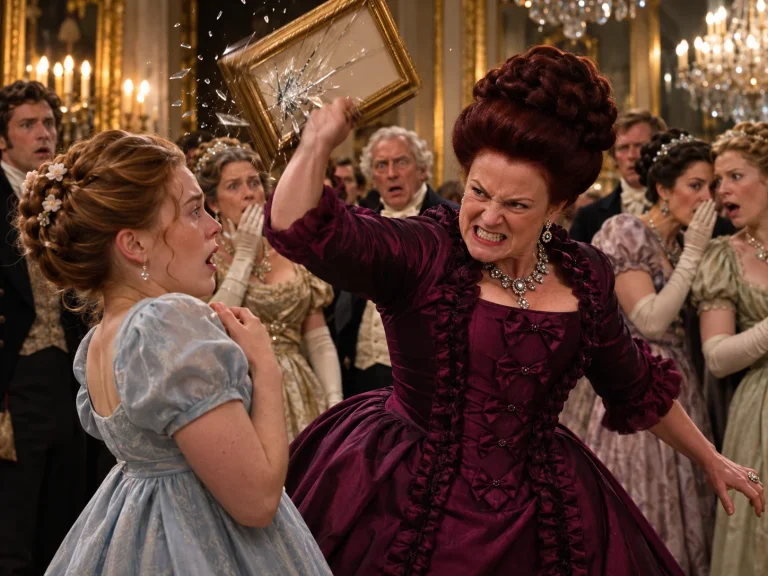
She asked Fenwick to appoint an independent adviser for her separate financial interests. He recommended her family solicitor. Augusta learned of these arrangements from a footman and burst into the corridor, demanding that Manie be confined for her own protection. Mrs. Finch, still attending the duchess, stood in front of the chamber door. “Her Grace has not invited you,” she said. Augusta raised her hand as if to slap her. Ruth appeared behind the midwife with two other servants who had witnessed the dining room assault.
Nobody moved aside. For the first time, Augusta discovered that fear was not an inexhaustible form of authority. She turned and walked away. In her private room she began writing a statement blaming every order on the absent steward.
—
The statement did not survive scrutiny. Augusta claimed Rook had invented the affair, drafted the false letters, and persuaded servants to act without her knowledge. But the footmen independently remembered her giving instructions, while Miss Vane possessed payment receipts signed with Augusta’s personal seal. The constable examined each claim rather than accepting a confession from the most convenient servant. In the course of the inquiry, Ruth revealed that she had overheard Augusta ask for a drink “strong enough to remove the difficulty.” Dr.
Bellamy would not speculate about the liquid’s exact composition. It had not been swallowed, and no reliable analysis could establish its purpose from appearance alone. What mattered was the threat: Manie had been restrained while adults attempted to force it into her mouth against her will. A noble household could not decide that violence became lawful when it was called a family matter. Meanwhile, Lewis visited his sister-in-law with a packet of letters written over the previous year. They concerned parish relief, schoolbooks, the cottage roofs, and finally the discreet midwife appointment.
All were ordinary. Manie smiled at one describing a stubborn goose that had stolen Lewis’s glove. Then her smile faded. “She made kindness into evidence against us,” she said. Lewis promised to speak under oath if required. He had enjoyed the privileges of being the younger son, never responsible for accounts or dependents. Now he understood how much harm could hide beneath a family name. That night Miss Vane sent Jake a request for a private audience. She feared Augusta would dismiss her without wages and claim she had acted alone. Jake refused to meet her privately. He asked Fenwick to arrange a recorded statement with independent witnesses. Miss Vane’s reply arrived at dawn: There is another letter, and it was written by your mother.
—
The other letter had been addressed to Lady Carrow weeks before Manie’s pregnancy became known. Augusta described her daughter-in-law as fragile, unsuited to the burdens of the dukedom, and likely to retire from society. She proposed reviving the old understanding between Jake and Lady Carrow’s daughter once “the present obstacle” had been removed. There was no lawful path to simply exchanging one wife for another, but Augusta wrote as though a woman’s disgrace could make the impossible inevitable. Fenwick made no promises of immunity.