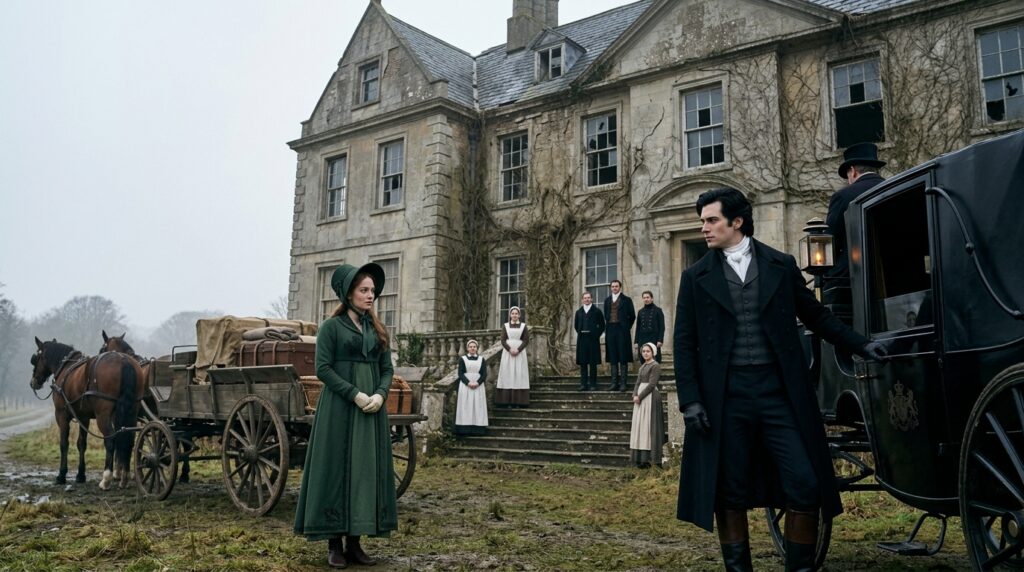
The servants watched from the castle steps in horrified silence. No one dared speak. No one dared interfere. Duke Alexander Ravenshire climbed into his carriage without looking back.
Standing 20 ft away, his wife remained alone beside a single wagon carrying only a few trunks, two horses, and enough provisions for several weeks. Beyond her stretched Blackthorn Manor, or rather, what remained of it. Its stone walls were cracked. The roof sagged in several places. Weeds swallowed the gardens. Broken windows stared like empty eyes across abandoned fields.
Once, Blackthorn had been the pride of the Ravenshire family. Now everyone called it the Dying Manor. Alexander adjusted his gloves.
“If the empty manor suits you so well…”
He finally looked toward Amelia.
“Let it be your grave.”
The words landed with terrifying calmness. No shouting. No anger. Simply cold certainty. Amelia lowered her eyes.
“I never asked to be sent away.”
“You asked me to trust your judgment. You insisted this estate could be restored. It cannot.”
He climbed fully into the carriage.
“I have no intention of wasting more money chasing your impossible dream.”
She stood perfectly still.
“Then why leave me here?”
Alexander’s expression never changed.
“Because if you insist on believing in ruins, you may live among them.”
The carriage door closed. Moments later, it disappeared down the long oak-lined road. Amelia remained standing alone until the sound of wheels completely vanished. Only then did she turn toward the abandoned manor.
“Well,” she whispered softly, “it appears it’s just us now.”
The front doors barely opened. Rusted hinges screamed. Dust filled the entrance hall. Rainwater dripped through broken ceilings. The grand staircase leaned dangerously. Furniture lay buried beneath white sheets and decades of neglect.
Most people saw corpses. Amelia saw something else. She knelt and brushed dust from the old marble floor.
“It remembers.”
Mrs. Eleanor Finch, the elderly housekeeper who had volunteered to accompany her, looked confused.
“The manor? The people?”
Amelia smiled.
“Houses remember those who refuse to abandon them.”
That first evening, they explored every room. Nearly half remained usable. The kitchen still possessed a working hearth. The wells produced clean water. The southern orchard, though neglected, still contained living trees beneath wild growth.
Most importantly, the surrounding villages remained occupied. Poor, forgotten, but occupied. Amelia closed her notebook.
“We are not rebuilding a house.”
Mrs. Finch nodded.
“What are we rebuilding?”
“A community.”
The following morning, she visited the nearest village. Many cottages leaned almost as badly as the manor. Children wore patched clothing. Fields remained half cultivated.
The village blacksmith looked suspicious.
“You’ll leave by winter.”
“So everyone says.”
“We’ve heard promises before.”
“I’ve brought no promises.”
She smiled gently.
“I’ve brought work.”
Few believed her until she began working herself. Not directing, working. She helped repair fences. She cleaned abandoned wells. She planted vegetables beside widows. She listened more than she spoke.
Within weeks, people stopped calling her Your Grace. Instead, they simply called her Miss Amelia. She preferred it.
Meanwhile, Alexander rarely thought about Blackthorn. London occupied his attention. Political dinners, Parliament, hunting parties. Every now and then, someone asked,











