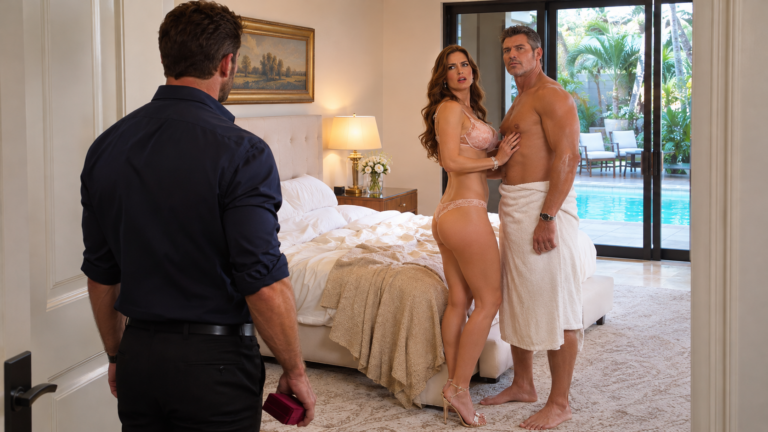
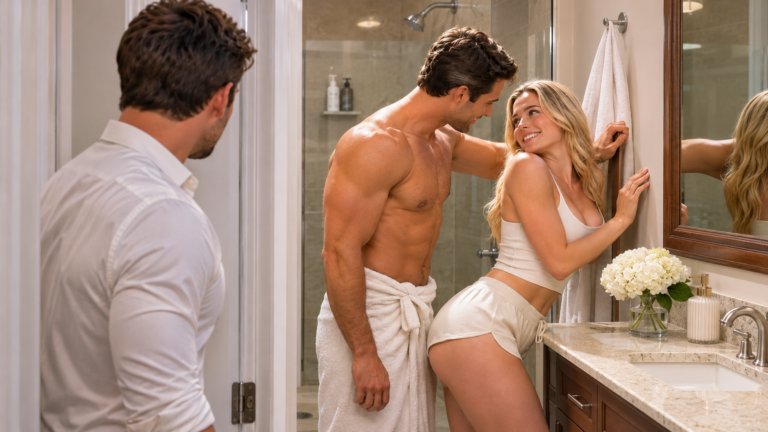
And the amount was large enough to stop his breathing for a moment.
—
The transfer was $6,800. Utah refreshed the banking app, hoping he had misunderstood the line. He had not. It was the third payment that month to Afterglow Events, a company whose name he recognized from the neon sign outside the club Lena loved. The earlier transfers were $4,500 and $8,200. All three had come from the account they called the house fund.
It wasn’t technically a secret account. They were both listed owners. Lena had every right to see it, and she could move money from it. But they had agreed, on paper, that its purpose was to renovate Evelyn’s home before winter. Her knee surgery was scheduled, and the bathroom door was too narrow for the walker she would need during recovery.
Utah ran a modest automotive upholstery shop outside Columbus, Ohio. His father had started it with two sewing machines and a borrowed garage. He wasn’t rich, although the little house he shared with Lena looked comfortable from the street.
When they met, Lena was twenty-three, working reception at a salon. She made him laugh during a rough year after his father’s death. He never asked her to become the tidy, serious woman his relatives expected. She loved music, dancing, and people. He loved her bright confidence. For a long time their differences felt like a promise of adventure, not a warning.
The first argument about bars came after Lena started coming home at three in the morning without answering calls. Utah worried about her safety. She said he embarrassed her by asking questions. Soon, any concern was described as control. Utah sometimes sounded jealous, and he knew it. He apologized when he did. Still, he couldn’t make sense of the lie that there was nothing to discuss.
At two in the morning Lena sent a message: Don’t wait up. The host booked another table for us.
Utah did not ask who “us” meant. He opened the account history for the entire year, printed the legitimate statements available to him, and arranged them across the kitchen table.