She married him 11 minutes later. Afterward, at the wedding ball, she trod on his foot twice in the first dance because she could not dance and never had been able to, a fact that had made her governess despair and her cousins cruel and which she had long ago filed away as simply one of the things that was true about her like her height and her head for arithmetic. He said:
“Never mind, Duchess, we shall sit the next one out.”
That was the first time he called her Duchess. She noticed it and put it away and told herself it was the day.
They were married in June and by October she understood the shape of what she had done. He was kind. That was the thing she could never make anybody understand afterward. He was never cold and never cruel. He was courteous at every hour of the day and night.
He asked after her health and deferred to her about the household and came to her rooms with the consideration that never once tipped into demand. He simply lived somewhere she could not reach and came to the surface at intervals to be pleasant to her and went back down. And he called her Duchess at breakfast, in the carriage, over the estate books, in the dark. Duchess, pleasantly, courteously, the way a man addresses an institution, and never once in four months, Cordelia. She took the books in hand in August because the agent was robbing them, and she was the only person in the house who could read a ledger properly.
She put in the drainage. She started on the cottages. She sat with tenants who had been told for 30 years that the family did not concern itself with such things, and learned their children’s names, and threw herself at the whole enterprise with an energy that had very little to do with duty. She was, she knew perfectly well, trying to become indispensable on the theory that a man who cannot love you might at least one day look up and be glad you are there.
“You have a better head than I have, Duchess,” he said in September, looking at the quarter’s figures. “I don’t know what the place would be without you.”
She went up to her room afterward and cried for 11 minutes by the clock, and then washed her face and went down to dinner. The worst of it was the library. She came in unannounced one afternoon in October and found him standing at the window doing absolutely nothing at all with an expression on his face she had never seen and could not name. And he turned and put the pleasant face on like a man putting on a coat and said:
“Duchess, is it 4:00 already?”
She thought about that face for a long time. She now knows exactly what it was. It was the face of a man remembering.
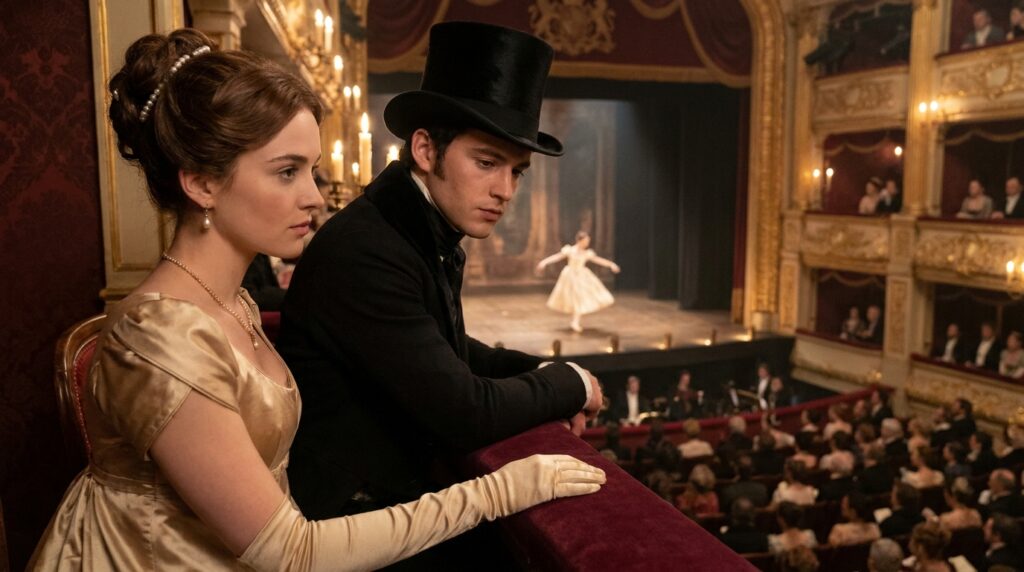
Elise Marchand came to London in the March of the following year, and by April, she was the most famous woman in England. The name was invented, obviously. Half of London knew perfectly well she had been born Eliza March somewhere in the north, and half of London found this romantic rather than otherwise, and the papers settled on the phrase ‘our English swan,’ which they printed approximately 400 times that spring. She had gone to Paris. That was the part nobody had predicted.











