“I remember,” Lynn said slowly. “You said you were thinking about going.”
“I went,” Noah said. “And Mom, they gave me a scholarship. A full scholarship. Everything is paid for: tuition, a place to live, everything.”
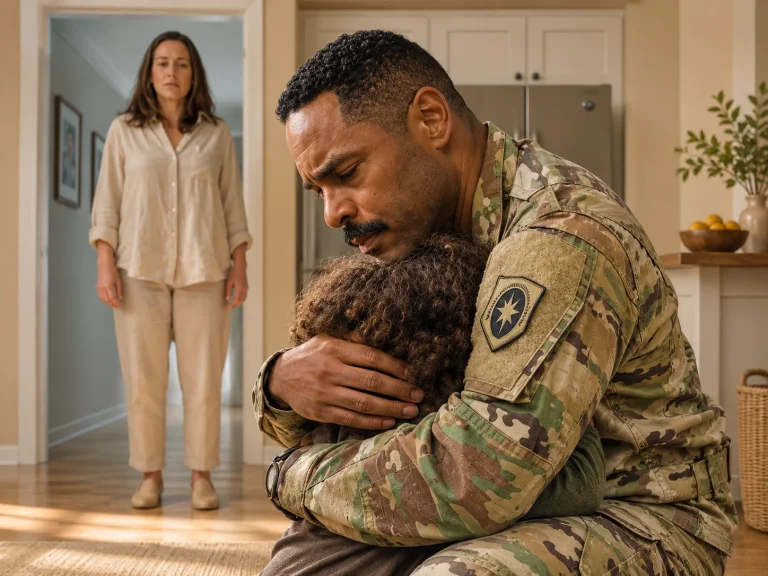
More silence. Then Noah heard a sound he had not heard in a long time: his mother was crying.
“Mom? Mom, are you okay?”
“I am okay,” Lynn said between sobs. “I am more than okay. Oh, Noah… your father would be so proud. He would be so, so proud.”
Now Noah was crying, too. They sat there, mother and son, separated by miles of city streets, weeping into their phones.
“I have to go back to work,” Lynn finally said, her voice still thick with tears. “But tonight, when I get home, you have to tell me everything. Every single detail. Promise me.”
“I promise,” Noah said.
He ended the call and sat at the bus stop, watching the cars go by. The world looked different somehow: brighter, fuller of possibility. For the first time in three years, Noah felt like the future was not just something to survive; it was something to look forward to. The bus came and he got on.
He rode through the city, looking out the window at the buildings and the people and the endless gray streets. Soon, he thought, he would be living near the academy: he would have a room of his own, a real bed, access to practice rooms with beautiful pianos; he would study music every day, learn from professors who had spent their whole lives mastering their craft. It was almost too much to take in. When Noah got home, he went straight to his room.
The apartment was small, just two bedrooms and a tiny kitchen. His room was barely big enough for a bed and a desk. On the wall above the desk, there was a photograph of his father: he was sitting at the old piano, smiling at the camera, his hands resting on the keys. Noah looked at the photograph for a long time.
“I did it, Dad,” Noah whispered. “I kept my promise. I kept playing.”
He touched the edge of the photograph gently, then sat down on his bed and closed his eyes.
While Noah was riding the bus home, something else was happening across the city. James Park was sitting in his dorm room at the academy, watching the video he had recorded. He had watched it five times already; each time, he noticed something new: the way Noah’s shoulders relaxed when he started playing; the way his whole body seemed to move with the music; the expressions on the judges’ faces as they realized what they were witnessing. James knew he should ask permission before posting the video; that would be the right thing to do. But he also knew that if he waited, if he asked and they said no, the world would never see this.
And the world needed to see this. He made his decision. He uploaded the video to YouTube with a simple title: Boy told to keep it simple turns piano into magic. He added a brief description explaining what had happened: how Noah had been dismissed after thirty seconds, how he had asked for sixty more, how he had transformed a children’s song into something extraordinary.