THE WOMAN WHO HELD THE PASS
Chapter 1
“Your daughter will pour for my men, Mrs. Bell, and you will thank me for keeping this town alive.”
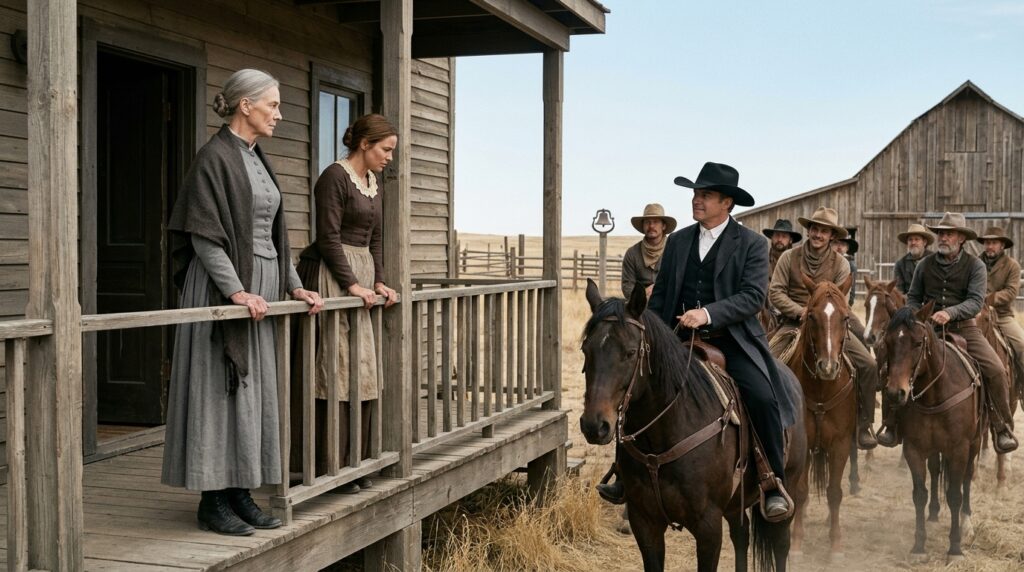
Silas Rusk said it from the saddle, smiling as if he had offered a kindness. Six riders crowded the yard of the Bell ranch, their horses steaming in the cold Wyoming dusk. Nora Bell stood on the porch with her mother, Martha, a sixty-three-year-old widow in a plain brown coat. The youngest rider laughed at the old woman’s small frame.
“That’s the help you sent for?”
Martha studied the men, then the narrow pass behind them.
“Before my husband died, he left me one good rifle,” she said. “Any man who believes he can take this house may try to make me put it down.”
Their laughter grew louder. Rusk tipped his hat.
“We came for the pass, not your furniture.”
“Then you should have brought a better offer.”
Nora felt her mother’s hand touch her sleeve. It was not a plea to stay quiet. It was a warning not to move. Rusk’s smile thinned.
“Tomorrow, the freight wagons use Bell Pass. Your gate will be open.”
“No,” Nora answered.
One rider leaned forward, his revolver visible. Martha did not reach for the rifle beside the door. She only asked how far the old quarry bell stood from the porch. The men glanced toward the ridge, confused.
“About a hundred yards,” one said.
Martha nodded.
“Then you have time to reconsider before supper.”
Nora heard the men settle in their saddles and understood that Rusk wanted the threat remembered longer than the visit. She kept her chin level until the last horse turned. Only then did she notice the small tremor in her knees. Martha did not mention it. Martha stayed beside Nora until the yard was quiet again.
Chapter 2
Three weeks earlier, Nora had been counting flour sacks, not gunmen. Her husband, Samuel Bell, had died when a freight wagon overturned on the steep road above Bell Pass. The official report called it an accident. Nora had accepted that explanation because grief left little room for suspicion.
Samuel had been careful with horses, wheels, and weather. He had also spent the last month arguing with men from the Continental Freight and Mining Company, who wanted a private road through the pass. Their proposed route would cut across the Bell property and leave three neighboring farms dependent on a company gate. Samuel refused to sign.
After the funeral, the company’s local agent, Silas Rusk, offered Nora a sum that would not cover the ranch’s debts. When she declined, two hired hands quit, a section of fence was pulled down, and the blacksmith refused further credit. The sheriff advised her to be practical.
“A widow cannot fight a corporation,” he said.
Nora rode home beneath a sky the color of old tin. She found Samuel’s coat still hanging beside the kitchen door and his last survey map folded beneath a ledger. A red pencil line marked a route through the pass that did not match the company’s map. At the bottom Samuel had written: “Ask Martha what happened at Red Hollow.”











