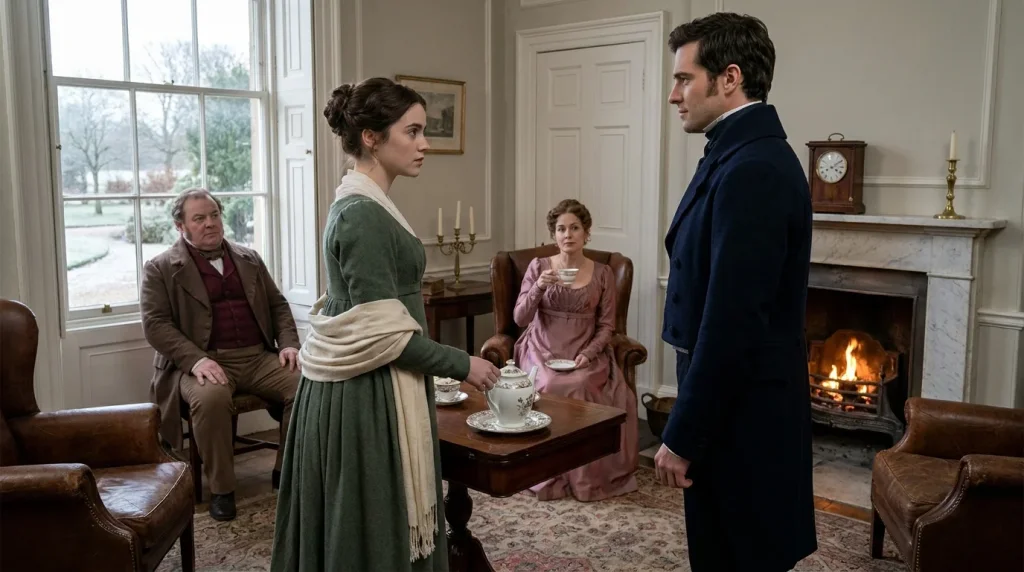
Every family keeps an account of what a daughter costs. It is not her poverty that marks her down. It is the people she refuses to leave behind.
“I cannot marry anyone,” Honoria Fenwick said. “I have four brothers to raise.”
The Duke of Raesford did not so much as glance at the cracked ceiling.
“Then I’ll need a larger house,” he said.
Nobody in the parlor breathed. Honoria Fenwick was five-and-twenty, unmarried, and the tenant of a house whose lease belonged to the man standing on her hearthrug. She had been proposed to eleven minutes earlier in front of her uncle and the most talkative woman in the North Riding. She had expected him to end the lease. She had expected a cold voice, a stated date, and a footman left at the door to watch them pack.
She had not expected to be asked, in her own parlor, to become a duchess. Lady Prescott’s teacup had stopped halfway to her mouth. Mr. Josiah Culpepper sat by the only good window with the face of a man watching a dog walk on its hind legs. Both of them had come to see her ruined. It was the bright, patient interest of people early to a hanging.
The parlor smelled of coal smoke, boiled cabbage, and the particular economy of a house where both were counted. The fire held three coals. Her uncle sent three coals a day to Harwick Grange and had done since Michaelmas. He called it his little contribution. Honoria set down the teapot.
“Your Grace is joking,” she said.
“I am not known for it.”
He was six-and-thirty. He was not tall. He stood an inch below her, compact and square through the shoulders in a dark coat that had been fine once and was now merely well brushed. His hair was dark brown, gone gray at the temples before time. His eyes were hazel.
In the thin window light they looked more green than brown, and they did not leave her face. He kept forty rooms at Raesford Hall and was said to live in three of them. He was also said to have let his own brother die abroad rather than pay the boy’s debts. Nobody in Thistlewood had ever heard him deny it.
“You do not know me,” Honoria said.
“I know you corrected the overseer’s figures at the vestry meeting in October. He had added the poor rate twice.”
“Yes. That is not a reason to marry anyone.”
“It is a better reason than most of the ones I have been offered.”
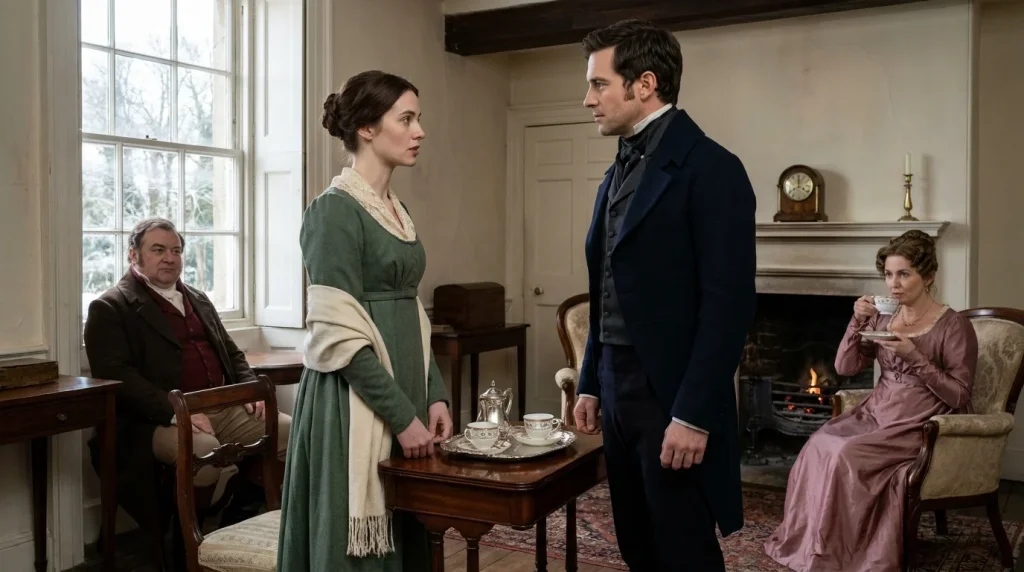
Lady Prescott set her cup down at last.
“Four boys,” she said to the room in general. “One does wonder how Miss Fenwick finds the leisure to be proposed to at all.”
“I don’t,” Honoria said. “His Grace arrived between the laundry and the mutton.”
The parlor went silent. Lady Prescott opened her mouth and found nothing in it.
“The mutton,” Honoria added, “will be burning.”











