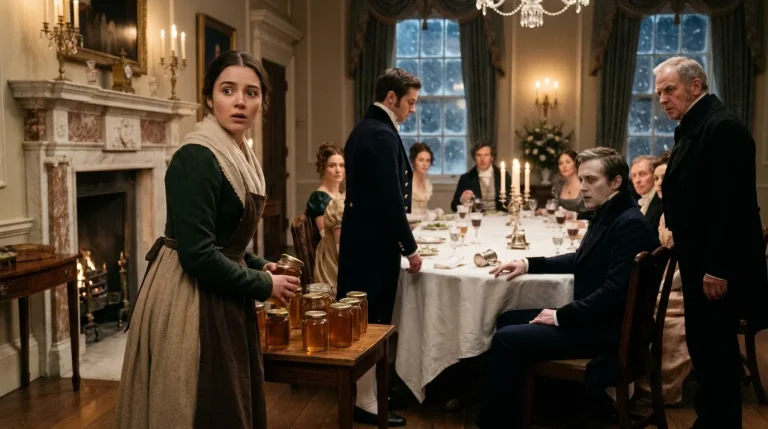
A few people in the gallery murmured approval. Judge Ward silenced them. The legal question was narrower than the crowd wanted. The court would not determine the entire company’s conduct in one morning. But there was enough conflicting evidence to suspend the foreclosure and order production of complete account records.
The Mercers would remain on the farm pending review. Amos closed his eyes. Caleb expected relief to feel like victory. Instead, it felt like being allowed another breath.
Outside, reporters from two county newspapers were waiting. Hale pushed through them without speaking. Mara stood beneath the courthouse awning and saw him glance once at the crowd. He no longer looked irritated.
He looked afraid of what they might compare next. For their neighbors, the lesson was different: a problem that belongs to one household today can reveal a weakness that affects everyone tomorrow. Nothing about the outcome erased hardship, but it restored the family’s ability to make choices with facts instead of fear. That was why the moment remained important to them long afterward.
The injunction saved the farm for the moment, but it also made life more difficult. Prairie Land stopped extending seasonal credit to anyone who publicly challenged the company. Merchants who depended on the lender became nervous. A feed supplier told Amos he would now require cash. Another man warned Caleb that powerful institutions did not forget humiliation.
The victory at court had not created money where there was none. Harvest was still weeks away, and the Mercers still owed legitimate debt. Mara understood the danger of turning Hale into a cartoon villain. Some company employees were ordinary clerks. Some borrowers had genuinely missed payments.
If the families exaggerated, they would make it easier for the company to dismiss everything. So she created a rule for the meetings that began taking place in Reverend Cole’s church basement: no rumor without a document, no accusation without a name willing to stand behind it, and no claim that could not be separated from what remained uncertain. That discipline frustrated people who wanted a dramatic reckoning, but it strengthened the case. Samuel Pierce spent days rebuilding transaction histories from his duplicate book. The county clerk compared postmarks against notice dates.
Clara Wynn discovered that a fee charged to her account matched a fee on three unrelated farms down to the penny, despite different loan sizes. Caleb traveled between homes collecting copies. He began to see the road network differently. Every farmhouse carried a private story of debt, pride, miscommunication, and fear. The bell had not revealed a simple world of victims and villains.
It had created a place where people could compare experiences. Some claims fell apart under scrutiny. Others became stronger. Hale sent Amos a private offer: the company would cancel the foreclosure, forgive disputed fees, and grant a favorable extension if the family withdrew its complaints and stopped assisting other borrowers. Amos read the letter twice.
Twenty-four hours earlier he might have accepted anything that protected the farm. Now he handed it to Mara. She asked what he wanted to do. Amos looked across the field toward neighboring roofs.
“If we take this,” he said, “the bell only rang for us.”
He tore nothing up. He simply placed the letter with the other evidence. Nothing about the outcome erased hardship, but it restored the family’s ability to make choices with facts instead of fear. The story endured because it did not require anyone to become extraordinary; it required ordinary people to refuse convenient silence. Even when tempers rose, the strongest moments came when someone lowered a voice, opened a ledger, and asked what the numbers actually showed. That was why the moment remained important to them long after the immediate danger had passed.
Three weeks later, a state banking examiner arrived in Red Creek. The newspapers had published careful summaries of the court dispute, avoiding claims not yet proved. Enough borrowers filed formal complaints that regulators could no longer treat the matter as a single foreclosure disagreement. The examiner, Thomas Keene, was a patient man who disappointed everyone by refusing to announce conclusions. He collected ledgers, contracts, receipts, and correspondence.