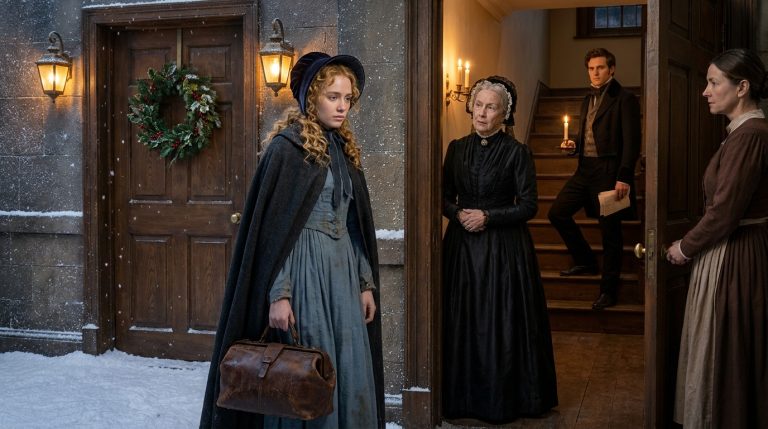
He found Carson at a modest lodging house three streets away. The elderly butler sat in a narrow parlor, reading a newspaper by the light of a single wax candle. When Alistair entered, soaked to the skin, Carson did not rise. That, more than the chain on the gates, marked the absolute completion of his downfall.
“The bank acted quickly, Your Grace,” Carson said, folding his newspaper slowly and carefully. “Mr. Hopkins surrendered the keys yesterday morning. The creditors have claimed the unentailed assets. The horses were taken by the bailiffs at noon.”
Alistair collapsed onto a wooden chair opposite the old man. It creaked beneath his weight. “And what of you, Carson?”
“I have accepted a position with Lord and Lady Hastings. I begin on Monday.” Carson regarded him with pale eyes entirely free of malice, which somehow made it worse. “I packed two cases of your personal clothes and shaving things. I had them delivered to a solicitor’s storage room on Fleet Street. Everything else belongs to the court.”
The decline was not a sudden plunge. It was a long, painful slide over broken glass. The months that followed became a public spectacle of humiliation.
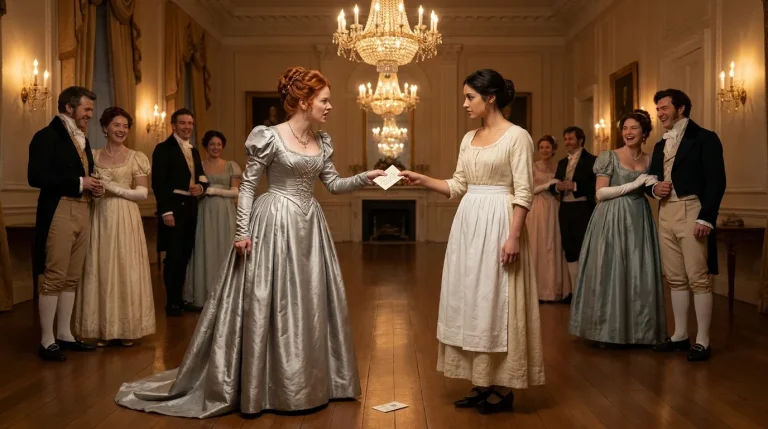
The Mayfair townhouse Alistair had bought for Genevieve went to auction first. He attended, standing at the back of the crowded room with his collar turned up. He watched the silk curtains, Persian carpets, and mahogany bed sold to the highest bidders. The people bidding were men with whom he had once drunk at White’s. They saw him standing there. Not one of them met his eye.
Then came the paintings, the silver, and the vast library of Rothbury House. Alistair rented a tiny three-room flat in one of London’s poorer districts. Its walls were thin enough for him to hear his neighbors arguing about the price of mutton. He had no servants. He taught himself to shave, often cutting his chin with trembling fingers and staining his frayed linen collar with blood.
The law protected his title, and a small, untouchable trust provided him with an annual income of three hundred pounds. It was enough to prevent starvation. It was not enough to maintain a duke’s life. He stopped visiting his club. He ignored the few sympathetic letters from distant relations. He spent his days wandering the muddy streets like a ghost haunting a city that had forgotten his name.
One evening, almost a year after the encounter at Lyme Regis, Alistair sat in a cheap tavern near Covent Garden. The air was thick with tobacco smoke and the smell of stale ale. He sipped inexpensive gin and stared at the scratched wooden table. A man slid into the booth opposite him. It was Hopkins, his former estate manager.
Hopkins wore a fine wool coat and looked healthier and heavier than Alistair remembered. “Your Grace,” he said with a stiff nod.
Alistair looked up with bloodshot eyes. “I have no position to offer you, Hopkins.”
“I know. I am now employed by a trading concern in Bristol.” Hopkins reached inside his coat, produced a thick envelope, and slid it across the sticky tabletop. “I have been asked to deliver this to you.”
Alistair stared at the white parchment without touching it. “What is it?”
“A release of liability from Mr. Coburn, sir. The litigation concerning Wye River Mill has been settled.”
Alistair blinked, his fogged mind struggling to understand. “Settled? How? I do not have the capital to settle a dispute of that size.”
“You did not settle it,” Hopkins said quietly. “The company I work for purchased Wye River Mill. It bought out Coburn’s entire lease, discharged the outstanding obligations, and incorporated the property into its own operations. The injunction against the Rothbury estate has been lifted. The matter is secure.”
Alistair stared at Hopkins, his heart thudding slowly and painfully against his ribs. “What company, Hopkins?”
Hopkins stood and adjusted his lapels. He looked down at the wasted man in the booth with an expression blending pity and profound respect. “Sovereign Trading Company, Your Grace. Owned and directed by Mrs. Beatrice Roth.”
Hopkins turned and left the tavern. Alistair sat in the darkness, the envelope untouched before him. She had not saved him out of love. She had secured the land because she alone understood its true value, and she had taken the most valuable part for herself. She had picked through the wreckage of his failure and made it serve her purposes. There was nothing he could do to stop her.