—
The second letter from Lord Edmund was discovered in the estate chapel, tucked inside a hollow space beneath the old prayer book. It had been addressed to Cecily and dated days before his final illness. It contained ordinary hopes: that their child would know the tenants by name, that Cecily would never again need permission to read in the library, and that the family would one day accept her without whispering about where she had begun. Cecily read it alone first. Then she asked Declan to join her. She handed him the paper. The final sentence was underlined: If the child is a son, let him know he was wanted before he was named. Declan sat for a long time. He had been wanted by Edmund, loved by Richard, and protected by Cecily.
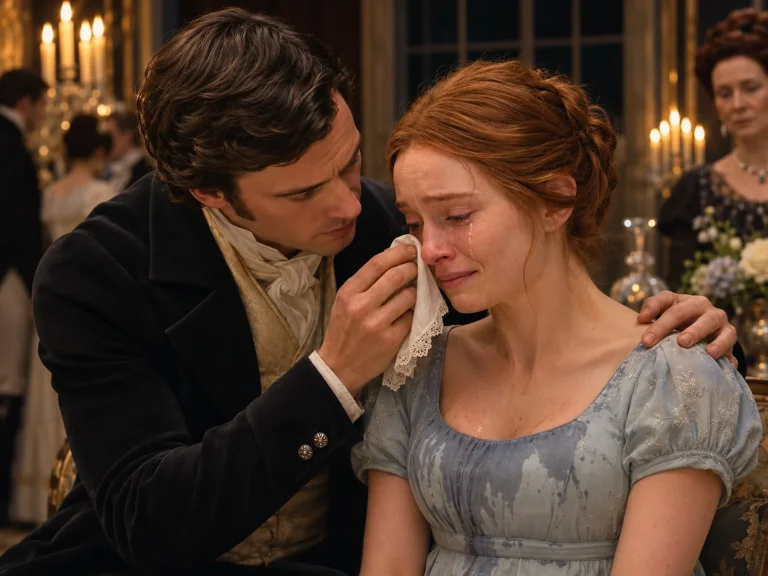
Yet each person had made choices that left him with a different version of himself. He realized he did not have to reject one father to honor another. He asked why she had kept the letter hidden. Cecily said she could not bear to read it after Edmund died. Richard had found it among her things and placed it in the chapel, where she could retrieve it when she was ready. She had never been ready. Declan took her hand. “You should not have had to carry it alone.” Cecily began to cry. It was the first time she had not tried to conceal her tears. Sella entered later with a list of families applying to the trust. She saw the letter between them and quietly set down her papers.
Declan explained the story without asking her to take sides. Sella listened, then said a child could be loved by more than one person without making that love less real. Cecily looked at her with new respect.
—
When spring arrived, the family held a small gathering to announce the revised estate arrangements and the opening of the Edmund Ashcombe Trust. It was not a ball. Declan refused to turn the event into a spectacle. Tenant families came to the house, along with the vicar, the schoolmistress, and the solicitor. The servants were invited to sit at the same tables as the guests. Cecily spoke first. She acknowledged that she had entered the house as a servant and spent too many years believing her past must remain hidden. She said Edmund had loved her without asking her to become someone else.
She also thanked Richard for raising Declan and protecting them after Edmund’s death. Declan announced that the legal review had confirmed his birthright and that the trust would benefit the estate’s tenants as well as the household. He did not present his parentage as a triumph. He called it a truth that should never have been treated as shameful. Sella stood near the doorway. She wanted the announcement to concern the trust, not her position. Declan respected that choice. After the guests departed, he found her in the garden. He asked whether she had considered the settlement. She said she had, and wanted one change: the cottage offered to her should remain hers even if they never married. Declan agreed immediately. Then he asked, quietly and without witnesses, whether she would consider becoming his wife.
Sella did not answer at once. She looked toward the house, where the windows glowed with lamplight and the servants were clearing the tables. She thought of the girl who had arrived with one trunk and a father’s primer, and the woman she had become since. “Yes,” she said at last. “But we will build the marriage together.” She kept her promise.