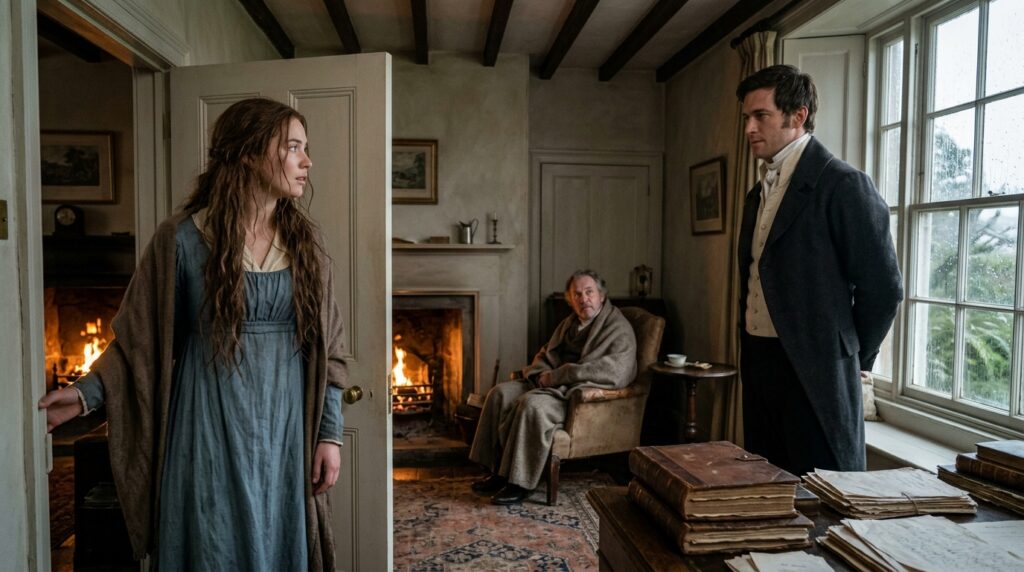
The weather turned in the middle of the afternoon, the way it always did on that coast in the week before Michaelmas. All morning, the sea had lain flat and pale under a thin sun, and the fishing boats had sat on the shingle with their nets spread to dry. Then a line of dark cloud came up out of the southwest, low over the water, and the gulls rose off the beach all at once and went inland, crying. Harriet Wickridge saw them go over the churchyard wall. She knew what it meant.
She did not stop working. She was kneeling in the long grass beside a leaning headstone with a sheet of paper on a board copying the last lines of an inscription that the salt wind had nearly worn away. If she did not take it down today, the first winter storm would take it for her. The first drops struck the paper while she was still on the second line. She bent lower and wrote faster.
“Also of Mary, his wife, who followed him.” The letters were soft as sand under her fingers. Behind her, the yew trees began to roar, and the wind came over the wall in a single long push that tore at her shawl and flattened the grass. Her bonnet had been hanging by its ribbons down her back. Now it went sailing across the graves like a frightened hen.
She let it go. She finished the line, slid the paper inside her bodice to keep it dry, and only then got to her feet. That was when she felt the pins go. The wind found her hair and pulled it loose all at once, and it came down past her shoulders in a wet brown tangle that whipped across her eyes and stuck to her mouth.
She laughed because it was all she could do. She caught the bonnet against the lychgate and ran down the lane with it in her hand, the rain coming sideways now, the whole gray sea behind her turning white along its edges. The rectory stood at the bottom of the lane where the village ended and the cliff path began. It was a low, crooked house with a slate roof and a garden full of wind-bent hollyhocks.
And she had lived in it every day of her 24 years. She came in by the kitchen door like a wave breaking, dripping on the flags, her skirts dark to the knee. Their housekeeper was at the table shelling beans. She looked up and her mouth fell open.
“Miss Harriet, look at you. Your father has a gentleman in the study this half hour asking for you. Come about the registers, he says. You’ll want to go up and put your hair to rights before you see him.”
Harriet pushed the wet hair off her face and looked at her hands. There was ink on the first two fingers of the right and grass stains on the cuff and a long smear of lichen from the headstone across the back of her wrist. She thought of the gentleman who usually came about the registers. They were elderly antiquarians in snuff-colored coats who wanted to know whether some knight of long ago had been buried in the chancel and who never once looked up from the page.











