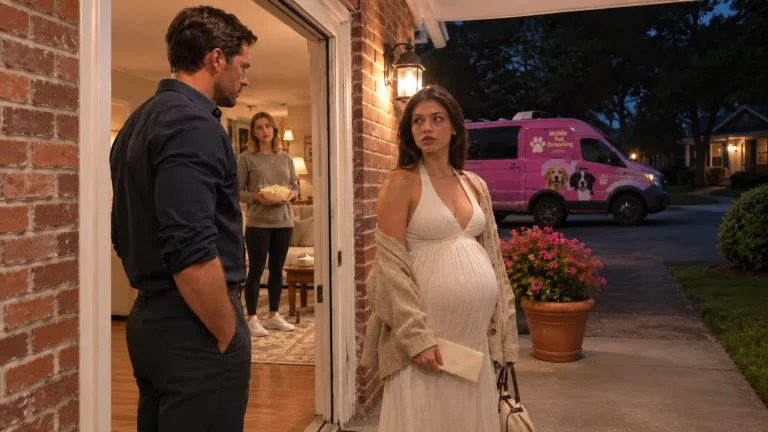
“Please go away,” she said without turning.
“I have been away twelve years,” the Duke said. “I find I no longer have a talent for it.”
She turned. He stood beside the door, a tall, dark shape against the glass, and did not come nearer.
“You should not be here. My aunt will be furious. People will talk.”
“They are talking already. I have made certain of that.”
He paused.
“I did not mean to distress you, Eleanor. I had prepared a great many fine speeches. Then your aunt said those things, and everyone laughed, and you smiled as though you were accustomed to it. And then she took your necklace.”
His voice roughened.
“I could not bear it. I am sorry. I ought to have waited.”
“You ought to have waited?”
From somewhere deep within her, anger flared, hot and astonishing.
“Is that what you say to me? I waited, Alexander. I wrote every month for a year after my father died, when I had no one in the world, and you never answered. Not one line. Then I heard you had found a rich woman in Lisbon. You might have written once, only once, to say goodbye. Instead, I sat at her table for twelve years as the poor relation a soldier had abandoned. Now you walk into her dining room and say you waited for me? Waited for what?”
Her voice broke on the last word. She turned away, ashamed, gripping the rim of an orange pot with both hands. Behind her came a long silence. Then the Duke spoke slowly.
“Eleanor. What woman in Lisbon?”
“Do not,” she said. “Please do not pretend.”
“I am not pretending. I swear to you on my brother’s grave. There was no woman in Lisbon. There has never been a woman anywhere. I wrote to you every week as I promised, from every camp and every posting. I wrote until I stopped. Until I received your letter.”
She turned.
“My letter?”
He reached inside his coat and took out a small, flat leather case, worn soft and dark with age. He opened it. Inside lay one folded sheet, yellowed and creased.
“I have carried this for ten years,” he said. “Through the Peninsula, through Waterloo. To punish myself, I think.”
He held it out.
“Read it.”
She took it with shaking fingers, unfolded it, and moved toward the window where the moonlight was strongest. The letter was short.
“Lord Alexander, I write to ask that you cease your correspondence with me. My circumstances have altered since my father’s death. I have received an offer from a gentleman of fortune in this neighborhood, and I have accepted it. I trust you will understand that our acquaintance was a passing youthful folly, and that you will make no further attempt to communicate with me. I wish you success in your career. E. Whitmore.”
Eleanor read it twice, then a third time. When she looked up, her face in the moonlight was as white as the paper.