The pearl had grown a little dull. She rubbed it gently against her sleeve until it shone. Then she put the ribbon around her neck and tucked the ring beneath her dress against her heart, where it had always belonged.
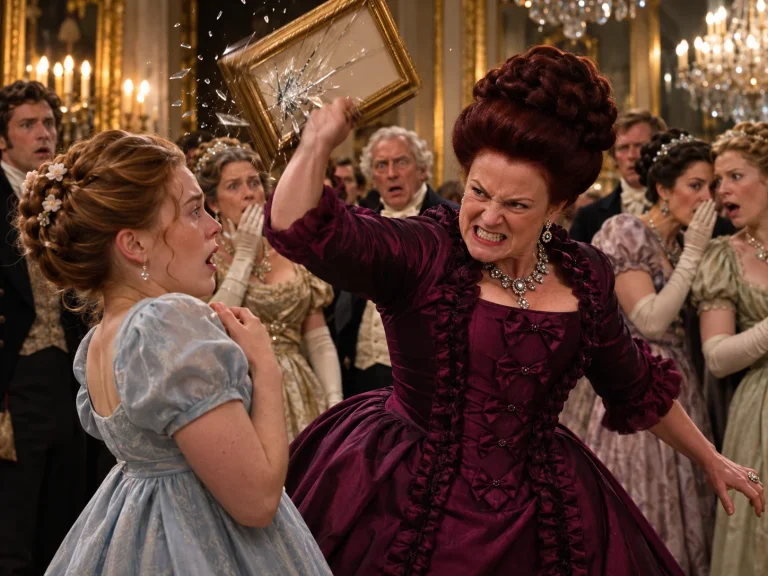
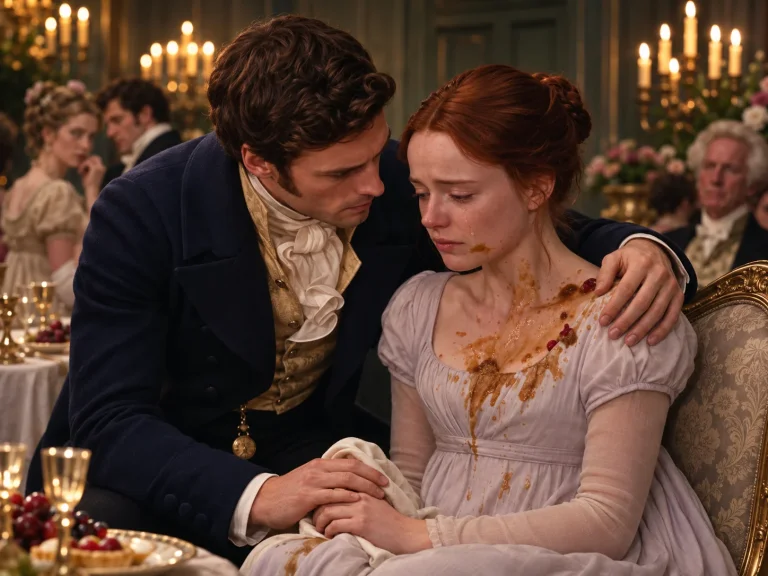
The wedding of Miss Clarissa Crane to Mr. Edmund Fairley took place on the following Wednesday at the parish church of St. Mary’s and was followed by a wedding breakfast at Crane Park, to which half the county was invited. Lady Harriet had spared no expense. There were swans made of spun sugar and towers of oranges and a cake with five tiers. And the long dining room had been opened into the drawing room to make space for 60 guests. It was, Lady Harriet had told everyone, to be the event of the season.
And she had invited, with great ceremony and a hand-delivered card, His Grace, the Duke of Ashford. He had sent no reply. Eleanor had not seen him since the night in the conservatory. She had heard only from Mrs. Pell that His Grace had been seen riding out early several mornings in a row, once all the way to Little Hartwell.
She did not know what it meant, but she found that she was not afraid. She had his letters now. Whatever happened, she would always know that she had been loved, not jilted, not forgotten, loved faithfully across a war and an ocean and 12 years of silence. It changed something in her.
That Wednesday morning, standing before the small mirror in her attic room, she did not reach for the gray dress. Instead, she took out a gown she had not worn in years, a soft, deep blue silk, the color of a summer evening. It had been her mother’s. She had altered it long ago for an assembly her aunt had then forbidden her to attend and folded it away.
She put it on. She did her hair a little differently, softer around her face, and she went downstairs. Lady Harriet saw her in the hall and stopped dead.
“What,” she said, “are you wearing?”
“A dress, Aunt,” Eleanor said pleasantly. “It is a wedding, after all.”
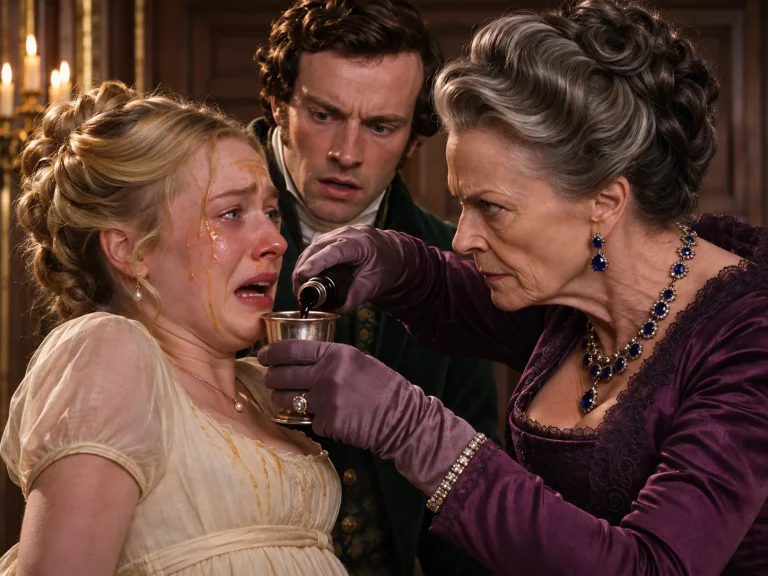
Her aunt’s eyes narrowed. But there was no time for more. The carriages were already arriving and Lady Harriet had to sweep away to greet them, and Eleanor went to see to the punch.
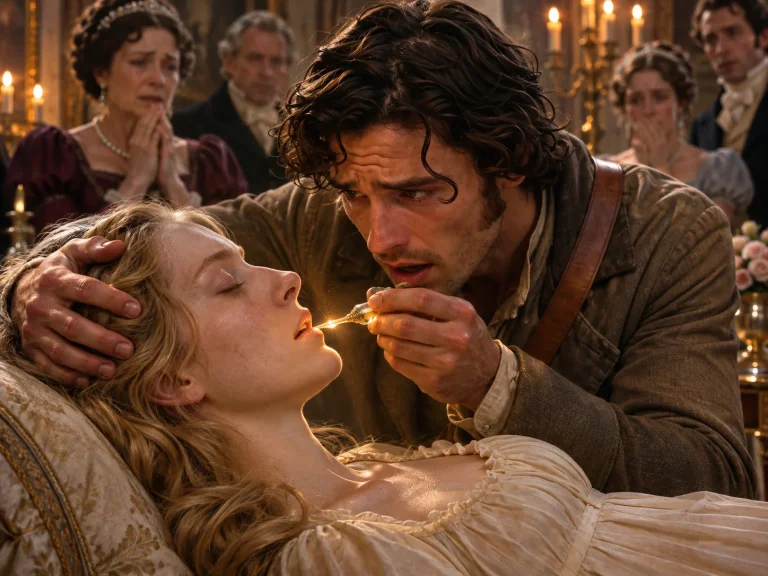
The breakfast was well underway and the room full of chatter and the clink of glasses when the butler appeared in the doorway and cleared his throat loudly.
“His Grace,” he announced, “the Duke of Ashford.”
Every head turned. He stood in the doorway in a plain dark coat. Behind him, to the general astonishment of the room, stood two other gentlemen, one elderly and stooped in the black coat of a clergyman, the other thin and precise with a leather portfolio under his arm. Lady Harriet recovered herself first. She hurried forward, all smiles, her hands outstretched.