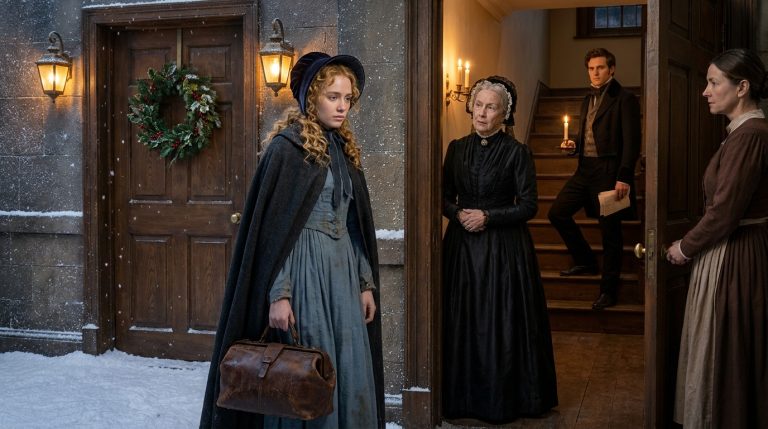
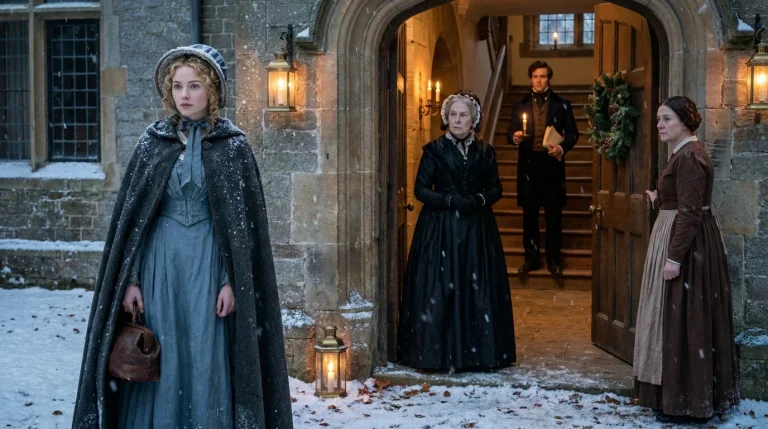
They danced one measured set while the pupils watched from the gallery. Arthur stood beside the Dowager, who had come but did not approach. The old rules had not vanished from society, but within that room they had been challenged by a school, a trust, and a woman who could now choose her own future.
A NAME OF HER OWN
Amelia and Henry married the following year in a modest ceremony at the school chapel. She retained her work and her independent income. The school expanded to include apprenticeships for girls who wished to become printers, teachers, bookkeepers, or musicians. The trust’s accounts were inspected each year by a committee that included former pupils. Rosalind eventually volunteered to teach drawing, having lost the security she once believed came only from marriage.
The Dowager never fully approved, but she ceased interfering with the trust. Amelia kept her mother’s portrait in the school’s entrance hall, where every girl could see it. The portrait no longer represented a family secret. It represented a woman who had refused to let her daughter inherit silence.
THE TENANT’S PETITION
A group of tenants from the Ashbourne estate arrived at the school opening with a petition. Their rents had been raised while the trust was being drained, and several families had fallen behind. Henry had inherited the leases but had never reviewed how the increases affected the cottages. Amelia asked to see the records before accepting his promise to reduce them. The tenants explained that a winter rent increase could mean less coal, fewer meals, or a child withdrawn from school.
Henry listened and agreed to an independent review. The decision was unpopular with the estate’s agent, who had profited from the old arrangement. Amelia reminded Henry that charity could not replace fair wages and reasonable rents. The trust would educate girls, but the estate also had to stop creating the poverty it claimed to relieve.
THE LAST PORTRAIT IN THE EAST WING
During repairs to the east wing, workers found a second portrait of Clara hidden behind a landscape. It showed her at twenty, standing beside Lady Beatrice with a music book in her hand. The inscription named her as a teacher and friend, not a servant. Amelia placed the painting beside the miniature in the school hall. The two images showed the same woman at different moments: first recognized, then erased.
Arthur said his mother would have wanted the portrait restored. Amelia answered that the painting mattered less than the promise behind it. Still, she wanted the girls to see that a woman who worked for a living could be remembered with dignity. The discovery also proved that the family had kept Clara’s likeness after claiming she had no connection to them.
THE CHOICE AT THE BALL
At the next county assembly, Amelia was invited as director of the school, not as a servant or a duke’s prospective bride. Lady Rosalind attended with her mother, and the Dowager Duchess sat beside the trustees. Henry offered Amelia the first dance, but waited for her answer. She accepted. The guests watched as they crossed the floor.
No one laughed. Arthur held the second dance card and asked Eliza Moore to join him for the next set, giving the scholarship teacher the same courtesy he had offered Amelia. The evening did not abolish class divisions, but it changed who was allowed to stand in the room without apology. Amelia understood that the real victory was not that a duke had chosen her. It was that she could now choose for herself.