A QUESTION OF CONSENT
Amelia told Rosalind that fear did not excuse cruelty. Both women had been taught that marriage determined their security, but only one had been given the power to humiliate the other. Rosalind admitted that she had envied Amelia’s ability to work and support her brother, while Amelia envied the protection Rosalind took for granted. Their conversation did not create friendship.
It did reveal how a rigid class system could make women compete for the limited safety offered by men and money. Later, Henry asked Amelia whether she would accept his proposal if the trust were restored. She answered that she might consider him, but she would not marry him because he had rescued her at a ball. She needed to know the man he was when no one was watching.
THE BANKER’S COPY
The bank produced a certified copy of the trust deed and the withdrawal order. The deed named Amelia as sole beneficiary and specified that the money could be used only for education, housing, or medical care. The withdrawal order transferred the principal to the estate’s general account. The signature attributed to Beatrice was demonstrably false: the date was six months after her death. The solicitor also found a note in the Dowager’s hand asking that the transaction remain “within the family books.”
Arthur took the documents to Henry. Henry was horrified to learn that his mother had used the money to pay debts connected to his own coming-of-age expenses. He had benefited from the theft without knowing it. The revelation made his public proposal more complicated: he could not ask Amelia to join a family that had stolen from her and pretend affection alone would repair it.
THE FAMILY COUNCIL
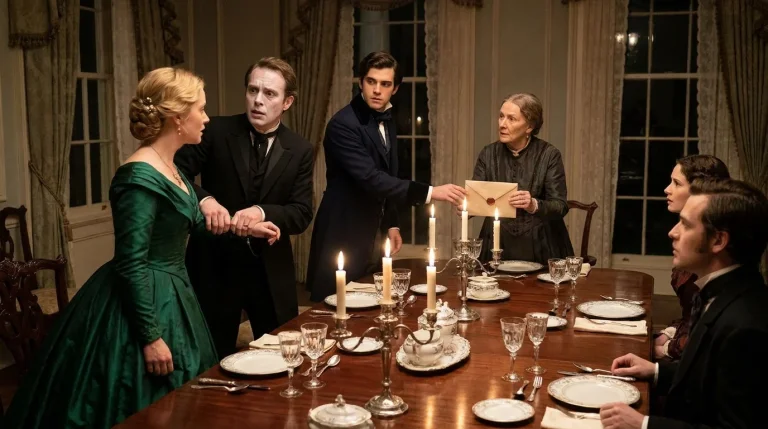
Henry called a family council in the library. The Dowager, Rosalind, Arthur, Amelia, and the solicitor attended. Henry placed the bank’s copy on the table and asked his mother to explain the false signature. She said the estate had been near ruin and that the money had kept servants employed. Arthur replied that the trust had been created precisely to protect a vulnerable child, not to subsidize the family.
The Dowager insisted that the family name was worth more than one servant’s future. Amelia answered that her mother’s life had been treated as less valuable because she worked for a living. The solicitor advised that the matter could be settled privately if the money were repaid. Amelia refused unless the trust was restored under independent management and the family publicly acknowledged the breach.
THE HIDDEN BENEFICIARY
The audit uncovered a second beneficiary: a girl named Eliza Moore, the daughter of another woman Clara had helped during the fever outbreak. Beatrice had added Eliza to the trust as a small scholarship recipient. The Dowager had removed her name and used the money to settle the estate’s debts. Eliza had since become a governess and was supporting two younger siblings.