A linen-room ledger contained payments made to Margaret after her departure. The entries stopped after three months, though the trust deed promised an annual allowance. The money had been redirected to the estate’s household expenses. Mrs. Finch, the elderly housekeeper, remembered delivering the first payment and being ordered never to mention Margaret again.
She had kept the ledger because she believed the girl might return. The pages showed that the family had not merely forgotten Margaret. It had continued to use money intended for her while telling the county she was dead.
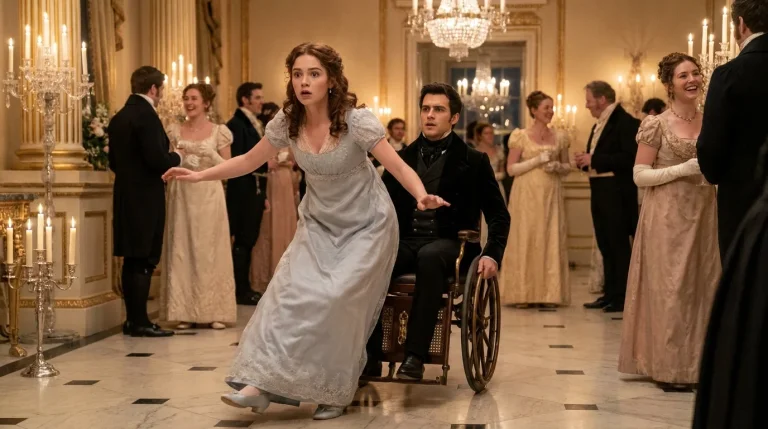
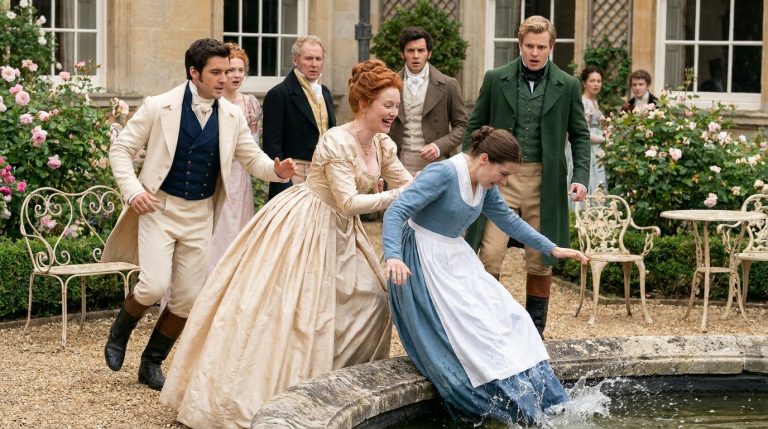
The garden fall had left Nora with a bruised wrist and a cut palm. Helena claimed it was an accident and accused Nora of dramatizing it. Oliver had seen the confrontation and stated that Helena’s companion had blocked Nora’s path. Sebastian demanded that the household surgeon examine her and record the injury.
Helena laughed at the idea that a servant needed a written account. Sebastian replied that a person’s station did not make pain less real. The surgeon’s note became another piece of evidence, because the Dowager later claimed Nora had invented the incident to gain sympathy.
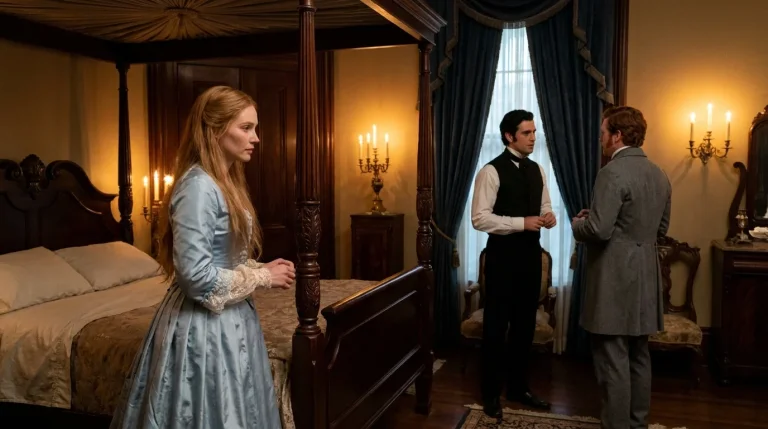
Sebastian told Nora that he would still marry her, but only if she wished it. He offered to arrange independent legal advice and a separate income from the trust. Nora asked whether he would still want her if she were not a nobleman’s daughter. He answered that he had wanted her before Oliver recognized the portrait.
Nora said she would not become a duchess merely to escape being a servant. She wanted the right to work, to own property, and to decide where she lived. Sebastian accepted her terms. His promise was no longer a rescue offered by a powerful man; it was an invitation to an equal partnership.
Oliver remembered that their father had kept a second portrait in his private study. It showed Margaret as a young woman holding a child wrapped in a blue shawl. The painting had disappeared after the funeral. Oliver confessed that he had once found it and asked his mother about it.
She told him the child had died. He believed her because he was fourteen and wanted to avoid another quarrel. Now he understood that his silence had helped the family bury Nora’s identity. He promised to search the old study, even if the discovery cost him his inheritance.
The parish register in York recorded Margaret Bell’s marriage and Nora’s baptism. The entry named Margaret Vale as the child’s mother and Thomas Bell as her father. The document proved Nora’s birth, but it did not automatically make her an heir to the dukedom. It did establish her right to the trust promised to Margaret.
The solicitor warned that the family could challenge the register, so he requested a certified copy from the parish clerk. Nora insisted that the truth be recorded accurately. She did not want a false claim to a title; she wanted what her mother had been promised.