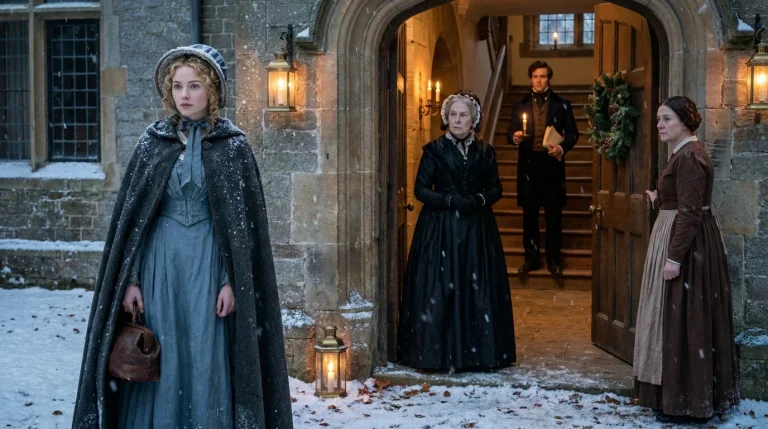
Oliver asked whether the family would now repay the full amount. The Dowager said the estate could not afford it. Sebastian replied that an estate built on unpaid obligations was already insolvent in the only sense that mattered.
Mrs. Finch and two former servants testified that Margaret had been dismissed without wages and that letters from her were intercepted. One remembered the night Margaret left with a baby and a small case. Another recalled the Dowager ordering the portrait removed from the gallery. Their testimony confirmed that the family had coordinated the erasure.
Nora listened without interrupting. She had spent years imagining her mother’s life from a handful of objects. Now the servants’ memories gave that life a human shape.
At the county meeting, the trustees read the trust deed and the account history. The family could no longer describe the matter as a private disagreement. The trust was restored under independent management, and the estate was ordered to repay the diverted income.
Nora was named beneficiary, with a right to oversee the fund alongside two elected trustees. The Dowager lost control of the charitable accounts. The county learned that the grandest family in the district had survived by withholding money from a woman it had publicly declared dead.
Sebastian’s political allies withdrew their support after he refused to conceal the scandal. His mother warned that he might lose his place in society. He answered that a place purchased by silence was not worth keeping.
The estate’s creditors demanded payment, and several tenants feared rent increases. Sebastian insisted that the workers and tenants should not bear the cost of the family’s wrongdoing. He sold unnecessary luxuries and reduced the household’s extravagant expenses before asking anyone else to sacrifice.
Nora visited her mother’s grave with the restored portrait. The grave was simple, marked only with the name Margaret Bell. Nora placed the miniature beside the flowers and told her mother that the family had finally spoken her name. She did not feel suddenly healed.
She felt grief for the years they had lost and anger at the people who had made her mother choose between dignity and comfort. But she also felt pride. Margaret had refused to surrender her daughter, even when the price was a life of hard work.
Oliver confessed that he had known part of the truth as a boy. He had found the second portrait and heard his mother arguing with the solicitor. He had stayed silent because he feared losing his inheritance and because he believed the matter would disappear.
He offered his own share of the estate’s remaining income toward restitution. Nora accepted the contribution for the trust, not as personal payment. Oliver’s confession did not erase his silence, but it began to make him accountable.
The estate established a school and refuge for girls who had been dismissed from service, widows without family support, and children whose education had been interrupted by poverty. Nora helped design the rules. No girl would be required to surrender wages or sign away an inheritance to receive shelter.