Ada Mercer became a board member. She insisted that widows receive payments on a predictable date and that children be given access to the education fund without having to beg a family patron.
James helped veterans apply for benefits and arranged for the mill to hire men returning from the war. He made sure the work was paid at a fair rate.
The first annual report listed every payment and every beneficiary. It was not elegant. It was honest.
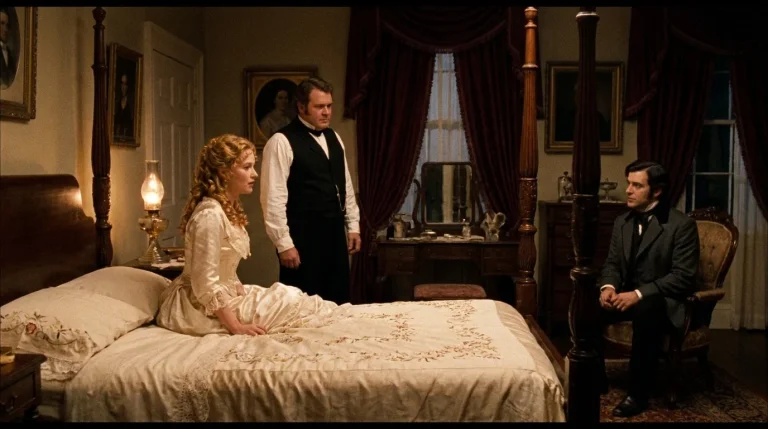
Clara kept a copy in the same room where Edmund had once demanded her signature. The room had become an office for the trust. The desk remained, but the lock had been removed.
THE SCHOOLROOM ABOVE THE MILL
The restored trust funded a schoolroom above the mill’s old counting house. Children of workers attended lessons in reading, arithmetic, and practical science. Older girls were offered instruction in bookkeeping and correspondence, skills that could protect them from being cheated in business or marriage.
Clara visited each week. She remembered how her own father had taught her to read accounts and how that knowledge had become the one thing Edmund could not take from her. She wanted the girls to have the same advantage without needing a wealthy father to provide it.
One student, Mary Ellis, asked whether a woman could ever own a business. Clara answered that the law and custom often made it difficult, but knowledge, property, and allies could make a difference. She did not promise the world would be fair. She promised that the girls would learn how to recognize unfairness.
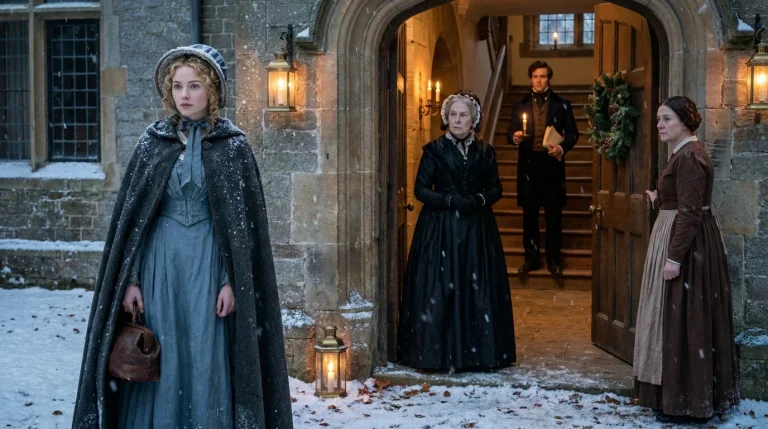
Lady Agnes visited the school one afternoon. Some workers objected, but Clara allowed her to enter as a guest, not as a patron. The old woman sat at the back and listened to the lesson. She did not speak.
Afterward, she donated a collection of books from the family library. The trustees recorded the donation publicly.
The schoolroom became a place where the family name mattered less than the work done inside it.
THE LAST LETTER FROM LADY AGNES
Lady Agnes’s health declined during the winter. She sent for Clara and gave her a small packet of letters that had belonged to Clara’s father. Among them was a note explaining why he had appointed Clara trustee.
He had written that she possessed patience, judgment, and a habit of asking who would bear the cost of a decision. He believed those qualities mattered more than rank. He had feared that the Vale family would treat the trust as an extension of the estate.
Lady Agnes admitted that she had hidden the letter because it showed her husband’s distrust of the family she had spent her life defending. She asked Clara to keep it, not as an excuse, but as a reminder of the responsibility entrusted to her.
Clara accepted the packet. She did not tell Lady Agnes that everything was forgiven. She thanked her for finally giving the truth its proper place.
The old woman died two weeks later. Her funeral was modest by the standards of the county. The schoolchildren placed flowers near the church gate, and Mrs. Weller stood with the servants.
Clara attended, but she did not wear the family emeralds. She wore a plain dark dress and carried her father’s letter in her pocket.
For the first time, she mourned Lady Agnes as a complicated woman rather than the guardian of a name.
A LIFE CHOSEN FREELY
In the years that followed, Clara did not remarry. She considered several proposals but refused to make another marriage a solution to financial or social pressure. She lived in a smaller house near the mill and managed the trust with a board that could challenge her decisions.