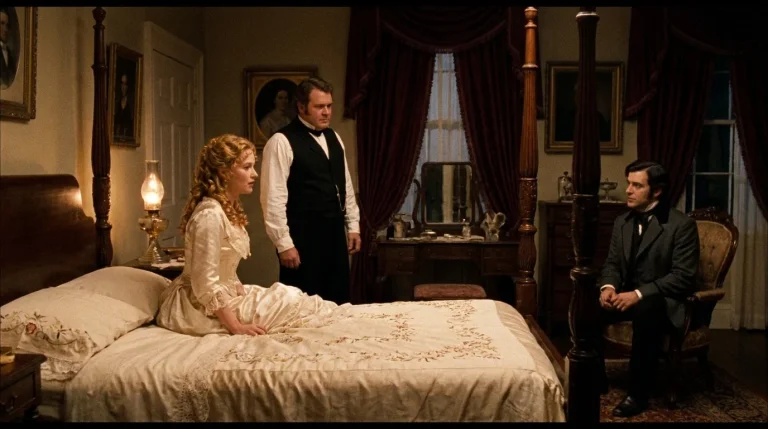
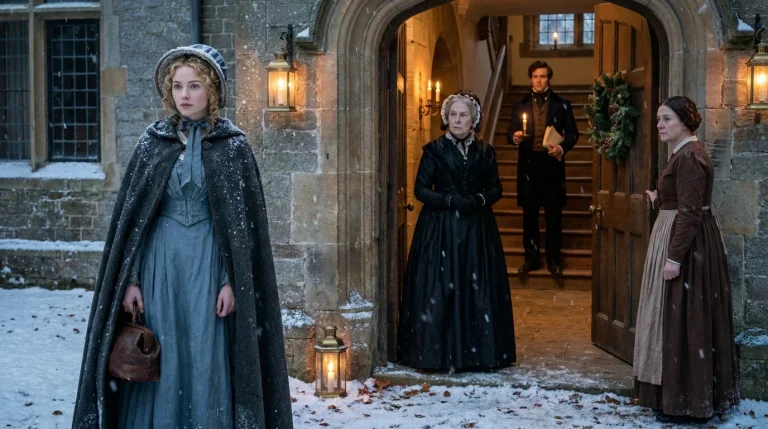
Clara replied that the buried things had already ruined her life. Edmund had controlled her correspondence, limited her visits to Philadelphia, and insisted that her late father’s accounts were too complicated for her to understand. When she questioned the household expenses, he called her ungrateful.
Lady Agnes said Edmund had always been difficult, even as a boy. She spoke as if his temper were weather: unfortunate, but beyond anyone’s control. Clara asked whether she had known about the bruises on her wrists. The older woman looked away.
That small movement answered more than words could. Clara understood that Lady Agnes had not been ignorant. She had chosen not to see.
A footman entered with a message. James requested that Clara meet him in the old conservatory after midnight. Lady Agnes told her not to go. Clara waited until the older woman left, then slipped the message into her sleeve.
For the first time, she intended to act without asking permission.
JAMES’S RETURN
James had returned to Bellgrave three weeks earlier, but Edmund had kept him occupied with estate business and family obligations. He had been given rooms in the east wing, far from Clara’s chambers. Their first conversation had taken place in the library, where James noticed that she flinched when Edmund’s footsteps approached.
He had asked whether his brother had hurt her. Clara had answered that marriage was not always gentle. James had not accepted the answer, but he had not pressed her. He knew that a woman in Clara’s position could be punished for speaking too plainly.
During the war, James had carried letters and supply orders between Pennsylvania depots. In the final year, he had discovered that several shipments of blankets, medicine, and flour had been billed to the government but never delivered. The company named in the records belonged to a man who had dined at Bellgrave: Silas Rook.
James had copied the orders before the inquiry was suppressed. One copy had been entrusted to their father, who promised to keep it safe. The sealed envelope at dinner contained that evidence and a letter explaining why the family had hidden it.
James had not come home to claim Clara or challenge Edmund’s place. He had come because he believed the fraud was connected to the estate’s finances and to the sudden death of a mill worker who had threatened to speak.
Now the envelope had been seen by the one person who could authenticate its seal: Lady Agnes.
THE CONSERVATORY AT MIDNIGHT
Clara found James in the conservatory beneath a roof of rain-streaked glass. The orange trees were bare, and the cold had gathered along the iron frames. James stood beside a small table, his injured leg stiff from the damp.
He told her the envelope contained a copy of the original Vale trust deed, a list of wartime supply contracts, and a letter from their father. The letter had been sealed with the family signet and witnessed by Lady Agnes. If genuine, it proved that Edmund had used money belonging to the workers’ relief fund to cover private debts.
Clara asked why the evidence had been hidden. James said their father had feared that exposing the fraud during the war would destroy the estate and leave hundreds of workers without wages. He intended to repay the money after the contracts were settled. But he died before he could do so.
Edmund had inherited the secret along with the estate. Instead of correcting it, he continued the transfers and tried to make Clara sign over her inheritance. Her father’s shares were the last liquid asset available to cover the missing funds.