Downstairs, Eleanor heard none of it.
Then James entered the library carrying a locked wooden box, his hands trembling. He told Eleanor there was something he should have revealed eighteen years ago. Their mother had made him swear never to open the box, insisting that the family’s reputation required Eleanor’s quiet acceptance of disgrace.
Inside were papers yellowed with age: a signed confession from Lord Ashworth admitting he had attacked Eleanor and lied to protect himself, witness statements from people who had seen her flee the garden injured and weeping, and a journal entry from their mother’s lady’s maid describing what truly happened.
Proof had existed all along.
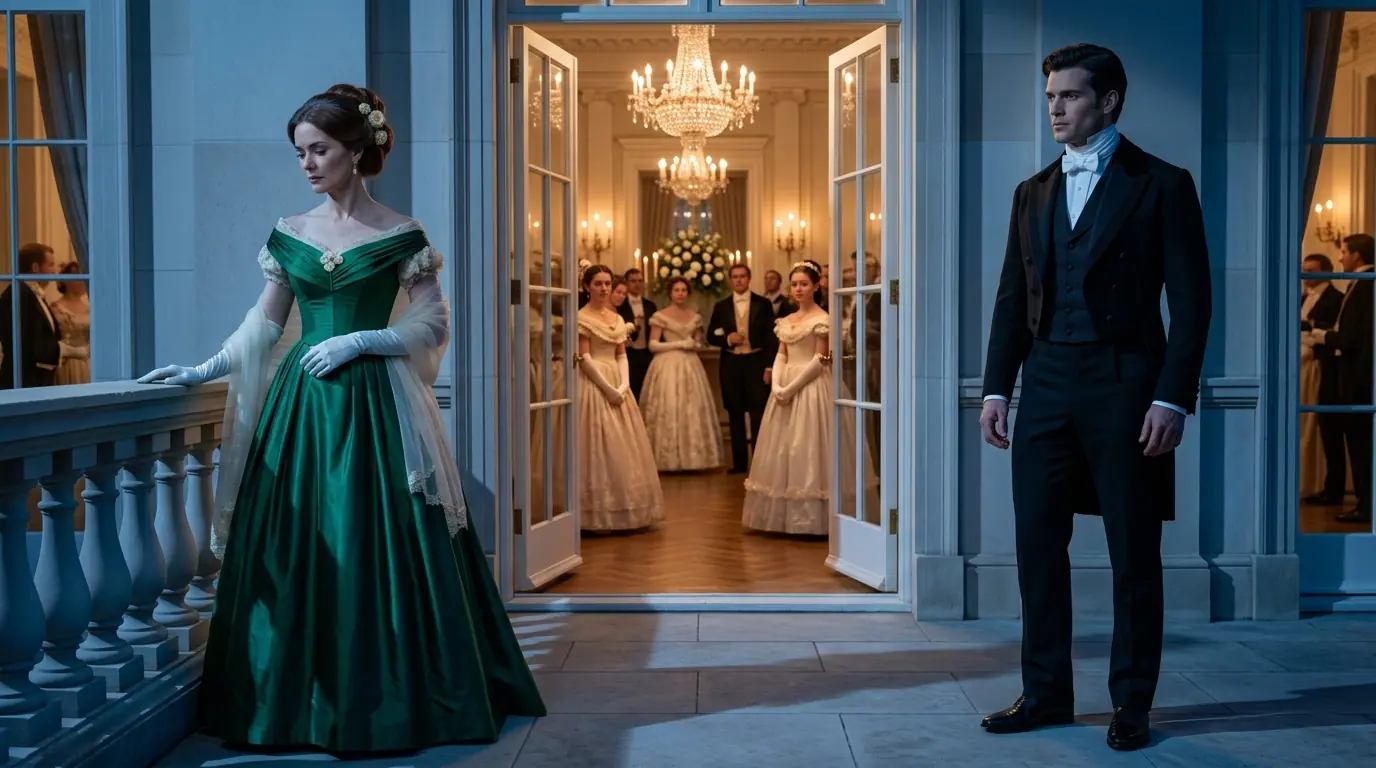
Eleanor could hardly breathe. Her mother had known the truth and forced her to live in disgrace anyway. James broke down, confessing that he had been young, frightened, and too weak to defy their mother. Eleanor looked at her brother’s anguish and understood that they had both been children trying to survive. She took his hand and forgave him.
When Alexander entered and read the papers, fury transformed into fierce joy. The evidence did not merely prove the new letters false. It vindicated Eleanor from the original scandal completely. He told her that the next day, the House of Lords would witness something unprecedented.
Eleanor barely slept. At dawn, Alexander’s sister, Lady Margaret Hartfield, arrived and insisted Eleanor wear the Ashborne sapphires. The jewels, she explained, were worn by the Duchess of Ashborne on occasions of great significance. When Alexander presented Eleanor before the lords, society needed to see that he had already claimed her as his own.
The House of Lords was packed. Every peer in London had received Alexander’s summons on a matter of honor. The public gallery held selected members of society whose opinions shaped the ton. Eleanor entered between James and Margaret, the sapphires glittering at her throat. Every eye followed her.
Alexander stood below in formal parliamentary robes. He addressed the chamber, first presenting the forged letters and calling an expert witness to prove they could not be authentic. The ink, paper, dates, and handwriting all betrayed the fraud. Then Alexander turned to the older injustice.
He read Lord Ashworth’s confession aloud.
The chamber fell into shocked silence as the truth emerged: Eleanor had been innocent, attacked, slandered, and punished for another man’s guilt. Witness statements confirmed every part of the story. Some peers looked ashamed. Some women in the gallery wept.
When one elderly lord tried to defend Ashworth’s memory, Alexander’s voice cut through the chamber. “My lord, are you calling me a liar?” The challenge was unmistakable, and the man sat down pale and silent.
Then Alexander turned toward Eleanor. He declared that she had endured eighteen years of undeserved scorn and that he would not allow one more day of it. He asked her to stand. Trembling, with tears on her face, Eleanor rose.
“Eleanor,” he said, his voice carrying through the chamber, “you are the finest woman I have ever known, brilliant in your mind, resilient in your spirit, dignified in the face of cruelty that would have broken lesser souls. Will you consent to be my wife, my duchess, my partner in all things?”











