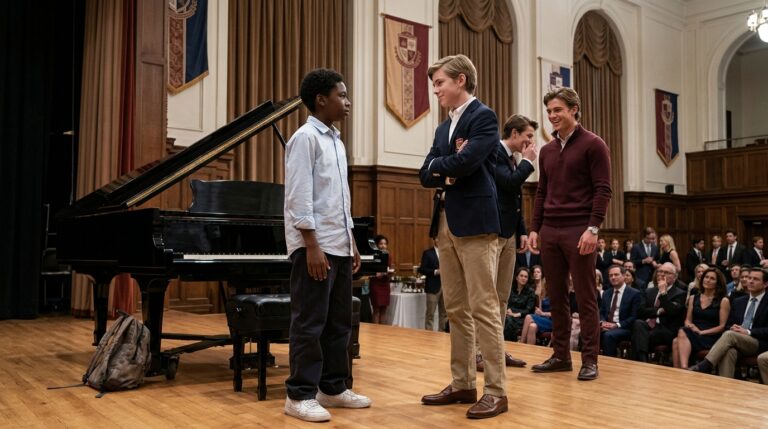
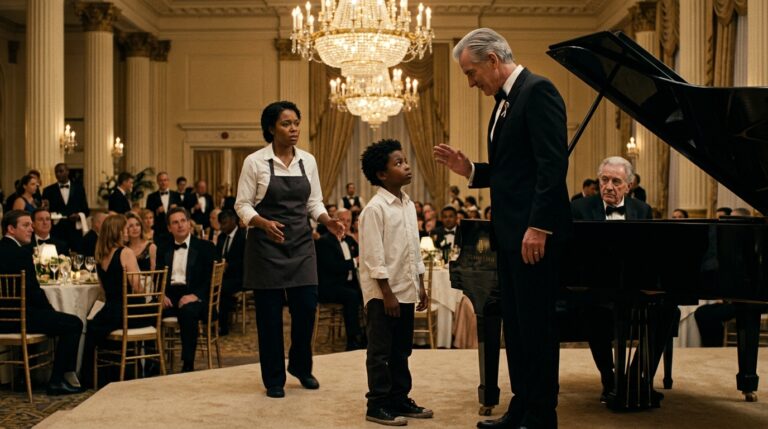
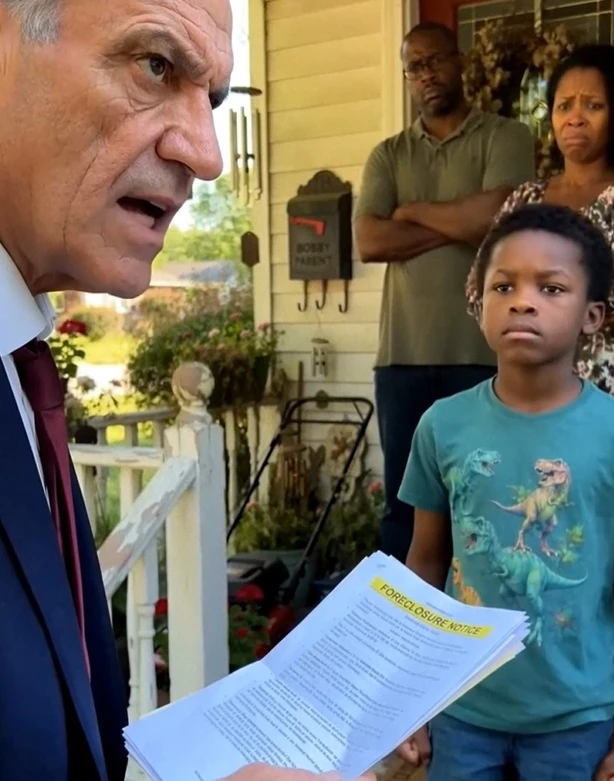
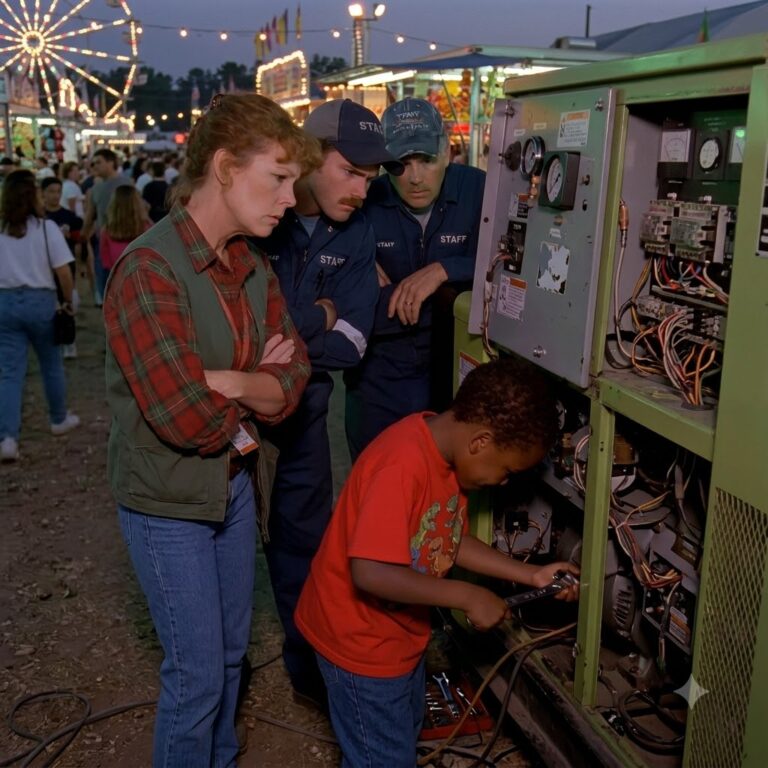
That same week, one of the pilot classrooms sent a photograph of a shy girl leaning over the model with a smile. Her teacher wrote that she had never volunteered to answer a science question before. Eli pinned the picture beside his first messy helicopter drawing. The two objects reminded him why he had chosen to make a teaching kit.
Renee completed her certification and was offered a quality coordinator position with predictable hours and medical benefits. She read the letter slowly, looking for conditions she might have missed. Mrs. Bennett welcomed her questions. The position was earned through study, work, and a documented assessment, not awarded because the town liked her son’s story.
Eli noticed the difference at home first. His mother came through the door early enough to cook dinner with him. They did not buy a new car or suddenly become wealthy. They replaced his worn shoes and paid a bill before its red date. Those changes felt enormous because he understood how many years they had taken. Money could solve an immediate problem, but learning and steady work would change what happened afterward.
On the night of Renee’s graduation, Eli arrived carrying the first diagram he had shown the mechanics, carefully framed.
—
The school district invited Eli and Sienna to explain the kits at a public board meeting. It was not a ceremony. Members wanted to know what the program cost, how long it took teachers to prepare, and whether the models would continue to work after repeated classroom use. Eli recognized questions his own mother had asked during the first budget discussion.
The new challenge felt different because people were no longer watching to see whether Eli embarrassed himself. They were waiting to see whether his idea would stand up to the same scrutiny they would give anyone else’s. He was grateful for that ordinary fairness. For the first time today, there was still useful work ahead.
At the meeting a parent suggested that poor families should be grateful for any free program, even one without clear instructions. Renee stood and said children deserved safe and useful materials regardless of what their parents earned. Several people shifted uncomfortably. Eli had never heard her speak to a room like that, but her voice did not shake.
Sienna demonstrated the model and admitted that the first batch had needed a revised glossary. Eli showed the revised page. The board appreciated that they had listened to the teachers instead of dismissing complaints. An administrator asked whether the children had rights to their design and who would receive payment for future orders.
Dr. Scott explained that their parents and a school adviser were helping ensure fair terms. Eli had not considered that a question asked on a public stage could affect who owned his work years later. He looked toward Renee. She nodded for him to answer honestly: they were still learning and would not sign anything that evening.