Nobody in that room knew the whole history of what Eli had learned. They saw his worn sneakers and the shirt he had outgrown. They did not see the evenings spent sorting screws into jars, reading manuals by a weak lamp, or asking a hundred questions of Mr.
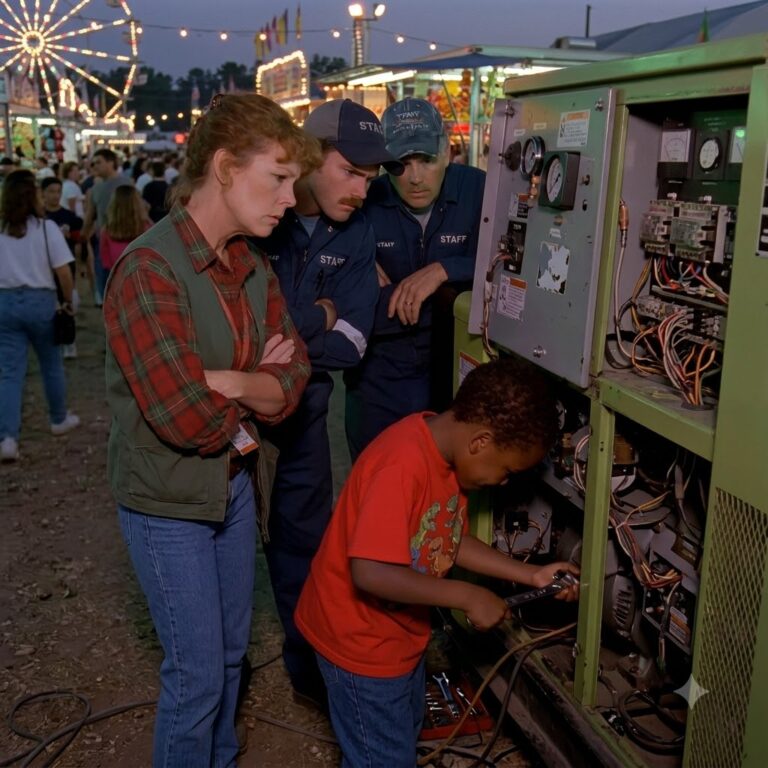
April reported normal figures through the radio. Foster nodded after each check. Then an indicator flickered just before the final reading. Eli’s heart dropped. Deke crossed his arms with a look that made the boy wish he could disappear. April stopped the sequence and ordered the data preserved rather than pretending the check was successful.
Luis discovered that a temporary test instrument had been disturbed. He did not dismiss it until a second controlled verification confirmed the helicopter’s own system was stable. Clara Hughes, watching on behalf of the county, told Mrs. Bennett that a shop willing to stop after a doubtful reading was more valuable than one that rushed to make a deadline.
On the repeated check everything stayed within the required limits. The crew smiled, but April reminded them that the aircraft still needed signed inspections and a test flight. Eli asked if the successful reading meant he could finally tell Ms. Ortiz what happened. Renee said he could tell the truth, including how many adults had done the work.
April climbed down and gave him a thumbs-up, then asked whether he had brought the notebook she wanted to see.
—
At school Eli tried to explain the ground test to his friends. They wanted to hear that he had grabbed a wrench and fixed a helicopter by himself. He told them it wasn’t like that: he had noticed two things happening together, and the certified team had checked the cause. One classmate looked disappointed. Ms. Ortiz, listening nearby, looked pleased.
A sensible adult knows the difference between a helpful child and an unsafe shortcut. April Benson insisted on that difference when excitement began outrunning judgment. The equipment would be secured, the proper tools used, and the work checked by people authorized to do it. Eli listened closely. The uncertainty had not vanished.
Renee came home with a course brochure and placed it beside Eli’s homework. She had spoken with an adviser about finishing her technical training. Eli was surprised; he had imagined that earning attention might someday allow him to help her escape endless cleaning shifts. She was already planning a future that belonged to her.
Foster helped Eli turn his notes into a classroom model that used harmless parts and colored paper. Three classmates joined the project. They argued over where labels belonged, ruined the first cardboard panel, and learned that explaining an idea to another person was harder than simply understanding it privately.