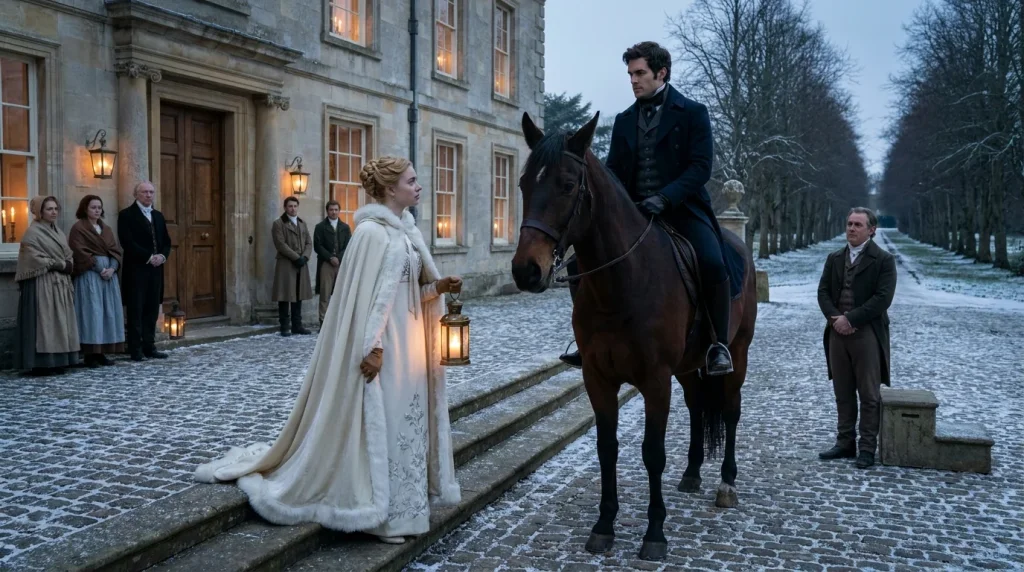
Every woman carries two prices: what she costs and what she is worth. Cruelty reads only the first. It is not the leaving that wounds. It is the man who never opened the second.
The Duke of Raisford rode into his own courtyard at dusk and said it from the saddle.
“I have come to send you away.”
He did not dismount to say it. He did not take off his gloves. The words dropped into the cold air of the yard and lay there like something spilled. Hester Corbold stood on the bottom step with a lantern in her hand. She was two-and-twenty.
She had been a duchess for six months and a wife for one night of them. She had expected coldness. She had expected silence. She had not expected to be told before forty servants what her husband’s homecoming was for. The yard had gone very still.
The grooms studied the cobbles. Mr. Tuck, the steward, stood by the mounting block with his hands folded and his eyes bright. Above them, in the lit window of the east wing, a curtain moved. She could feel the whole yard waiting for the duchess to break.
“I see,” she said.
It was not what they wanted. Her voice came out level, and the lantern did not shake because she had told her hand not to.
“May I ask the reason?”
“You may ask,” said the duke.
He swung down from the saddle. He was no taller than most men, and he stood like a man carrying a sack of stones. Three days of road lay on his coat. Under the dust, his face was brown from foreign weather and shut like a door.
“A carriage will take you to Bath on Thursday,” he said. “The house is taken. Your allowance is settled. You will want for nothing.”
“Except an explanation.”
“Yes.”
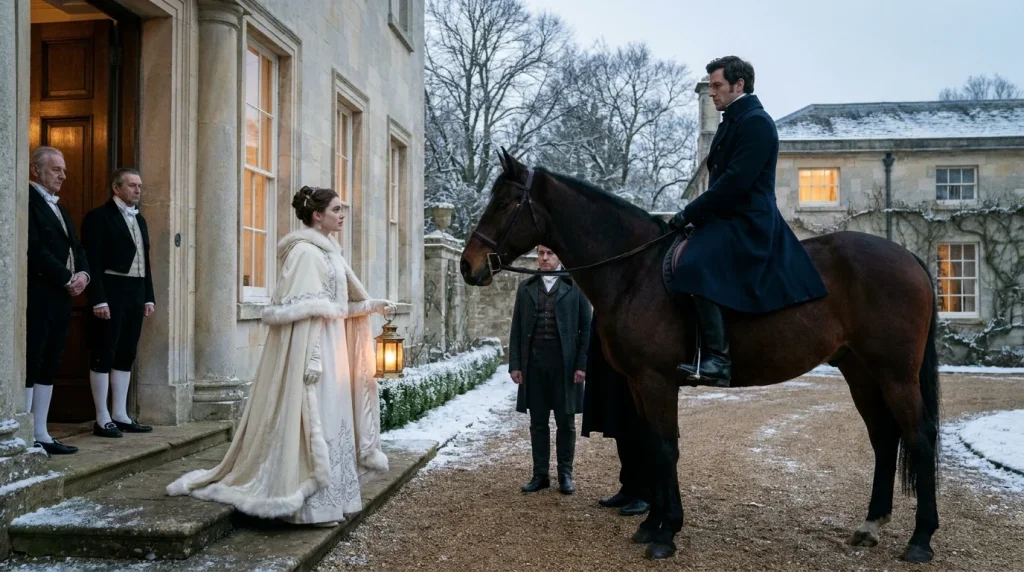
That was all. Yes. Bracken, the old pointer, came out of the house at that moment. He was fourteen and nearly blind. He crossed the yard by smell, found his master’s boots, and leaned his whole weight against them.
The duke’s gloved hand went down to the dog’s ears. It was the only part of him that moved. Then the sound came up the avenue. At first it was a murmur, the way a river is a murmur before the bend. Then it was voices.
Then it was lanterns, a hundred of them, swinging between the elms. And under the lanterns, a crowd in patched coats and darned shawls. The crowd was shouting a name.
“Hester! Hester Corbold! God keep the duchess!”
The noise struck the walls of the courtyard and came back doubled. The Duke of Raisford stopped with one glove half off. He did not move again for the length of a long breath. His hand lay still on the dog’s head. He looked at the gate and at the lanterns and at last at his wife.
His face had been shut like a door. Now it looked like a door with something leaning on the other side.











