—
The dining room glittered with candlelight. Silver dishes reflected the flames, crystal glasses caught the glow, and the long table had been arranged so that the most important guests sat nearest Beatrice. Clara was placed halfway down, between Lady Hensley and a retired colonel who had already asked whether she intended to become a governess. The Duke of Ashcombe arrived shortly before the first course. Julian wore a dark coat, a white cravat, and no unnecessary decoration. His presence quieted the room without effort. He greeted Beatrice, acknowledged the magistrate, and then turned to Clara. “Lady Clara,” he said. It was only a greeting, yet his expression changed when he saw her. He looked as though he had been holding a question for years and had finally found the person who could answer it. Clara curtsied. “Your Grace.”
Beatrice noticed the exchange. She immediately began speaking about the weather and the roads, placing herself between them with practiced ease. Julian did not force a conversation. He took his seat at the opposite end of the table and listened as the guests discussed Parliament, horses, and the latest London scandal. Clara answered when spoken to. She did not look toward him again, though she could feel his attention whenever the conversation turned to the village school or the infirmary. At the second course, Lady Hensley asked whether Clara had finally reconsidered Lord Percival’s offer. Beatrice smiled before Clara could answer. “My niece has a remarkable talent for refusing sensible arrangements,” she said. “At twenty-eight, one might think she would have learned that time is not an inexhaustible resource.”
Several guests laughed politely. Clara placed her fork down. Julian’s expression did not change, but his hand closed around the stem of his glass. His greeting unsettled Clara more than she expected tonight.
—
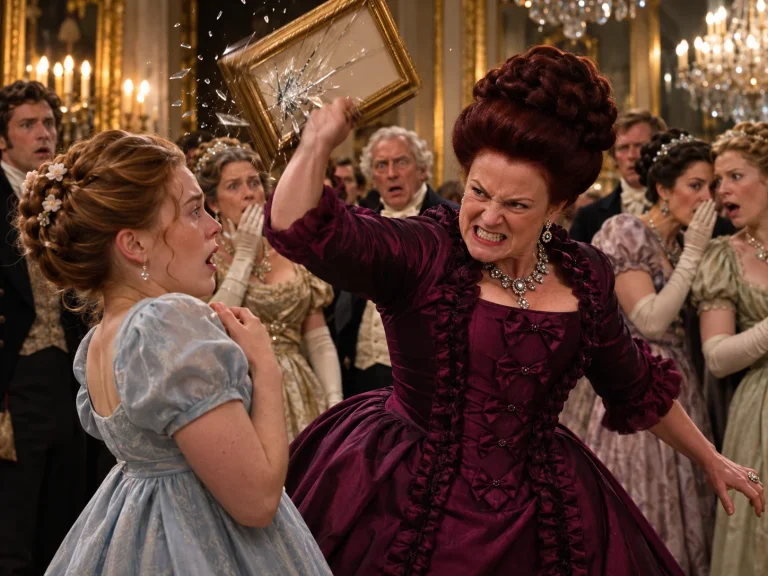
Beatrice had chosen the menu with care. The dishes were rich, the sauces heavy, and the dessert course included pears preserved in wine. She knew Clara disliked being watched while eating. She also knew that a stain on the pale blue gown would be difficult to remove before the guests departed. As the servants cleared the plates, Beatrice leaned toward her niece and asked whether she intended to spend the rest of her life managing cottages. Clara answered that she hoped to improve the school and repair the infirmary roof before winter ended. “A charitable hobby,” Beatrice said. “Not a future.”
Clara replied that the children needed a warm room more urgently than she needed another dance invitation. The colonel chuckled. Lady Hensley raised her brows. Beatrice’s smile tightened. “There is that stubbornness again. You have mistaken being useful for being wanted.”
Clara felt the words land. She had heard versions of them for years, but never before an audience so large. She looked down at the tablecloth and counted the tiny embroidered leaves along its edge. It was a habit she had developed as a child when her mother was ill and adults spoke too freely nearby. At the other end of the table, Julian watched her. He remembered the girl at the bridge who had not asked whether his family would reward her for helping. He remembered her letters, full of small details about people no one else considered important. He had not come to the dinner to rescue a woman from embarrassment. He had come because he had finally discovered that the silence between them had been arranged by someone else. But Beatrice was not finished. Clara knew guests were watching, but she refused to apologize for caring about people whose names never appeared in society columns.