“You are worth precisely what I choose to enter against your name,” said Mortimer Culpepper, and he pinched out her candle.
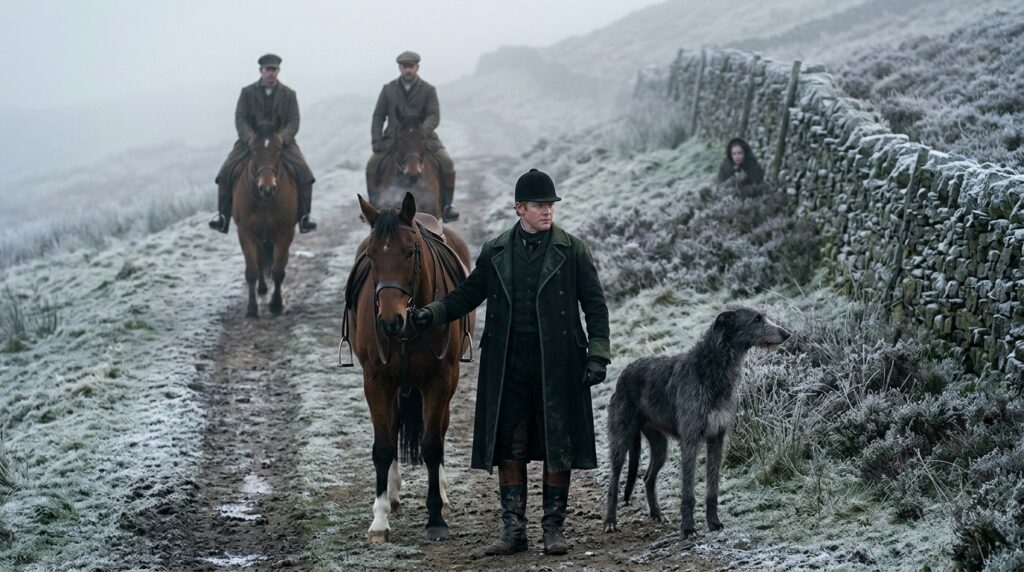
That was at midnight. By dawn, Cecily Brandreth, 20 years and 10 months old, lay flat in frozen heather and watched a duke lay his bare hand on her empty saddle.
“Still warm,” said the Duke of Raysford.
He said it to nobody, the way a man reads out a figure he has hoped was wrong. Cecily did not breathe. The wall that hid her was dry stone, waist-high, furred white with rime. 40 yards of moor lay between it and the mare. She had expected hounds.
She had expected her guardian’s grooms with their whips and their patient lies. She had expected, if she were honest, to be dead of cold by noon. She had not expected the one man on the moor she meant to find to find her mare first. She had slapped the mare’s flank and sent her down the track toward the road to draw the grooms away. It was the only decoy she owned.
It had worked on everyone but him. Two riders sat their cobs on the track below. They were Culpepper’s men, and they watched the duke as men watch a bill coming due. They had agreed on the story before they left the stable yard.
The ward had run. The ward had fallen. The ward was not quite right in her head. There would be pity at the funeral, and it would be cheap.
Every house in the riding had a story about Roland de la Mere, Duke of Raysford, and every story ended in the same cold place. Cecily had heard them all across her guardian’s dinner table. She had weighed them as she weighed everything and found them light on evidence.
He was six and thirty and not tall. He was broad through the shoulder and short in the leg. A man built for hauling things uphill. His greatcoat was black frieze gone green at the seams. His hair was the brown of chestnut husks, gray at the left temple.
His eyes, when he turned his head, were hazel and tired in the way of eyes that have stopped asking for anything. He owned the moor, the beck, and the lead workings under both. He was scratching the mare’s ears with his thumb as gently as a man mending a watch. Beside him stood a deerhound the color of wet slate.
The dog was not looking at the mare. The dog was looking at the wall. Cecily put her face into the heather. It smelled of iron and frozen peat.
Her cheek had gone past hurting. Somewhere above her, a lapwing complained and was ignored by everybody. She thought of the mare who had done exactly what she was asked and was being scratched behind the ears for it. She had been outdone in courage by a horse.
“Morning, Your Grace,” called the nearer groom, touching his hat. “We are after a mare, brown, one white sock, a lady’s saddle.”
“I have a mare,” said the duke.
“That will be her.”
“And the young lady?”
“I have seen no young lady.”
Cecily marked the wording. It was exact. It was not a lie.
“Mr. Culpepper’s ward, Your Grace,” said the groom. “Not quite herself. Poorly in her mind. We were told to bring her home gentle.”
The second groom shifted his whip from one hand to the other.
“Gentle,” said the duke.
“Very gentle, Your Grace.”
“Then she will want a physician and not a whip.”
Neither groom found anything to say to that.











