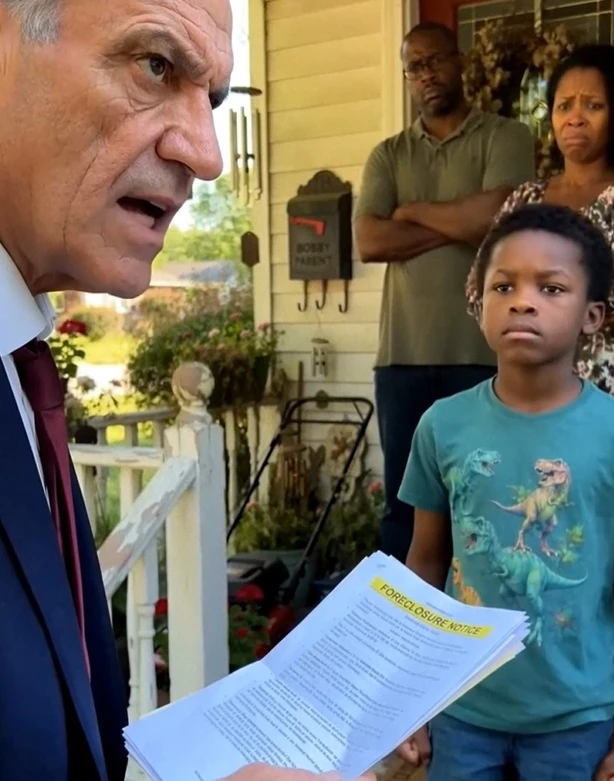
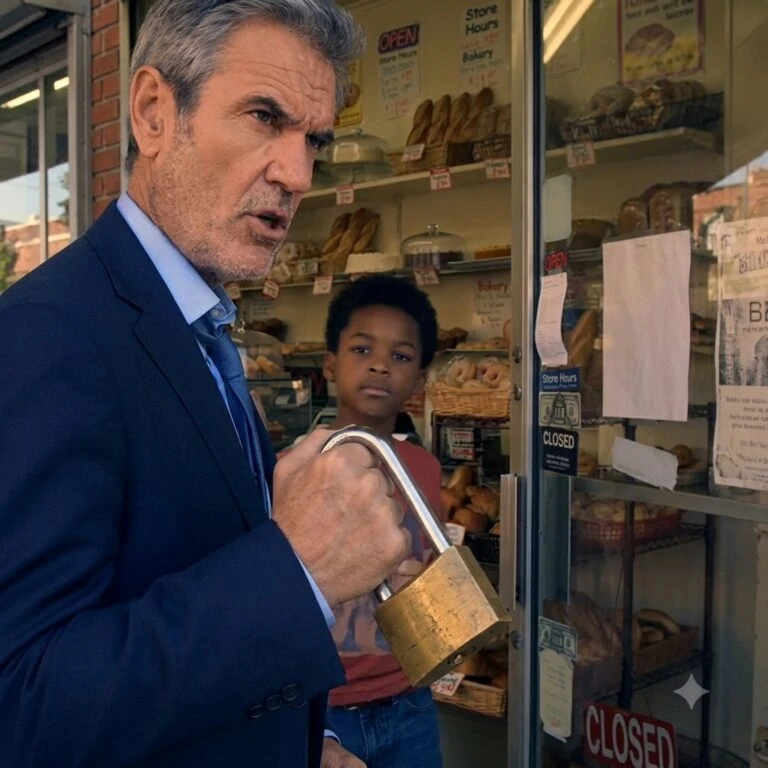
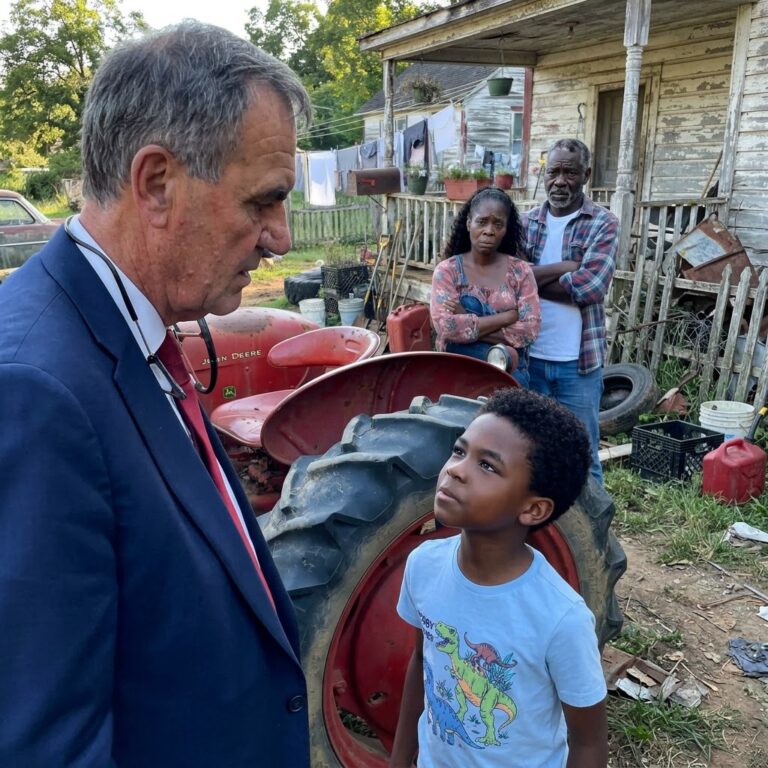
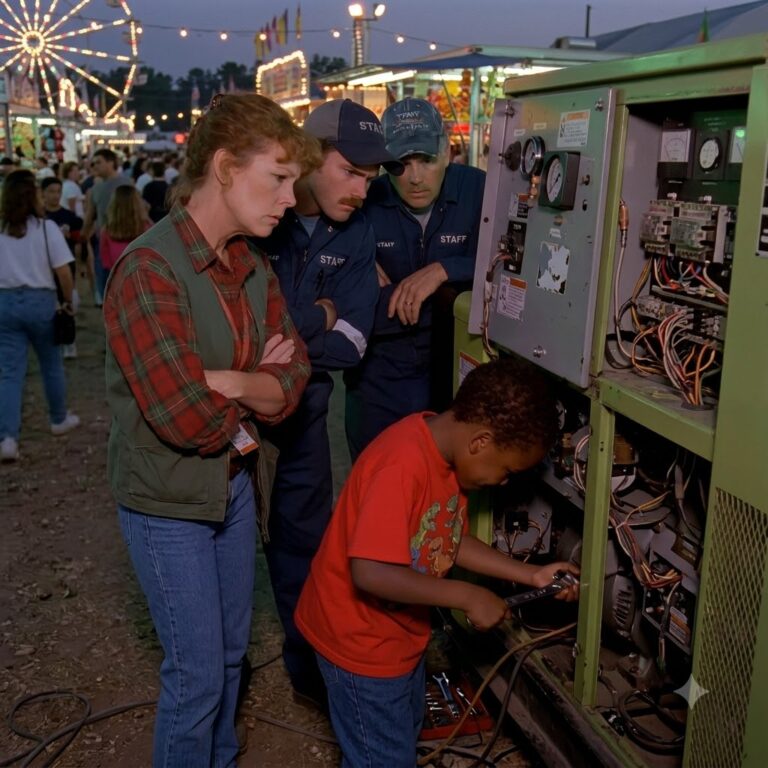
Haskins approached Loretta after a training session and said he had underestimated Jordan. She asked him whether he would listen to the next worker who spoke up about safety. He said he would try. Loretta answered that trying meant changing habits, not delivering a one-time apology. He nodded and began including more crew members in maintenance discussions.
The youth program invited Jordan and Maya to return as student mentors. Jordan hesitated. He had once been the boy whose suggestions were treated like interruptions; now younger students would look to him for guidance. Dana said he did not need to know every answer. He needed to model how to ask good questions and seek qualified help.
During the first mentoring session a smaller boy asked if worn shoes meant the workshop might send him home.
—
The smaller boy’s name was Theo. His boots had been patched with duct tape, and he stood by the classroom door as though waiting to be told it was a mistake to come. Jordan remembered the field supervisor’s laugh from the first day. He asked Theo what he liked to build, and the boy answered that he made small windmills from discarded plastic.
By evening, tired people become vulnerable to convenient answers. That was when engineer Dana Lewis asked everyone to slow down. No piece of equipment becomes safe merely because an important person wants it finished. Jordan liked the firmness in that statement. He had watched adults confuse urgency with certainty all his life. He knew the risks now.
Jordan took him to a safe practice table and introduced him to Maya, who explained the day’s assignment. There were no expensive kits required. Students could borrow supplies from the program, and every experiment would be supervised. Theo loosened his grip on his notebook. Jordan realized he was changing the kind of first conversation someone else would remember.
During the lesson a model failed and Theo whispered that he must be bad at engineering. Jordan showed him one of his old diagrams filled with crossed-out ideas. He explained how the first combine problem had taken professional checks and a second fault still remained after the first repair. Failure was information, not an identity.
Dana watched the exchange from across the room. She told Loretta later that Jordan was learning to make other people feel safe asking questions. Loretta smiled because she had hoped her son would gain respect without losing the gentleness that made him curious in the first place.
A university adviser then asked Jordan to prepare a portfolio of the projects he had completed since the harvest night.
—
A portfolio sounded like something rich students carried in leather folders. Jordan had only a cardboard box of notebooks, drawings, photographs, and a letter from the growers association. The adviser told him the work mattered more than the cover. He spent three evenings sorting the materials by date and describing what had changed between early failures and later designs.