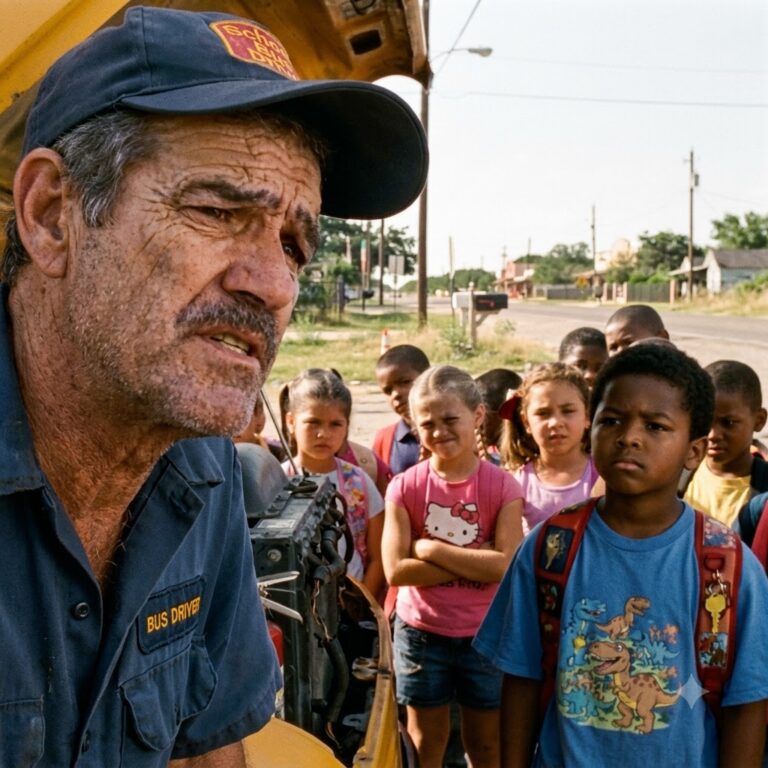
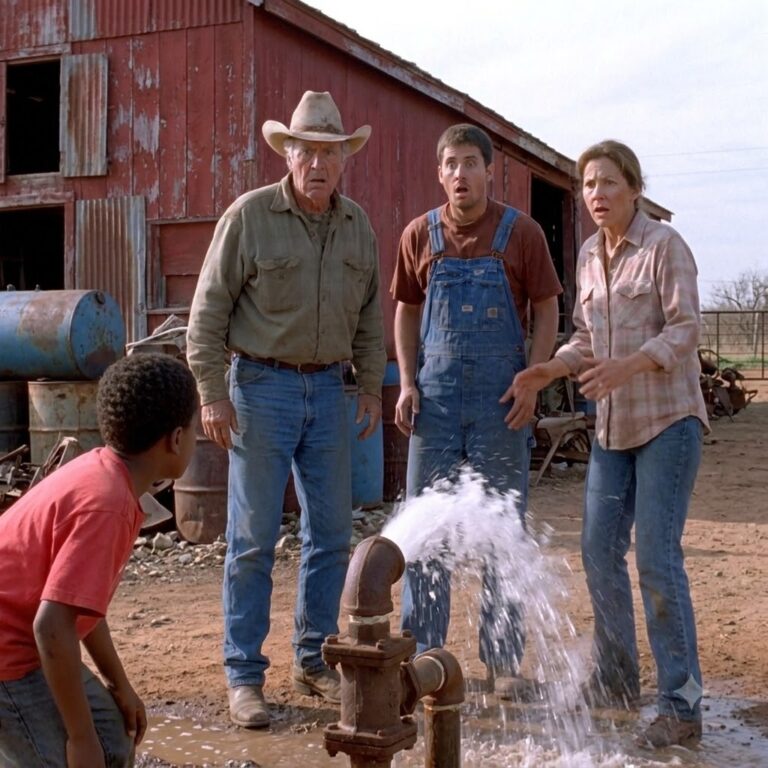
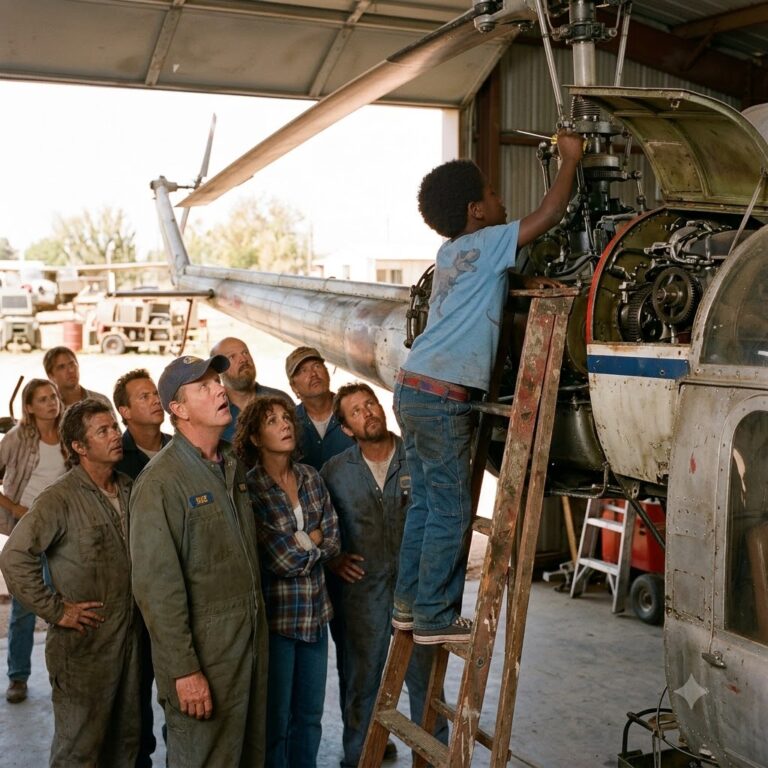
A teacher from a neighboring school asked whether the students would bring their model to the county harvest fair.
—
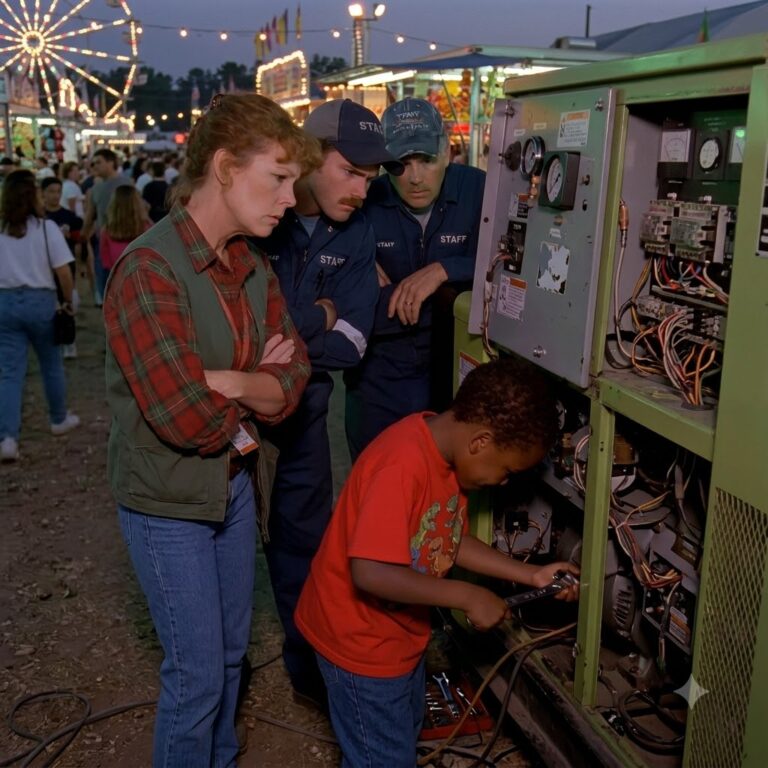
The harvest fair was filled with equipment displays, pie contests, and demonstrations by farmers who could tell the age of a tractor from its sound. Jordan had never stood at a booth with his name printed on a sign. Loretta wore her work uniform because she had come straight from a shift. She stayed near the back, afraid someone would ask her to leave the exhibitors’ area.
Later he would remember the sounds more clearly than the compliments: shoes on concrete, a tool being put down gently, someone clearing a throat before changing an opinion. Even now, he could hear the quiet encouragement in his mother’s voice.
Jordan and Maya demonstrated their model for children. An older farmer said it was a toy and asked what use it had in a real field. Jordan answered that it taught how to record an observation before making a costly guess. The farmer pointed to the model and asked a harder technical question. Jordan admitted he did not know but offered to find the answer.
A county agricultural extension educator named Dana Lewis, already familiar with the repair, stopped by with a colleague. They showed the farmer a copy of the maintenance note listing the damaged connection and the later adjustment. The note did not make Jordan into a licensed mechanic; it explained why systematic observation mattered. The farmer returned later with his grandson.
At the end of the fair, Jordan was invited to apply for a youth farm technology program that included classroom training and visits to supervised workshops. The application requested school records, a project, and a letter from a mentor. It was not a prize handed out for one lucky night.
When Jordan showed the form to Loretta, she turned it over and went quiet at the price of transportation.
—
Loretta turned the travel estimate over twice, hoping she had read it wrong. The youth program would meet outside town for eight Saturdays. Jordan’s application might qualify for tuition assistance, but gas and meals remained the family’s responsibility. He offered to stop asking about the program before she could worry. She asked him not to make that choice for her.
An unfair remark can leave a person angry for hours, but anger is poor at explaining the size of a measurement. Jordan had to choose where to spend his attention. He could defend himself against each insult or he could keep a record of what he observed. He looked back at her.
Uncle Ray volunteered to drive the first weekend if the school could find a way to share later trips. Ms. Carter contacted a county education fund. Maya’s father offered seats in his truck for project meetings. The solutions were ordinary and incomplete until the family wrote them on the same calendar. Jordan learned to respect a plan that accounted for everybody’s time.