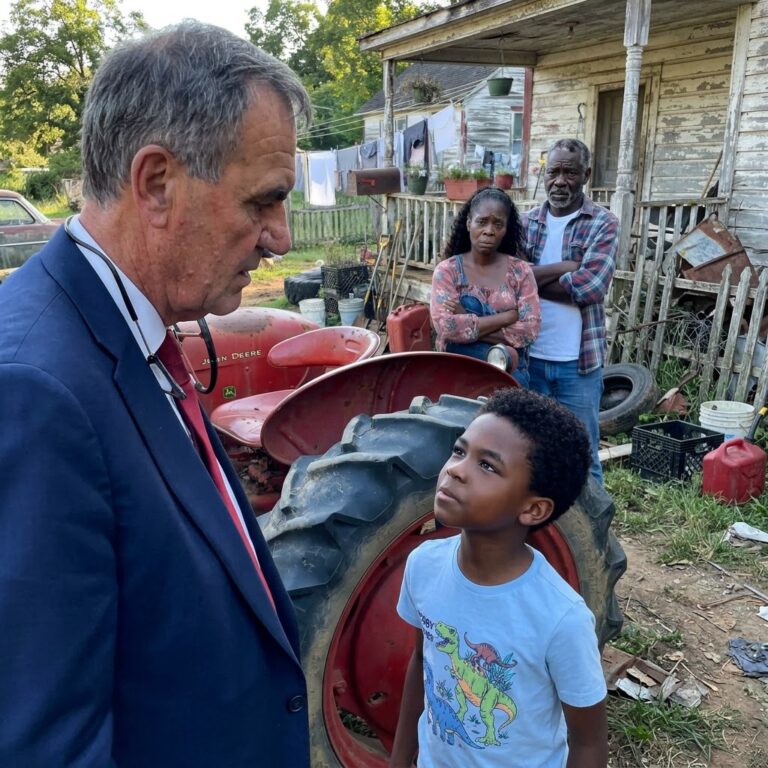
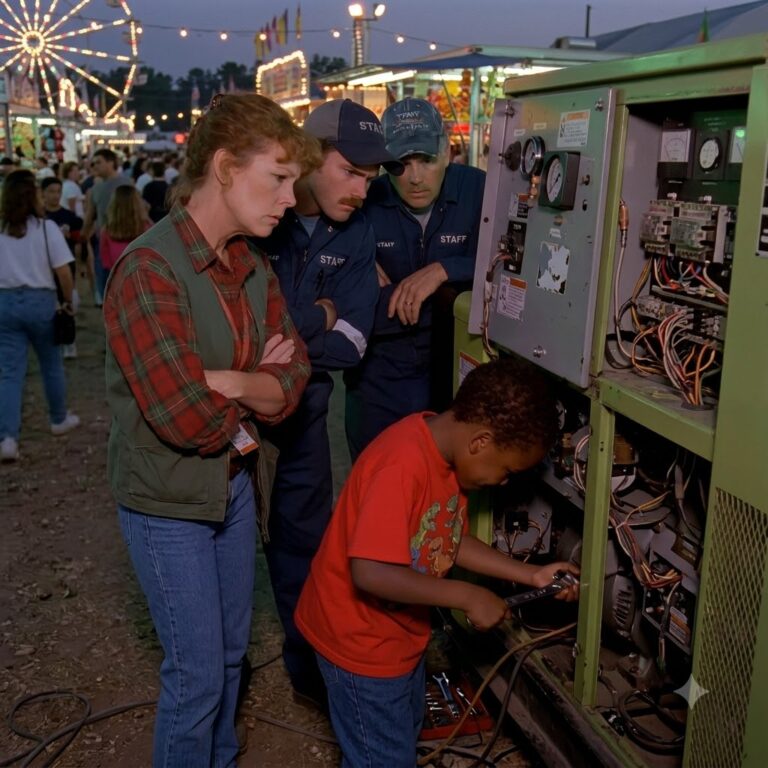
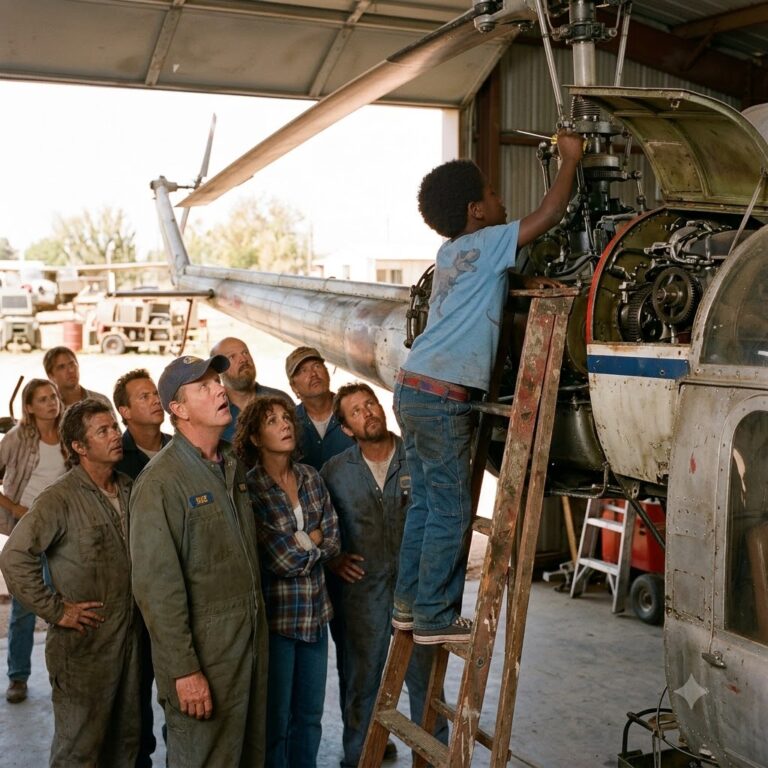
Jordan braced for another joke. Instead Bishop asked him to describe the difference between the first shutdown and the later grain loss problem. The boy explained the observations and admitted which parts had been handled by trained workers. Bishop listened for several minutes. The supervisor’s face reddened as it became clear the owner was taking the explanation seriously.
Bishop was impressed but also concerned that a child had been near farm machinery. Dana described the safety boundaries and said the crew had followed them. Loretta added that she would never allow Jordan to climb into running equipment for someone else’s entertainment. Bishop agreed and promised no one would ask him to do that.
The owner offered a small payment for helping with the records. Jordan looked at his mother. She thanked him but said any recognition should be documented and not used to avoid paying the adult workers fairly. Bishop agreed to settle the crew’s overtime correctly. It was the first time Jordan heard his mother negotiate with a landowner without lowering her eyes.
Then Bishop asked whether Jordan had ever considered studying agricultural engineering instead of only repairing what other people discarded.
—
At school the story spread faster than the facts. Some classmates claimed Jordan had rebuilt a giant combine by himself. Others said he must have been lucky. The truth was less dramatic: a boy noticed a timing pattern, the qualified team checked it, and many workers labored through the night. Jordan struggled to explain that without sounding as if he was defending himself.
Still, something shifted in Loretta when another adult finally listened to her son without talking over him. Pride came first, then worry. She knew how easily an eager child could be invited to carry the blame if a hurried repair went wrong. She wanted the work inspected properly, every step documented, and credit shared with whoever actually did it.
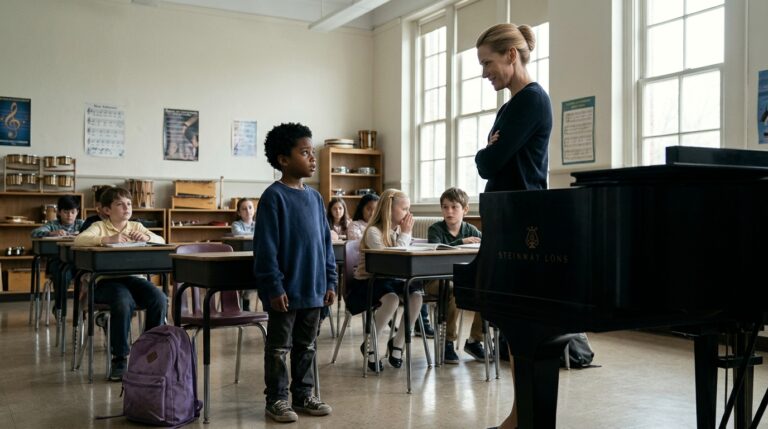
Ms. Carter, the science teacher, invited him to demonstrate a safe model of a sensor circuit. Jordan built it with paper, low-voltage classroom components, and cardboard borrowed from the art room. Two classmates helped, including a girl named Maya who loved mathematics more than machinery. They disagreed over the best way to make the diagram easy to read.
Their first presentation confused the younger students. Jordan spoke too quickly and assumed everyone recognized the words “feeder” and “harness.” Maya asked him to explain what each part did before discussing the fault. The revised lesson became clearer and more interesting. Jordan began to realize that sharing knowledge required a different skill from finding it.
Dana sent a note encouraging the project but warning against treating a classroom model as proof about actual farm equipment. Ms. Carter read the note aloud as a lesson in limits. Jordan liked that Dana still expected him to be careful even after the combine worked.