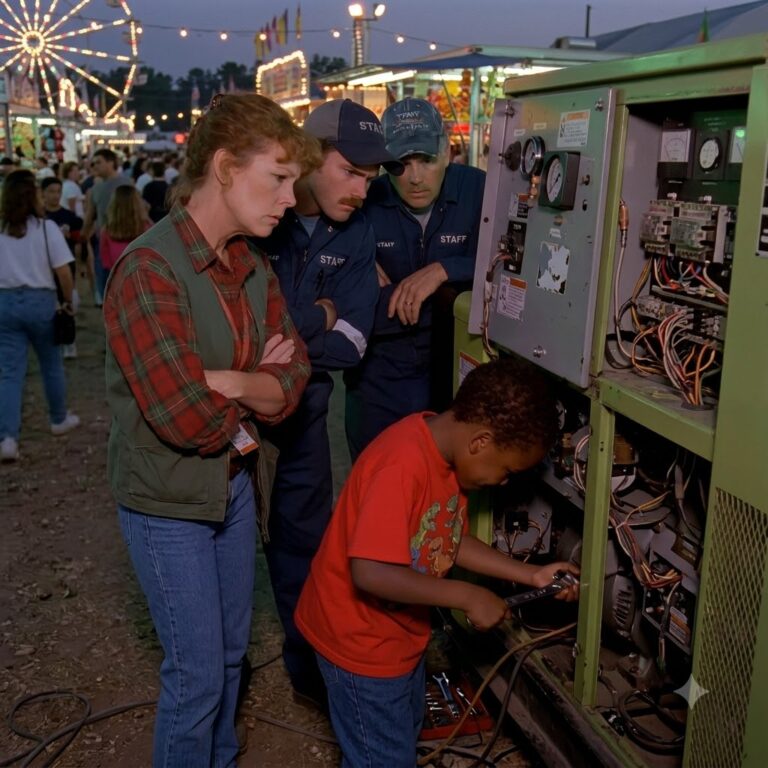
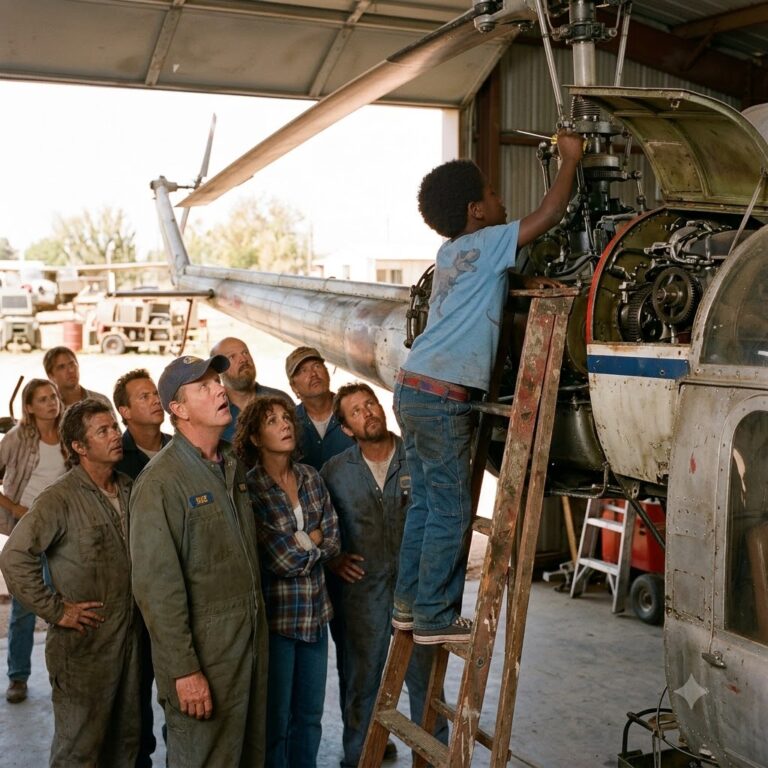
The question of what to do with success mattered more than the question of who had won the argument. Jordan remembered friends who repaired bicycles with him, classmates who could not afford supplies, and adults who had once quietly lent him tools. He did not want a miracle that carried him away from all of them.
The representative asked whether he would be willing to work with experienced mechanics after graduation rather than expecting to lead immediately. Jordan said yes. His first lesson from the combine had been that noticing a problem was different from safely repairing it. He wanted years of training, not shortcuts or a title he had not earned.
The institute gave him a mentor contact and a list of courses he should take next year. Ms. Carter helped choose the mathematics and science classes. His school could not offer everything, but the county program would support a few supervised opportunities. Loretta read the schedule and began planning transport.
At home Ray watched Jordan copy the new timetable into the same spiral notebook he had carried into the field. He said the boy was becoming a young man who could stand in a room of experts without pretending to be one. Jordan laughed and asked Ray to keep correcting him when he forgot that.
The following harvest brought Jordan back to Bishop’s fields, where a young worker was afraid to report an unusual sound.
—
The worker was a high school student hired for the summer, not much older than Jordan. He said the machine had made an unfamiliar sound twice and worried Haskins would accuse him of wasting time. Jordan remembered the supervisor laughing at him in the wheat. He told the worker to report the observation through the proper channels rather than guess at a repair.
Time passed differently after that. School days were still filled with homework, buses, dishes, and the ordinary embarrassments of being a child. The opportunity did not erase effort; it made effort count in a new place. Jordan faced teachers who expected more and projects that did not work on the first try.
Haskins listened when the report reached him. He stopped the operation, called the qualified maintenance team, and asked for the circumstances to be recorded. Nothing dramatic was wrong; a routine component needed attention before the next shift. The supervisor thanked the young worker for speaking up. Jordan stood at a distance, surprised by how much that small exchange meant.
Loretta, now a certified safety training assistant, was helping new employees learn the reporting process. She no longer had to choose between taking home wages and speaking honestly about unsafe habits. The job had brought a steadier schedule and a modest raise, neither of them spectacular but both important to the family’s life.