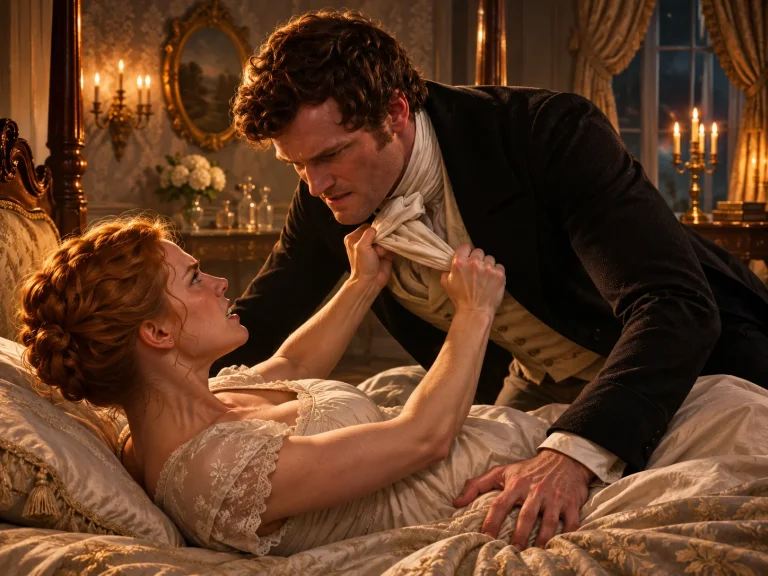
“The door is locked.”
“I know.” A key turned. Mrs. Finch slipped inside and shut the door softly. “Her ladyship expects me to keep you quiet. I have no intention of doing so.”
She held out a folded envelope. The seal was broken, and the paper had yellowed.
“I found this in the desk she ordered me to clear last spring,” the maid said. “I was afraid to give it to you. After tonight, I’m more afraid of leaving it hidden.”
Eleanor recognized the crest pressed into the wax: a hawk above a river. The same crest decorated the duke’s carriage.
On the front, in a woman’s delicate handwriting, were the words: For Miss Eleanor Ashford, personally.
—
Eleanor unfolded the letter with such care that her fingers barely touched the creases. The Dowager Duchess of Westmere had written in 1817, while Marian Ashford was still living. She also mentioned a second letter sent directly to Eleanor after Thomas died, offering practical help with her education and a place to stay whenever she wished.
At the bottom, a sentence had been underlined. We ask for the privilege of friendship, not repayment of a debt.
Eleanor read it twice. Her aunt had told her no one in respectable society remembered the Ashfords. She had insisted their modest household was an embarrassment and that Eleanor should accept any marriage offering financial security.
“How many other letters were there?” Eleanor asked.
“I do not know,” Mrs. Finch replied. “But her ladyship kept a packet tied with blue thread. Mr. Harcourt collected it last week.”
A sudden knock interrupted them. Lady Lavinia spoke from the corridor. “Mrs. Finch, I expect you downstairs.”
The maid folded the letter into Eleanor’s hand. “Keep it inside your stays until morning,” she whispered. “And do not let anyone send me away before I can speak.”
When she left, the lock turned again.
Eleanor sat on the bed and considered the painted faces now resting in the duke’s care. Her parents had chosen to help strangers without seeking advantage. Someone had turned that choice into a secret, then used Eleanor’s isolation to convince her she was helpless.
A bell sounded in the servants’ corridor. Footsteps hurried below. Through the window Eleanor saw Mr. Harcourt’s carriage arrive long after midnight.
He entered through the side door carrying a leather document case. A few moments later, she heard her aunt’s voice beneath the floorboards, sharp with panic.
“If Westmere sees the accounts,” Lady Lavinia said, “we shall lose everything.”
—
Westmere’s sister arrived at Bexley House shortly after ten the next morning. She entered the drawing room with a small wooden bird tied to her reticule.
“Where is Eleanor?” she demanded.
Lady Lavinia offered breakfast, explanations, and an assurance that her niece was unwell. Cecily declined all three. “I came because she invited us through my brother. I should prefer to speak to her.”