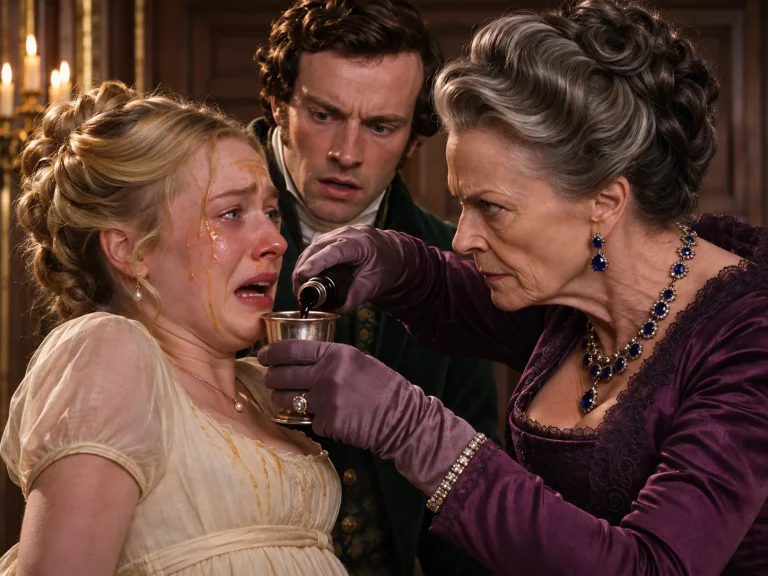
Westmere suppressed a smile. Cecily did not. She began collecting Eleanor’s belongings while the duke arranged for an independent solicitor to review the papers.
As they reached the carriage, Lady Lavinia called after them. “You will discover that gratitude has limits, Westmere. Your beloved rescuers left their daughter nothing but debts.”
Eleanor stopped. She had heard that accusation for years. But now she possessed a letter suggesting that one part of her inheritance had been deliberately concealed.
—
The packet lay in a writing cabinet at Westmere House, beside the duchess’s old prayer book. Adrian had avoided opening it since his mother’s death. Grief had made the cabinet feel like a room he was not ready to enter.
Inside were letters from Thomas and Marian Ashford, an account of the river rescue, and a drawing of the wooden bird. There was also a copy of an offer made to Eleanor’s parents: a scholarship for their daughter to study drawing and estate management when she reached adulthood. The assistance had been declined in a respectful letter signed by someone claiming to act for Marian.
Eleanor studied the handwriting. “This is not Mother’s signature.”
“Are you certain?” asked Mr. Edward Langley, the solicitor Cecily had recommended.
“She taught me to write. She never joined those two letters that way.”
The solicitor noted the difference but cautioned that expert comparison and original papers would be needed before anyone could call it a forgery. Eleanor appreciated the care. Her aunt had made accusations freely, caring little whether they could be proven. Eleanor wanted a different kind of justice.
Westmere remembered meeting Lady Lavinia once, at an autumn gathering in 1817. She had spoken proudly of managing her niece’s interests and claimed the Ashfords preferred to be forgotten.
“I should have asked more questions,” he admitted.
“You were told what she wanted you to hear,” Eleanor said. “So was I.”
Their eyes met. Something gentler than gratitude had begun between them, but both were cautious. The duke wanted to help a woman whose parents had saved his family. Eleanor wanted to know whether he could see her as herself.
Mr. Langley interrupted with a practical discovery. One letter mentioned a bank deposit set aside for Eleanor’s education. Its receipt number was still legible.
—
The receipt led to a banking office in Bath, where a clerk found an old account opened in Marian Ashford’s name. The sum was not enough to purchase a grand estate. It was enough to make Eleanor’s future less dependent on Lady Lavinia. Interest had accumulated, and the account was still active, although its correspondence address had been changed to Bexley House.
Mr. Langley asked the bank to preserve its records. The clerk explained that withdrawal authority required examination; a name on an address form did not necessarily confer ownership. Eleanor listened without interrupting. For years her aunt had described money as a subject unsuitable for a woman of gentle birth. Now Eleanor discovered that it consisted of figures, signatures, and questions that could be learned.