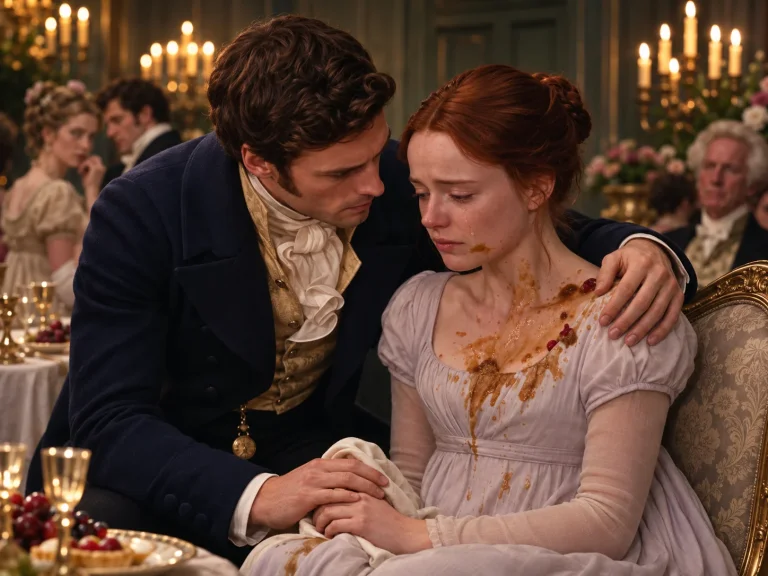
Outside, a carriage splashed through rainwater. Eleanor remembered Marian’s rule: every contributor deserved to know where the money went.
Westmere offered to pay the solicitor’s fees until the account was secured. Eleanor thanked him but asked that any advance be recorded as a loan to be repaid. The duke agreed. He seemed surprised by her firmness, pleased.
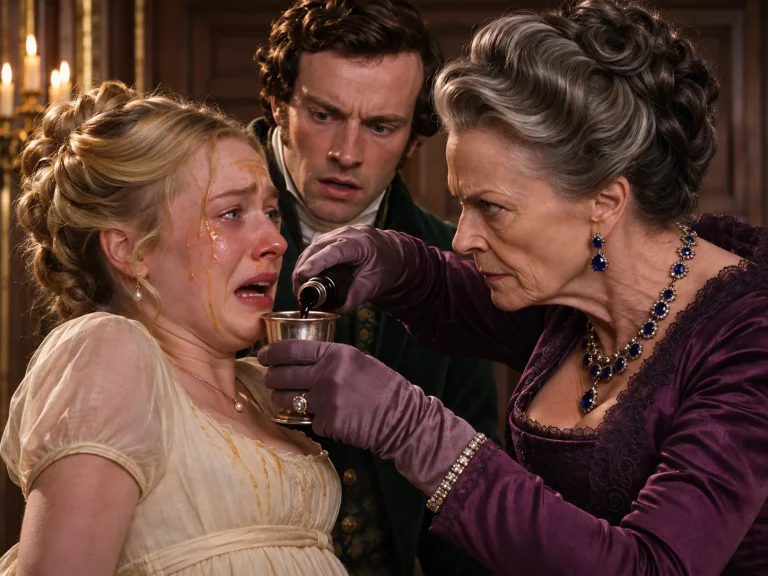
Their conversation was interrupted by an urgent message from Mrs. Finch. Lady Lavinia had dismissed three servants who witnessed the portrait’s destruction and threatened to accuse them of theft if they spoke publicly.
Eleanor set aside the bank papers. “They are being punished because I left.”
“Then they need counsel as well,” Mr. Langley said.
Westmere offered to introduce them to reputable employers, but Eleanor suggested first asking what each servant wanted. Some had families nearby and could not simply move to London. Her solution was slower, less dramatic, and more useful.
By evening, two former servants agreed to testify about household correspondence. The third, Daniel Price, remembered Harcourt calling the portrait evidence of an older promise.
—
Eleanor could not imagine what promise the portrait might conceal. It had hung above her bed for years, a painting of her parents seated beside a window. She knew every detail of their faces and the blue ribbon her mother wore beneath the green shawl.
A respected restorer named Mrs. Pritchard examined the damaged frame at her Bath workshop. She lifted the cracked glass, flattened the torn backing, and found a second sheet of thin paper carefully folded behind the painting. Eleanor gasped. Her father had been fond of hiding encouraging notes inside birthday gifts, but she had never thought to open the frame he had sealed himself.
The folded paper contained a list of names, all written in Thomas Ashford’s neat hand, followed by payments marked for village families displaced by the 1809 flood. At the bottom he had recorded a donation made by the Westmere family for repairs to the old bridge. His final note stated that the money had been entrusted to a local committee, not to any private relative.
Eleanor saw at once why her aunt might want the portrait destroyed. The committee had later been managed by Harcourt’s father, and Lady Lavinia had often claimed the bridge fund belonged to her household. The document alone did not establish theft, but it contradicted that claim.
Westmere stood beside the worktable, his expression grave. “Your father kept better records than anyone knew.”
“He believed promises should be remembered,” Eleanor answered.
Mrs. Pritchard handed her the damaged paper. “The portrait can be restored, Miss Ashford. Its history cannot be repaired with paint, but its faces need not disappear.”
Eleanor held the two pieces together and felt something shift. Her aunt had tried to destroy a memory. Instead, the damage had exposed a record that might finally protect it.