Lady Margaret sent a donation anonymously. Clara recognized the handwriting on the accompanying note. She accepted the money only after the trustees voted to do so, and she recorded it publicly. The old woman had lost authority, but she had begun to understand that repair required more than regret.
The school did not erase the past. It gave the money a purpose its founders had intended.
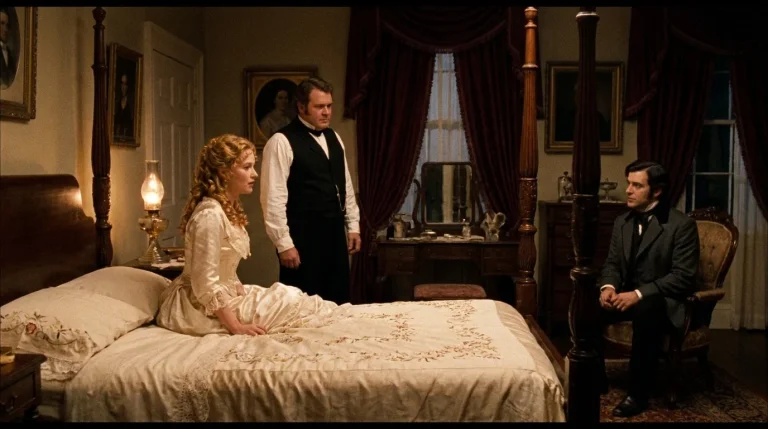
On the first winter evening, Clara watched children leave with books held beneath their coats. She remembered the bedroom door and the moment she had said she knew who started all of it. The truth had cost her a marriage, but it had also opened a door for people whose names had never appeared in the family portraits.
The Choice That Remained
A year after the hearing, Thomas received an offer to return to military service in a training role. He asked Clara whether she thought he should accept. She told him the decision belonged to him. He smiled at the answer, recognizing how different it was from the household in which they had both grown up.
Thomas accepted the position but arranged to remain involved with the trust. Before leaving, he and Clara walked through the mill yard. Workers were repairing a furnace, and Ada was checking the relief register. The sound of machinery carried across the river.
Thomas admitted that he had once believed protecting Clara meant standing between her and Henry. He now understood that it also meant standing back when she wanted to act for herself.
Clara said she had once believed safety meant never making anyone angry. She had learned that silence could be more dangerous than conflict.
They did not declare their love or promise a future together. Their bond had been tested by grief, loyalty, and the temptation to make one another responsible for healing. They chose honesty instead.
When Thomas’s carriage departed, Clara returned to the school. A girl waited at the door with a book she could not understand. Clara invited her inside and sat beside her.
The work was ordinary, difficult, and unfinished. It was also hers.
A Name Reclaimed
Years later, the county remembered the Whitmore scandal as the case that changed the rules for charitable trusts and private medical confinement. Clara disliked being called a heroine. She said she had only insisted that the law apply to a woman as it applied to a man.
The ironworks continued under independent management. The relief fund paid widows, supported apprentices, and sent several girls to teacher-training colleges. Its records were open to the families it served.
Thomas remained a trusted friend. He never claimed that he had saved Clara. When people praised him for confronting his brother, he pointed them toward the woman who had kept the evidence, faced the assembly, and refused the private bargain.
Clara kept the blue folder of letters in the school archive. Beside it she placed the trust deed and a copy of the first public accounts. Students were allowed to read them when they studied the history of the mill.
The last page carried a note in her hand: “A family name is not a license to command another person’s life. An inheritance is not worth preserving if it is built from another person’s silence.”
On the anniversary of the school’s opening, the children sang in the hall. Clara stood near the doorway, listening. The old mansion no longer belonged to the story of a husband and wife trapped by power. It had become a place where the next generation could learn to recognize power before it became cruelty.