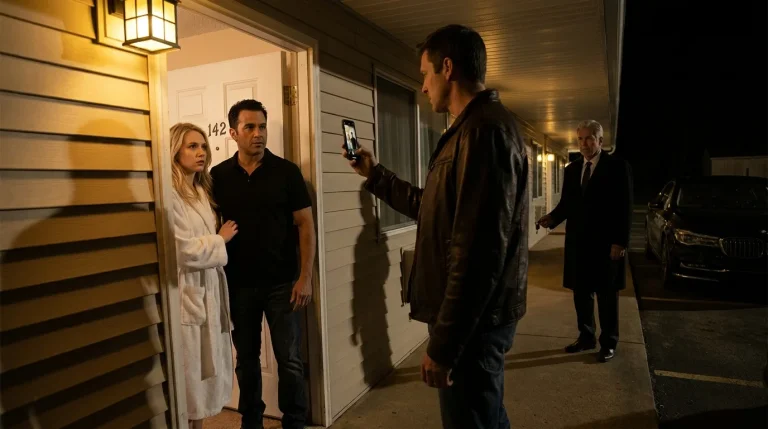
Thomas recognized the intermediary’s name from his service. A captain he had reported for selling army supplies had been protected by a senior official. The scandal had followed him home.
Clara asked whether Rook was threatening her. He smiled and said he was explaining how the world worked. She answered that the world had worked very well for men who never had to answer for their decisions.
Rook left with no agreement. Thomas warned that the next pressure might not come in the form of a letter.
A Night at the Mill
A fire broke out at the ironworks storehouse before dawn. The blaze destroyed several boxes of old account books and damaged the office roof. The watchman said he had seen two men leave through the canal gate. No one was injured, but the timing was too convenient to ignore.
Clara reached the mill with Thomas and found workers standing in the snow, afraid they would lose their wages. She told them the payroll would be protected and that the audit would continue. She did not promise that the mill would remain open indefinitely. She promised that no one would be dismissed merely to hide the theft.
Ada Mercer found a charred metal box beneath a fallen beam. Inside were several receipts that had not been stored with the main books. One showed a payment to a man whose name matched the watchman’s description of a visitor the previous evening.
Thomas asked the watchman to speak to the magistrate. The man hesitated, then admitted that Rook’s clerk had paid him to leave the gate unlocked. He had not known the building would be burned. His testimony connected Rook to the destruction of evidence.
The fire changed public opinion. The workers who had doubted Clara now understood that the audit threatened people with something to hide. They formed a committee to protect the remaining records and ensure the families received updates.
Clara stood beside the damaged furnace and listened to the workers argue about repairs. She had inherited a trust, not a fortune. She would have to learn how to protect it in a world that treated women’s authority as an inconvenience.
The Letter from the Front
Thomas received a letter from a former army sergeant who had served with him near Petersburg. The man had heard that Rook’s name was connected to the wartime supply scandal and had kept copies of requisition forms. The forms showed that equipment had been billed to the government but never delivered.
One signature appeared repeatedly: Henry Whitmore’s. He had been a civilian contractor during the war, supplying iron fittings and wagon parts. The payments had passed through Rook’s company. The same account had later received money from the workers’ trust.
Thomas confronted Henry with the copies. Henry said he had signed what the government requested and that the missing supplies were the contractor’s responsibility. Thomas asked why the money had been transferred to the estate.
Henry admitted that Rook had promised to repay him with profits from a railway venture. When the venture failed, Henry used the trust money to cover the shortfall. He claimed he had intended to replace it before anyone noticed.
Thomas asked whether the soldiers who never received the equipment had known the difference. Henry looked away.
The letter from the front made the scandal more serious. The inquiry now involved public funds and wartime contracts. Thomas sent the forms to the appropriate authorities.
Henry accused his brother of choosing strangers over family. Thomas answered that the soldiers had been family to the men who depended on them, and the widows at the mill had been family to the trust.