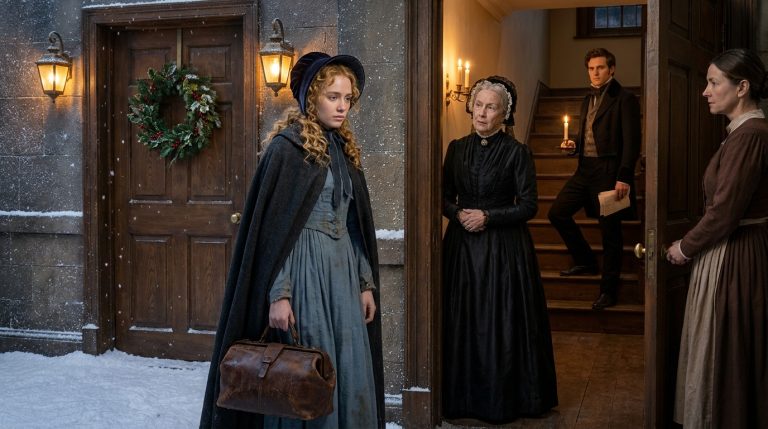
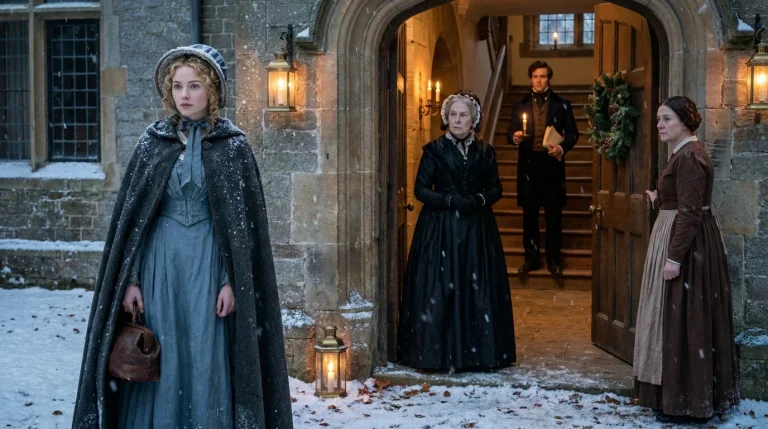
Clara asked whether he would give a statement. James agreed, but warned that the household would know by morning.
They copied the letters and returned the ledger before dawn. As they reached the servants’ stairs, they heard Henry’s voice in the hall. He was asking where his brother had been.
The Brother’s Wound
Henry confronted Thomas in the billiard room. He accused him of stealing estate papers and seducing Clara into rebellion. Thomas denied the accusation and asked why Henry had planned to declare his wife incompetent before she had refused the transfer.
Henry’s anger broke into something more personal. He said Thomas had always been the favored son, the one their father praised for his courage and their mother forgave for every mistake. Henry had inherited the title but never the affection. He had spent his life trying to prove he could keep the estate together.
Thomas answered that he had never wanted the title. He had wanted a brother.
Henry laughed bitterly and said Thomas had taken the one thing Henry believed belonged to him: Clara’s affection. Thomas said Clara was not property, and no man’s jealousy gave him a claim over her.
The brothers’ argument revealed an old wound. When they were boys, their father had promised Thomas a place in the ironworks, but after his death Lady Margaret had arranged for Henry to control the business. Thomas had left for the army believing he had been unwanted. Henry had remained, convinced that everyone expected him to fail.
Neither brother had understood how their mother had used those resentments to keep them apart.
Henry demanded the letters. Thomas refused. A struggle began, but this time Clara entered and ordered them both to stop. She told them the real enemy was the plan that had turned a family into a contest for control.
The Woman Who Started It
Clara gathered the evidence in the morning room and asked Lady Margaret to join them. She placed the forged letters, the ledger, and the doctor’s draft report on the table. Lady Margaret did not deny the handwriting. She said she had acted to protect the estate.
Clara asked why the relief fund had been used to cover the family’s debts. Lady Margaret replied that the mill would have closed otherwise. She claimed the workers would have lost everything if the Whitmores had failed.
Thomas asked why she had planned to confine Clara. Lady Margaret said a woman in grief could not be trusted with a business. Clara answered that her father had trusted her with the shares precisely because she understood the accounts.
Then Clara revealed the final piece. She had found a letter from her father, written shortly before his death, stating that the ironworks shares were held in trust for the workers’ widows and their children. Clara was only the trustee. She could not legally transfer them to Henry, even if she wished.
The marriage settlement had been built on a false assumption. Henry and Lady Margaret had believed Clara owned the shares outright. In fact, they had been trying to seize property that belonged to the beneficiaries.
Lady Margaret’s face changed. The plan was no longer merely immoral. It was a fraud against the very families the estate claimed to protect.
Clara said, “I know who started all of this. It was not Thomas. It was not me. It was the person who taught us to call greed duty.”
Lady Margaret stood without a word.
The Trust’s True Owner
The letter from Clara’s father was not enough on its own. The trust deed had been registered in Philadelphia, and the original copy was held by a bank. Clara sent a messenger to retrieve it. Until it arrived, Lady Margaret continued to insist that the document was a private family arrangement.