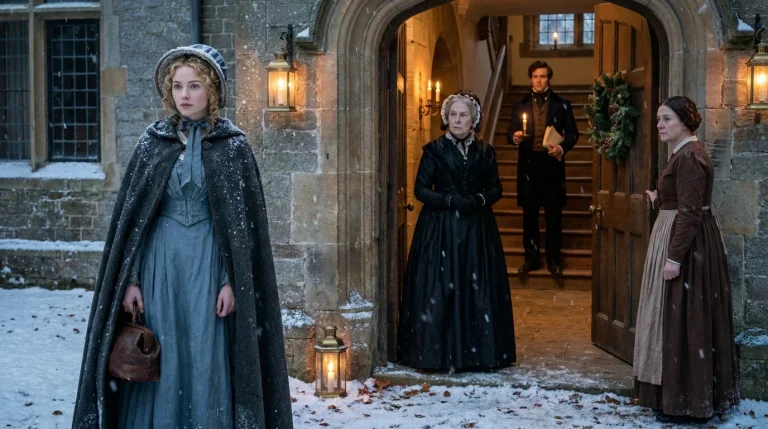
When he finally saw her in the library, she looked older than her years. She told him she had tried to write, but her letters had been returned unopened. Thomas showed her the letters he had received from Henry, each claiming Clara had asked him not to visit. Their handwriting was similar to hers, but the phrasing was wrong.
They compared dates. The letters had been posted from the estate office, not from Clara’s family home. Someone had controlled the correspondence.
Thomas wanted to confront Henry at once. Clara stopped him. She had learned that anger gave Henry an excuse to call a man reckless and a woman unstable. She needed evidence that could not be dismissed as jealousy between brothers.
Thomas agreed to wait, but the restraint cost him. He had returned from war believing the worst dangers were behind him. At Whitmore Hall, he discovered that a quieter kind of battle had been taking place in every locked room.
The Ledger in the Music Room
Clara led Thomas to the music room, where her father’s old piano stood beneath a portrait of the ironworks. Behind a loose panel in the piano bench, she had hidden a small ledger. It recorded dividends from her father’s shares, payments to the mill workers’ relief fund, and transfers made after her marriage.
The entries showed that Henry had withdrawn money from the ironworks account under the description of equipment purchases. The equipment had never arrived. A second set of payments went to a Philadelphia broker named Silas Rook, who had arranged loans for the Whitmore estate.
Thomas recognized the name. During the war, he had seen Rook’s company listed among suppliers accused of selling poor-quality equipment to the army. The investigation had disappeared after a senator intervened.
Clara explained that she had found the ledger when she noticed the mill’s relief fund had stopped paying widows. Henry told her the accounts were being reorganized. When she asked to see the books, he accused her of interfering in business she did not understand.
The ledger was incomplete. Several pages had been removed, and the original account book was locked in Henry’s study. Clara believed the missing pages showed who had authorized the transfers.
Thomas asked why she had not gone to the authorities. Clara said the local magistrate was a dinner guest at Whitmore Hall, and the family solicitor had drafted the marriage contract. Every door she might have knocked on seemed to open into another room controlled by Henry.
Lady Margaret’s Rule
Lady Margaret Whitmore ran the household with a discipline that the county admired. Every servant knew the hour for meals, the proper form of address, and which rooms were closed to visitors. She believed order was the foundation of respectability. She also believed that family disagreements should never leave the house.
When she learned Thomas had entered Clara’s bedroom, she summoned him to the morning room. She said he had humiliated his brother and endangered the family reputation. Thomas replied that he had stopped Henry from hurting Clara. Lady Margaret called it a private misunderstanding.
She then reminded Thomas that the estate had carried the family through three generations and that Henry had sacrificed everything to preserve it. Thomas asked whether the ironworks money had been used to pay private debts. Lady Margaret’s expression changed.
She told him that men who had not managed an estate had no right to judge those who did. Thomas answered that he had managed men under fire and knew the difference between leadership and intimidation.
Lady Margaret ended the conversation by saying Clara had always been troublesome. She had encouraged Henry to marry her because the ironworks shares would secure the family’s future, but Clara had refused to surrender control. The older woman called that ingratitude.