—
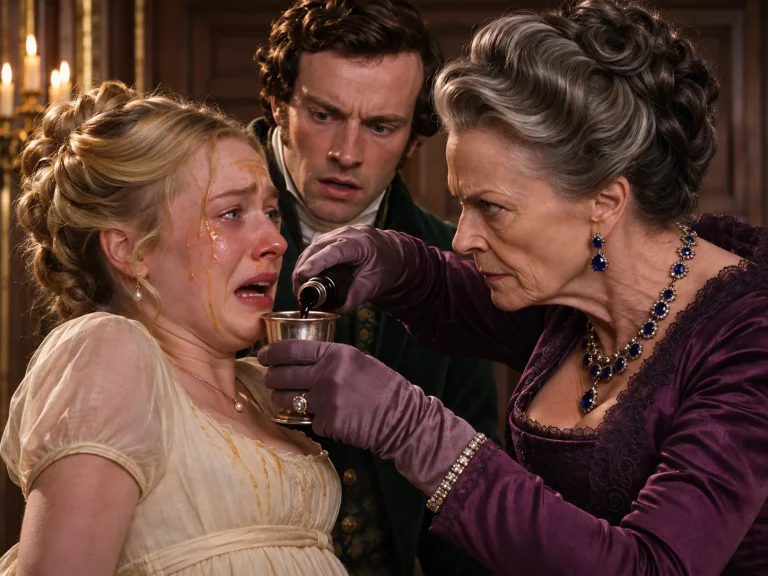
Eric summoned Gordon to the study that afternoon. He stood behind their father’s enormous desk, one hand resting on a silver letter opener. He looked composed again, as though the night before had been no more than an unpleasant interruption. “You will stay away from Diana,” Eric said. Gordon placed the bundle of letters on the desk. “You and Mother kept these from us.” Eric glanced at the seals and then at his brother. “Old correspondence proves nothing.” “It proves she did not abandon me.” “She is my wife now.” Gordon stepped closer. “You made certain she had no choice. You threatened her father and sent me abroad.” Eric’s expression hardened. He admitted that the Vale estate had been under financial pressure, but called the marriage a reasonable arrangement. Diana had received a title and a home,
he said. She should be grateful. Gordon asked why a grateful wife had to be locked in her room. Eric set down the letter opener. “You are confusing jealousy with honor. You want her because I have her.” The accusation struck harder than Gordon expected. He had loved Diana before Eric had shown interest in her. Yet he knew he could not prove that to a brother determined to call every objection selfishness. Eric ordered him out and warned that any further interference would cost him his allowance and his place at Ashcombe House. Gordon left without answering. He had depended on the family income for years, but that dependence had made it easy for Eric to treat him as a child. He went directly to Sir Edmund and asked what would happen if the duke’s conduct became public.
The solicitor replied that reputation could be managed, but forged accounts, intercepted correspondence, and violence could not be made lawful by a title alone.
—
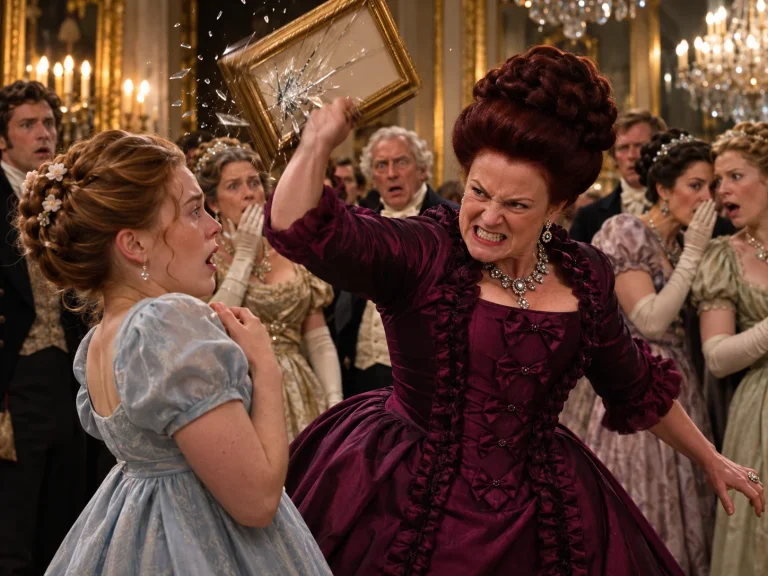
Diana was allowed downstairs for dinner two nights later, but only because Beatrice wanted the household to appear normal. Her cheek had faded from red to yellow, and she wore a high collar to conceal the mark near her jaw. Eric sat beside her and spoke pleasantly about a planned visit to London. Across the table, Gordon watched her hands. She held her fork carefully, as if any sudden movement might draw attention. When Eric reached for her wrist beneath the table, she flinched. Gordon rose so quickly that his chair scraped the floor. Beatrice looked at him. “Sit down.” He did not. “Diana needs a physician.
” Eric laughed. “She has one.” “Then let him examine her without you in the room.” The table fell silent. Beatrice ordered the servants to leave. When the doors closed, she accused Gordon of trying to humiliate his brother. Gordon answered that the humiliation belonged to the person who struck his wife. Diana spoke before the argument could grow. “I do not need either of you to speak for me. I need the truth to be heard.” She told them that Eric had demanded she sign a new document transferring control of her father’s remaining land to the Ashcombe estate. She had refused because the marriage settlement placed the property in trust for her and her sister. Eric had told her the trust could be challenged if she did not cooperate.
Sir Edmund, who had been invited to dinner, asked to see the document. Eric refused. That refusal changed the room more than Diana’s accusation had. The solicitor said the original settlement was held in his office and could be examined the next morning. Beatrice ordered everyone to stop speaking. Silence had been purchased, not chosen, and Gordon finally understood the price of obedience.