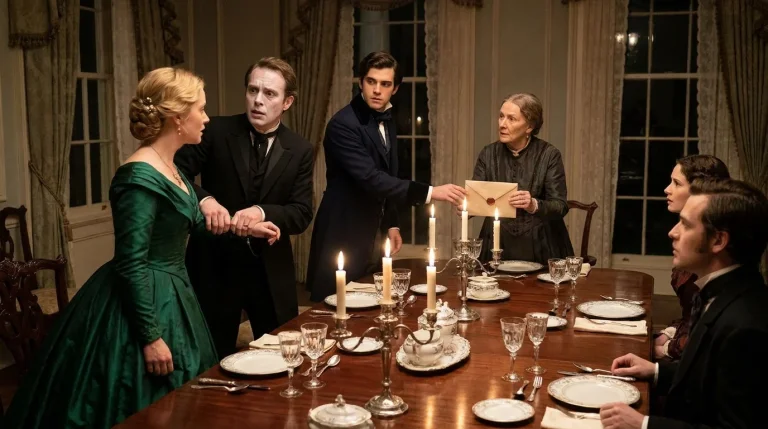
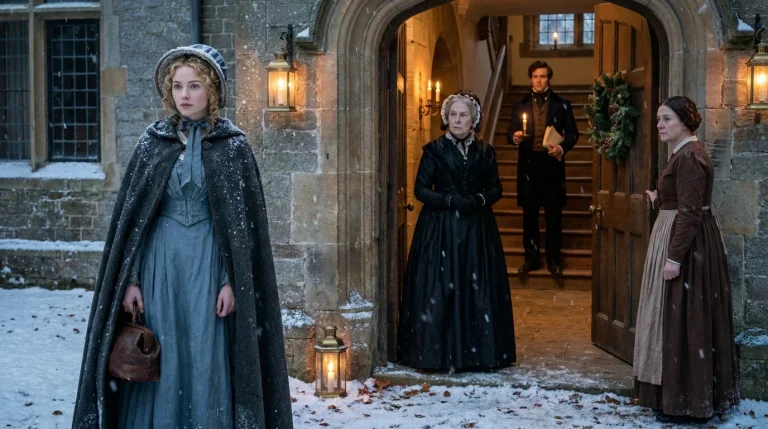
Nathaniel testified. He described the confrontation and the documents Eleanor had shown him. Charles’s counsel asked whether he was motivated by jealousy or affection for his brother’s wife. Nathaniel answered that he was motivated by the evidence.
Eleanor watched him speak. She knew the accusation had been designed to make her seem like the prize in a rivalry between men. She refused to let the court reduce her to that story. When she took the stand, she described her own decisions, her investigation, and the reasons she had kept the documents.
The jury found Charles guilty on the financial charges. The judge ordered restitution from the remaining assets and imposed a prison sentence. Sir Alistair Wren’s role was referred for a separate inquiry.
The Ashford name survived, but it no longer protected Charles from the law.
A Different Kind of Inheritance
After the trial, Eleanor had the right to live separately and manage her own inheritance. She did not return to the role of dutiful wife. The marriage was dissolved through the proper legal process, and the court confirmed that her trust assets were hers to administer with the independent trustees.
Nathaniel expected her to leave Ashford Hall. Instead, she asked to remain long enough to establish a permanent office for the charitable fund. The estate had rooms that could be used for classes, and the village had girls who needed schooling. She proposed turning the east wing into a small residential school for young women who had lost family support.
Some members of the county objected. They said the house was too grand for such a purpose and that girls of humble birth would not know how to behave in it. Eleanor answered that the fund had been created precisely because education should not depend on birth.
Nathaniel supported the plan but warned that the estate needed a reliable income. They reviewed the land leases and reduced the rents for small tenants. The railway shares were sold gradually to restore the fund. The first scholarships went to Anne Whitcomb and the two sisters from the mining village.
Mrs. Finch became the school’s housekeeper. She insisted that every girl have a proper bed, a warm meal, and a place to keep her books. No one was to be sent away for asking a question.
Eleanor kept the grammar book Anne had given her on her desk. She no longer measured safety by the absence of raised voices. She measured it by whether the people under her care could speak freely.
The Brother Who Stayed
Nathaniel was offered a position in London after the inquiry. It would have restored his prospects and removed him from the daily reminders of the scandal. He considered accepting, but Eleanor asked him to remain until the school was established.
He worried that his presence might invite gossip. Some people still whispered that he had defended Eleanor because he loved her. The accusation had no foundation, but it was difficult to silence. Nathaniel had cared for her as a friend and as a person wronged by his brother. He did not seek to replace Charles in her life or to claim a reward for doing what was right.
Eleanor understood the rumours. She told him she would not ask him to sacrifice his future for her. Nathaniel replied that he was choosing work that mattered to him, not remaining out of obligation.
Their relationship settled into an honest friendship. He managed the estate’s repairs and helped the trustees. Eleanor directed the school and learned to negotiate with suppliers, magistrates, and local families. They disagreed often, but neither used affection as leverage.