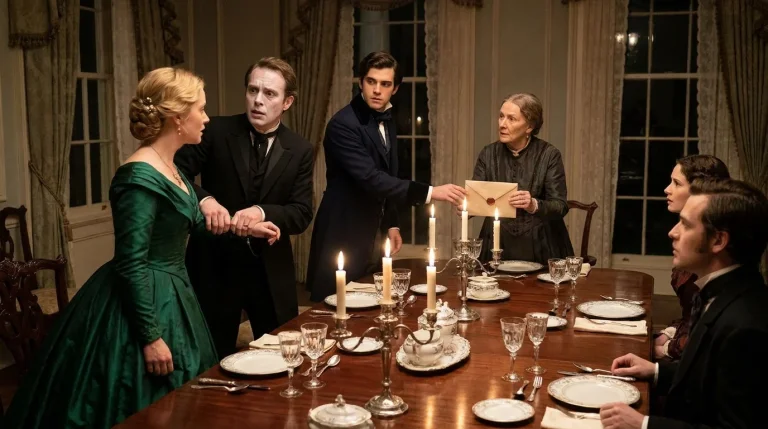
Nathaniel’s anger rose, but Mrs. Finch placed a hand on his sleeve.
“Anger makes a gentleman loud, sir. We need you accurate.”
The housekeeper’s caution steadied him. She had risked her position by keeping the ledger. Eleanor thanked her, then asked whether the other servants had seen anything. Mrs. Finch said several had, but none would speak while Charles remained master of the house.
The household itself had become a witness stand, waiting for someone to open the door.
The Brother’s Secret
Charles summoned Nathaniel to the library and offered him a bargain. If Nathaniel left Ashford Hall and returned to his regiment, Charles would forgive the interruption in the bedroom. He would even arrange a respectable post for him when the war office released him from service. In exchange, Nathaniel must stop questioning the steward and physician.
Nathaniel asked why a man with nothing to hide would fear questions. Charles poured brandy and said the estate was in danger. Their father’s debts had been larger than anyone knew. He had kept the land together through difficult years, and Eleanor’s inheritance had been the only way to preserve the family name.
Nathaniel asked whether preserving the name required forging medical reports and stealing from a charity. Charles’s face changed. He admitted that their father had once used the same charitable fund to settle a private debt. Charles had discovered the practice after inheriting the estate and continued it because he believed the fund would never be audited.
The revelation unsettled Nathaniel. The family corruption had begun before Charles’s marriage. But Charles insisted he had only done what their father had done. He argued that a noble household could not survive by following every rule meant for ordinary people.
Nathaniel told him that the fund had been established by Eleanor’s father, not theirs. Charles replied that the distinction was sentimental. Money did not remember whose name had been written on it.
Nathaniel left the library with a clearer understanding of the man he had once admired. Charles did not believe himself cruel. He believed the world owed him enough power to make cruelty unnecessary to explain.
That evening, Eleanor received a letter from the institution confirming that a bed had been reserved in her name. The date of admission was the following Monday.
The Woman in the Portrait
Eleanor found an old portrait in the west gallery, half hidden behind a landscape of the Ashford estate. It showed Nathaniel and Charles’s mother, Lady Margaret, standing beside a young woman in a plain dress. The young woman was not a relative. She was one of the beneficiaries of the charitable fund.
Eleanor remembered her father speaking of a girl named Anne Whitcomb, who had been educated at his expense after her parents died. Anne had later become a governess and written letters thanking him. The portrait had been commissioned to celebrate the fund’s tenth anniversary.
When Eleanor examined the back of the frame, she found a folded note. It was written in Lady Margaret’s hand and addressed to the estate solicitor. The note asked him to preserve the fund’s original charter and warned that Charles had begun using its money for private expenses.
The date was fifteen years earlier. Lady Margaret had died before Eleanor married Charles. The note suggested that Charles had inherited not only debts, but a warning he had ignored.
Nathaniel realized their mother had known something. He searched the old family papers and found a letter from Lady Margaret to him, written shortly before her death. She had asked him to return home if Charles ever began treating the estate as his personal kingdom. Nathaniel had never received it. The letter had been placed in a locked dispatch box.