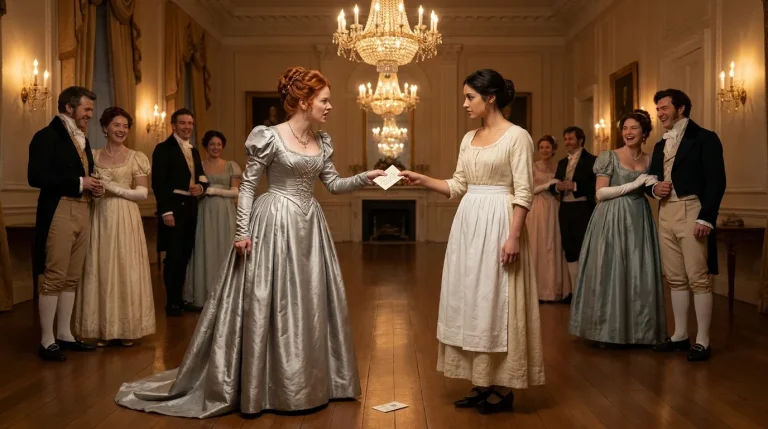
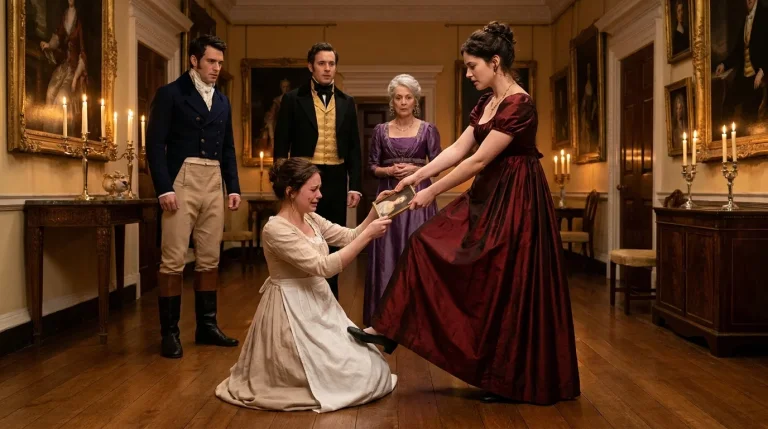
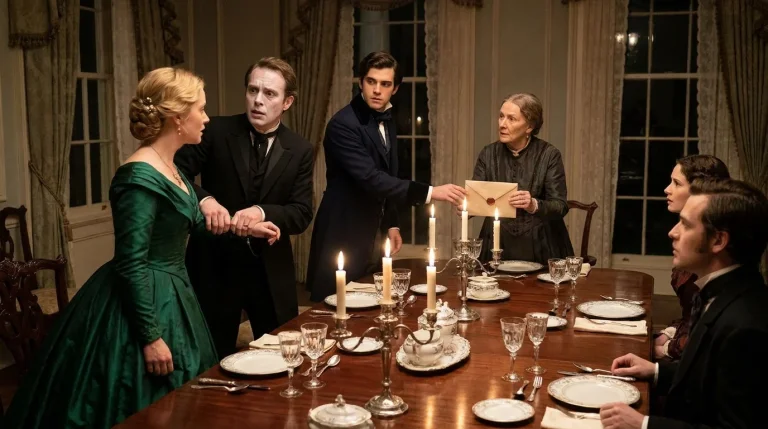
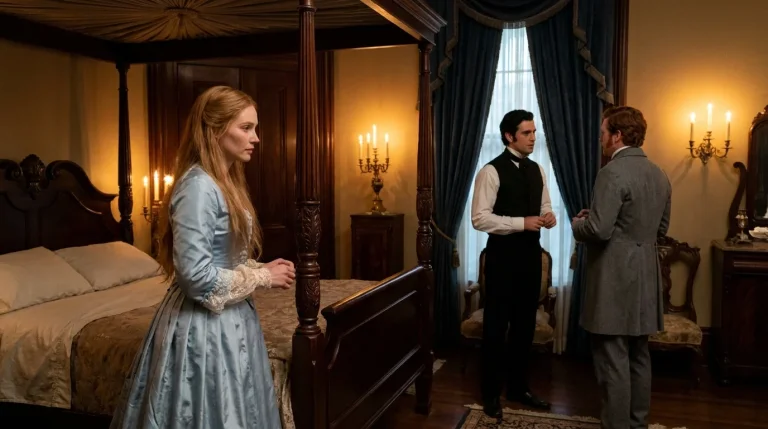
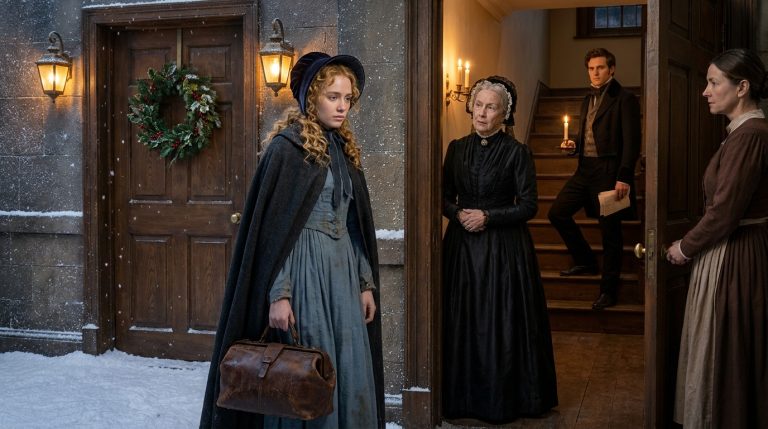
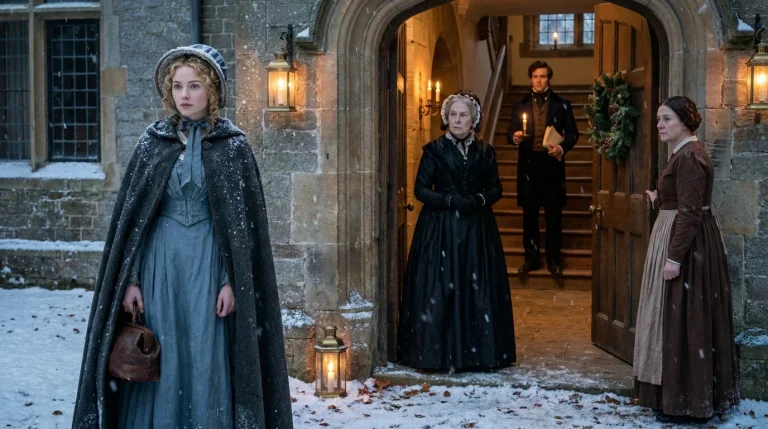
One afternoon, Nathaniel found a letter from Charles in the post. It was written from prison and asked for forgiveness. Charles said he had been driven by debt and fear. He claimed that Eleanor’s refusal to submit had destroyed the family.
Nathaniel did not answer immediately. He showed the letter to Eleanor. She read it and placed it back in the envelope.
“He still believes the worst thing that happened was losing control,” she said.
Nathaniel understood. Forgiveness, if it came, could not require them to pretend the harm had never happened.
The Opening of Ashford School
The school opened the following autumn. The first six girls arrived with trunks that were too small, shoes worn thin, and expressions that mixed hope with suspicion. Anne Whitcomb greeted them at the door. She had become the school’s first teacher, and she knew how frightening it was to enter a grand house where everyone else seemed to belong.
Eleanor stood in the hall and welcomed each girl by name. She showed them the dormitory, the library, and the dining room. The beds were simple but clean. The windows had curtains. Each girl had a drawer that belonged to her alone.
At the first meal, one child hid a piece of bread in her sleeve. Eleanor noticed but did not shame her. She quietly placed a covered basket of rolls on the sideboard and explained that food would be available whenever the girls were hungry.
The child looked uncertain. Anne told her she could take a roll for later if she wished. The girl began to cry.
Eleanor recognized the fear. It was the same fear she had seen in herself when Charles controlled every choice. The school would not solve every hardship, but it could refuse to reproduce the cruelties that had been called discipline.
At the opening ceremony, Reverend Bell read from the trust charter. Nathaniel stood beside the trustees. No Ashford portrait dominated the room. Instead, the girls’ names were written on a board above the fireplace.
The house had not forgotten its past. It had chosen a different purpose for its future.
She refused to let the discussion become a contest between two brothers when the evidence concerned the rights of many people.
The Last Visit
Several years later, Charles was released under conditions that required him to live away from the county and make regular payments toward restitution. He wrote to Eleanor asking for one meeting. She agreed to see him in the presence of the solicitor, not because she wished to resume the marriage, but because she wanted to hear whether he understood what he had done.
Charles arrived thinner and older. He looked around the school library and seemed unable to recognize the house. He said the rooms had been changed. Eleanor replied that they had been put to better use.
He asked whether she had ever loved him. Eleanor said she had loved the man she believed he was when she married him. She had also loved the future she thought they might build. But love did not make his actions less deliberate.
Charles said he had been afraid of losing the estate. Eleanor answered that he had been more afraid of losing authority than of losing the people who depended on him.
He looked toward the girls studying at the far table. One of them was Anne’s niece. Another was the daughter of a tenant whose rent had once been raised beyond what his family could pay. Their books had been purchased from the restored trust.
Charles asked whether she would ever forgive him. Eleanor said she did not know. She would not promise a feeling to make him comfortable. He could continue paying restitution and live honestly. That was what remained in his power.