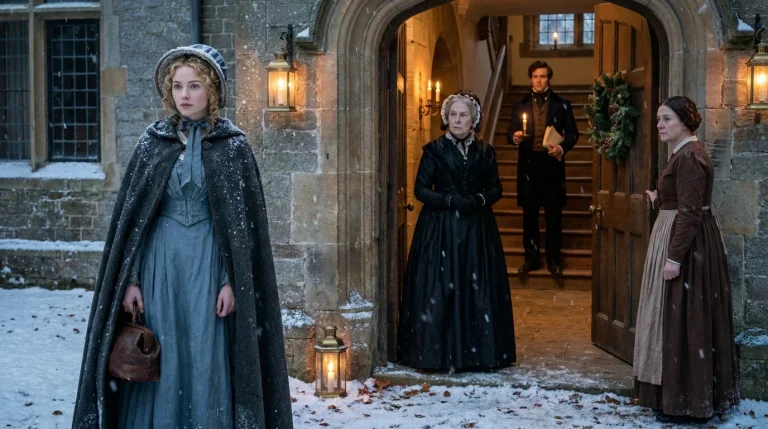
“I understand you mean to keep the account of all this.”
“Yes.”
“In the school?”
“In its archive. With the trust deed and the names of the people who were owed money.”
The Dowager looked toward the window.
“After I am gone, there will be no purpose in keeping the scandal alive.”
“There will still be a purpose in knowing what happened.”
“You would have me remembered for nothing else?”
Sophie considered before answering.
“I will record it accurately. I will not add cruelty to the truth. But I cannot remove my mother’s name to make your part easier to read.”
The older woman was silent for a long time.
“I thought I was preserving something.”
“I know.”
“It was all I knew how to do.”
Sophie looked at the papers on the table.
“You have signed these. That will be recorded too.”
The Dowager died that winter. The school did not close, the payments did not stop, and nobody had to ask a new head of the family whether an old promise still applied. Margaret continued to help with the school and gradually became someone the pupils trusted to return when she said she would. It was slow work. Sophie did not hurry it by calling her changed before the girls had reason to believe it.
Years later, a visitor entering the school would first see the portrait of Anne Bell and Duchess Eleanor. Beneath it hung a copy of the deed. Beside it was a list of beneficiaries, including people whose names had once been removed from the books. Jane, now teaching accounts herself, sometimes brought pupils into the hall to explain why those papers were displayed where everyone could read them.
Sophie kept the little watercolor in her office, with her mother’s silver thimble beside it. The opened letter rested in the archive, no longer a last word she was afraid to hear, but something another young woman could ask to read. George continued to attend the trustees’ meetings. Frederick learned to recognize the occasions when his most useful contribution was to sit quietly until the people affected had spoken.
One summer afternoon, he found Sophie beneath her mother’s portrait with three pupils and a document spread across a bench. He waited at the door.
“What happens if the person who made a promise changes his mind?” one girl asked.
“Some promises need to be written down,” Sophie said. “And the people they concern must be allowed to keep a copy.”
The girl studied the signatures.
“Even if they are not important?”
Sophie moved a little closer so they could read together.
“If their lives are affected, they are important.”
When the lesson ended, Frederick asked whether she had time to walk. They went down through the orchard and across the lawn toward the fountain. Its water still caught the sunlight in the same bright, careless way. Sophie paused beside the stone rim and remembered the tray striking the paving, the cold, and the terrible effort of trying not to make the laughter worse.
“What are you thinking?” Frederick asked.
“That I knew who I was even then.”
He looked at her, but did not offer to explain the memory for her.
From the school came the sound of a bell and girls calling one another to supper. Sophie checked the key in her pocket. Then she took Frederick’s hand and led the way back.