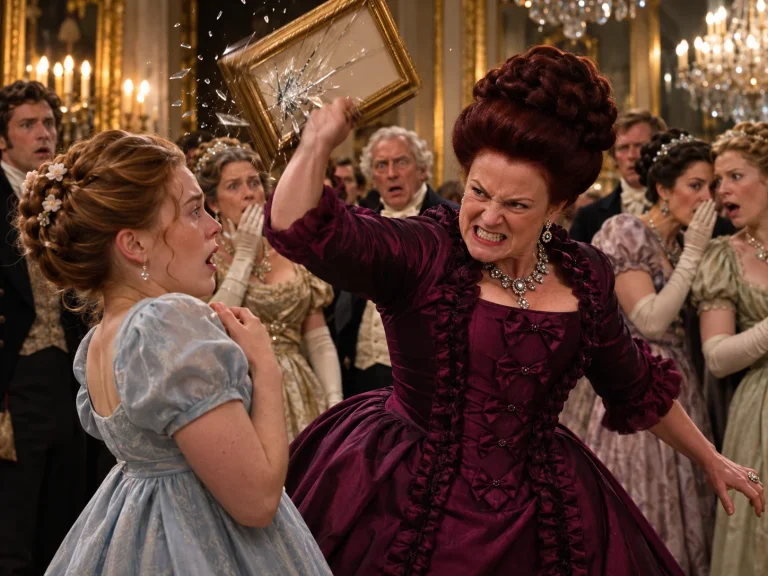
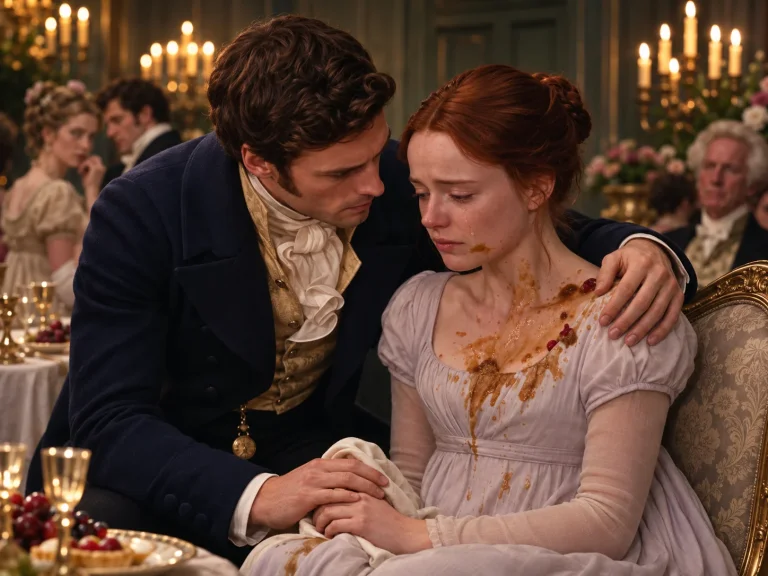
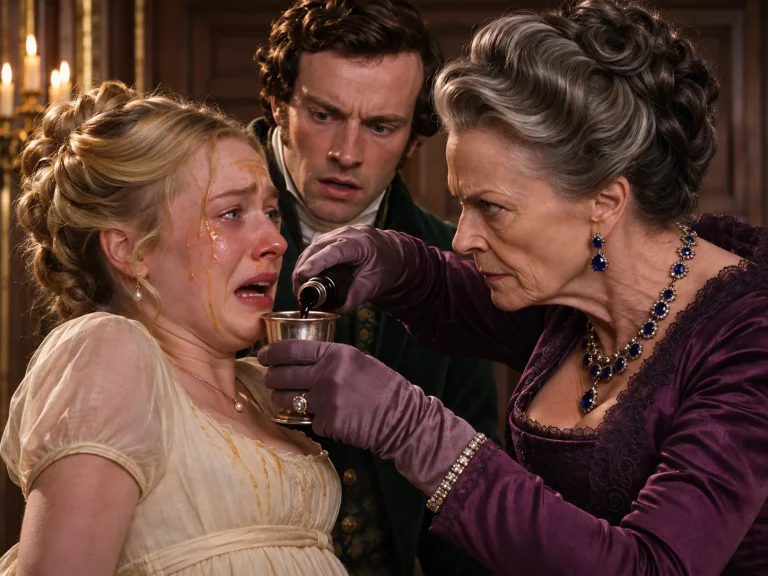
“You will not turn her safety into a public trial,” Alistair said to Frederick.
Frederick replied that he had been betrayed by the two people closest to him. Nora, attending Lady Harrow, raised her hand.
“I heard Lady Catherine ask to be released,” she said. “I saw her leave with me, not with Lord Elias.”
An elderly tenant stood beside her. He had known Catherine since childhood and asked why the word of a servant should be worth less than a gentleman’s when both had witnessed the same house.
Frederick’s face darkened. The duchess ordered the subject closed, but Duke Alistair rose with difficulty.
“I have encouraged this family to value silence above truth,” he said. “That ends today.”
He asked Fenwick to bring the parish papers to his study and directed that no one harass Catherine or Lady Harrow. Before dismissing the gathering, he announced that the succession records required a formal review.
Frederick understood the meaning immediately. He knocked his chair backward and shouted, “You would strip me of my birthright for her?”
—
The duchess spent the following day searching her locked correspondence cabinet, pulling out diaries and packets she had never permitted the servants to examine. But her secretary had once made a habit of copying outgoing correspondence into a ledger, and the ledger was still missing from its place.
She found Frederick in the billiard room, standing before a fire with a glass untouched in his hand. He asked whether the dates from Moorfield were genuine. Helena began to explain what society had required of a young woman who became a mother before marriage.
“I was the child,” he interrupted. “You made me the heir. Did Father know?”
“Yes. We expected no one to question it.”
He set down the glass. “Then every lesson, every speech about duty, every arrangement you made for me was built on a lie.”
Helena insisted that he was the eldest in every way that mattered. Frederick stared at her as though she had spoken a foreign language. Now he wondered whether she had taught him to frighten others because she herself had lived in fear.
“Did you forge Catherine’s letters?” he asked.
His mother hesitated. That was answer enough.
Frederick confessed that he had known of the doubtful marriage record for a year. A former steward had tried to sell him a copy. He paid for the paper and dismissed the man, then pressed Catherine to produce a son, hoping the birth of a grandson would make the family too invested in his line to investigate.
“You knew a child could not change the date,” Helena said.
“I knew people rarely question what they wish to believe.”
Before she could answer, a knock came at the door. Fenwick stood outside with a sealed request for the duchess’s correspondence ledger. It bore the duke’s own signature.