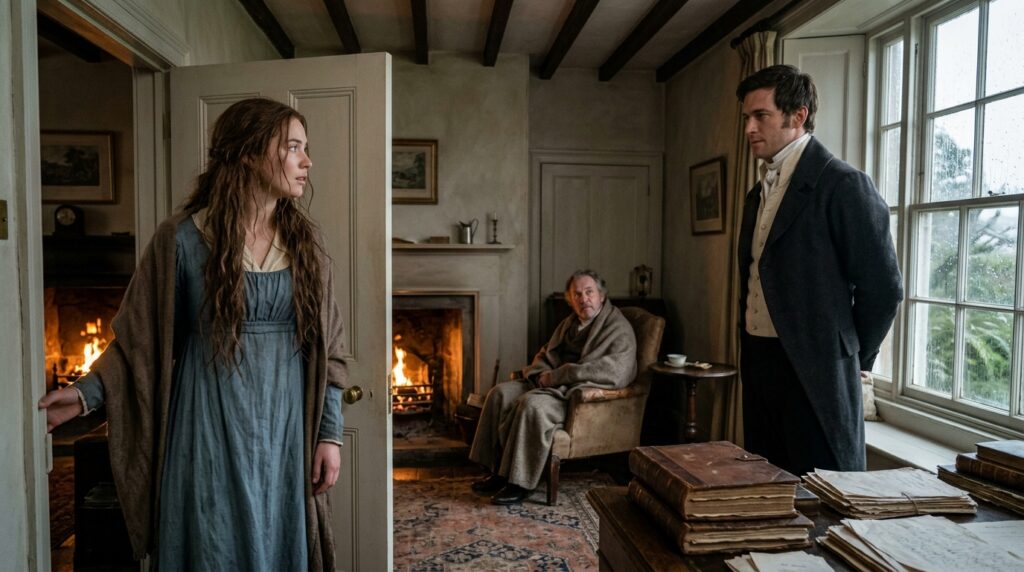
She shook her head slowly.
“And now somebody has taken my name off the page and put a stranger in its place. What for? So some fine lady can call herself a duke’s cousin?”
“I think so,” said Harriet. “I think she means to go up to Briar Cross and be received as family. And if the book says the schoolmaster’s daughter was called Mary and Mary’s daughter was her mother then there is no Agnes in it anywhere. You will have been scraped out.”
Agnes gave a short dry laugh with no humor in it.
“I was scraped out the day I was born, child. My grandfather saw to that. My mother walked out of that great house and never had a penny from it again. And she never asked for one. She taught me my letters on a slate by this very fire. And she died in this cottage with her hand in mine. I’ve never wanted anything from Briar Cross. I want nothing now.”
“I know,” said Harriet. “You told me so when I was 14. And I have kept quiet for 10 years because you asked me to. But this is different. They have not just left you out. They have written a lie over you in the parish book. And that book is in my keeping. I cannot let it stand.”
She put her hand over the old brown fingers in the net.
“I will not say a word to anyone without your leave. But think about it. Please. Before the Duke’s man goes back to Dorchester and tells him the lady at Weymouth is telling the truth.”
Agnes turned her face toward her. The deep dark eyes were wet.
“This gentleman,” she said slowly. “This Mr. Fairlie. What sort of man is he?”
Harriet thought about it. She thought of the muddy boots and the ruined bonnet carried up the lane. And the way he had said, “Very well, I will wait.” As though it had cost him nothing. She thought of the way he had looked at her in the study with her hair down her back. And how she had felt it all the way to her wet feet.
“I don’t know yet,” she said honestly. “I think he’s a man who listens.”
“Then bring him to me,” said Agnes. “When you know.”
Agnes did not send for her the next day or the day after. Harriet did not press her. She had learned long ago that old people and old books could not be hurried. Instead, she did the thing she had promised and went up to the vestry every morning at 9:00 and found Mr. Fairlie waiting at the lychgate every morning with his hat in his hand.
He wanted to read the whole of the old register, he said. Not just the Briar Cross pages, all of it. So, she sat him down at the table under the green window and she taught him how. He was a good pupil and that surprised her.
Most gentlemen she had known could not bear to be taught anything by a woman and certainly not by a woman with ink on her fingers. Mr. Fairlie did not seem to mind at all. He bent over the brown pages with his chestnut head close to hers and let her show him how the old curates had written their letters. There was the tall S that looked like an F, and the little loop that stood for half a word.
There was the way a date ran on from the old year into the new at Lady Day instead of at New Year. He made mistakes and laughed at them. He read a fisherman’s name as Fif when it was plainly fish, and then could not stop seeing it until she laughed too. And the sound of it went up into the cold stone rafters and surprised them both.
“You are enjoying this,” she said on the third morning.
“Yes,” he said.
He did not look up from the page.
“Is that wrong?”
“No. Only unusual. The gentlemen who come to read our books usually want one name and they find it and they go away. They never want the plowman.”











