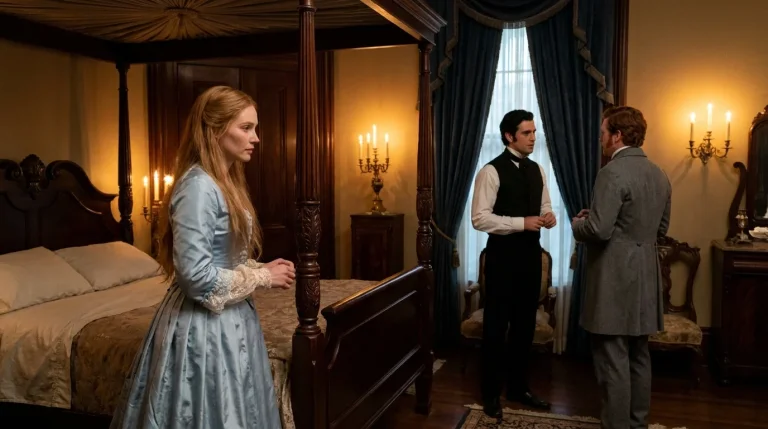
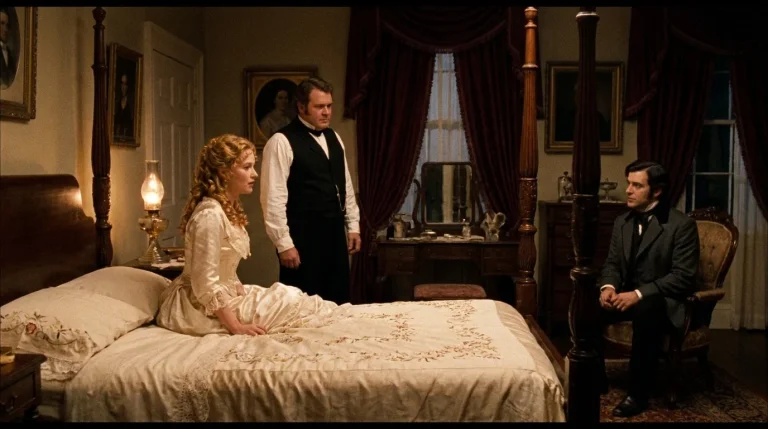
She told him that evening what Lady Griselda had said, from the beginning, without holding anything back. He listened in silence.
“I shall speak to my aunt,” he said at the end.
“You will not, Your Grace.”
She put down the ledger.
“If you defend me to her, you will prove her right.”
“Piers,” he said.
She looked at him.
“My name is Piers. I should like someone in this house to say it once as though I were a person and not a title.”
“I cannot.”
“Say it once, so that I know what it sounds like.”
Their whole lives came to stand at the edge of the oak table and waited.
“Piers,” she said.
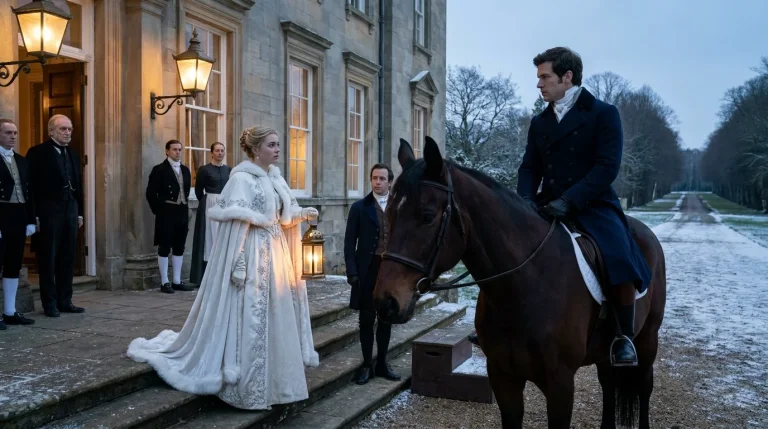
On the last Monday of February, he went to Newcastle to see the bank. For six years, a draft upon the estate account had been cashed there every quarter in the name of Hargrave and Company. He wanted to see for himself who was cashing it. He was to be away two nights. Avis thought afterward that Mr. Crowe must have known the date of the journey a fortnight ahead.
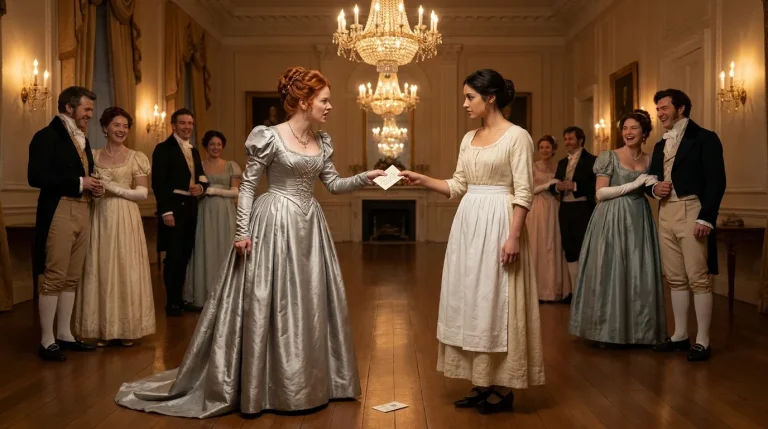
They were all summoned to the servants’ hall at eleven on Tuesday morning: Mrs. Elsdon and the butler, the maids and footmen, and the knife-room boy. Lady Griselda stood at the end of the long pine table, Mr. Crowe beside her with a small blue notebook in his hand. She was sorry, courteous, and pleasant throughout, which was the cruelest way of doing it.
“This is not a happy matter,” she said, “and I shall be brief. Miss Tennant, you will leave this house today. Mr. Crowe found this book in your room. It contains figures copied from His Grace’s private accounts. I do not say that you meant harm. I do not say anything at all.”
She let the silence remain, which did the work.
“But it is being said in the county that His Grace’s governess is not merely his governess, and I cannot stop that. What I can do is remove the cause. There is no error here, only a situation, and of the two people concerned, only one can be dismissed.”
“My lady,” Mrs. Elsdon said from the end of the table, “the girl has done nothing but good in this house.”
“I did not say she had done anything, Mrs. Elsdon.”
Still perfectly pleasant.
“The carrier leaves for Morpeth at two. Miss Tennant will go with him. Her wages have been paid.”
“And my character, my lady?” Avis asked.
For the first time, Lady Griselda hesitated. It lasted less than a second. Avis saw it, and Mrs. Elsdon saw it, and neither ever forgot.
“I cannot give you a character, Miss Tennant.”
It was said clearly, before an assembly that understood exactly what it meant. For the second time in a year, Avis stood before a household without protesting, without weeping, without looking for help in anyone’s eyes.
“Thank you, my lady,” she said. “I shall be gone by two.”
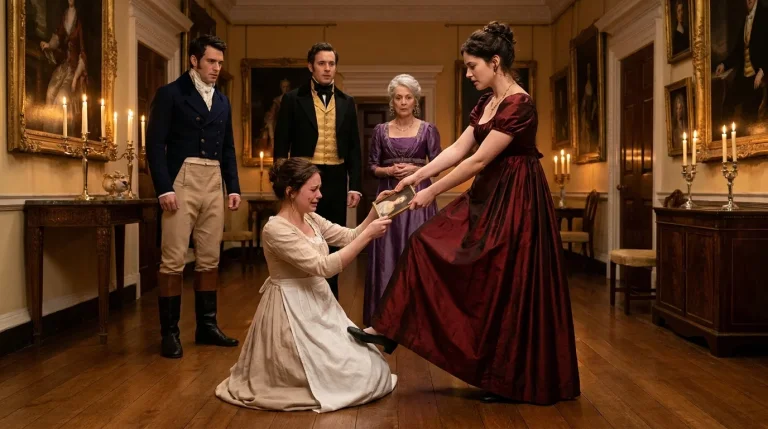
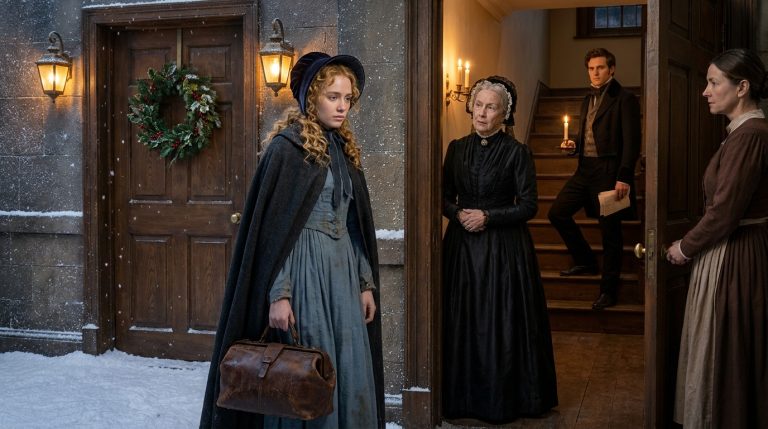
She packed in a quarter of an hour because she owned only what could be packed in a quarter of an hour. Tabitha found her on the service stair with her bag and would not let her go, neither crying nor speaking. Avis knelt on the stone step and took the child’s face in her hands.
“Listen to me, Tabby. You must go on playing every day, and you must let your uncle turn the pages, because he needs it more than you do. Will you promise me?”
Tabitha nodded. Still she said nothing. As Avis went down the stairs, she was afraid she had taken the child’s voice with her.